

Keszoox
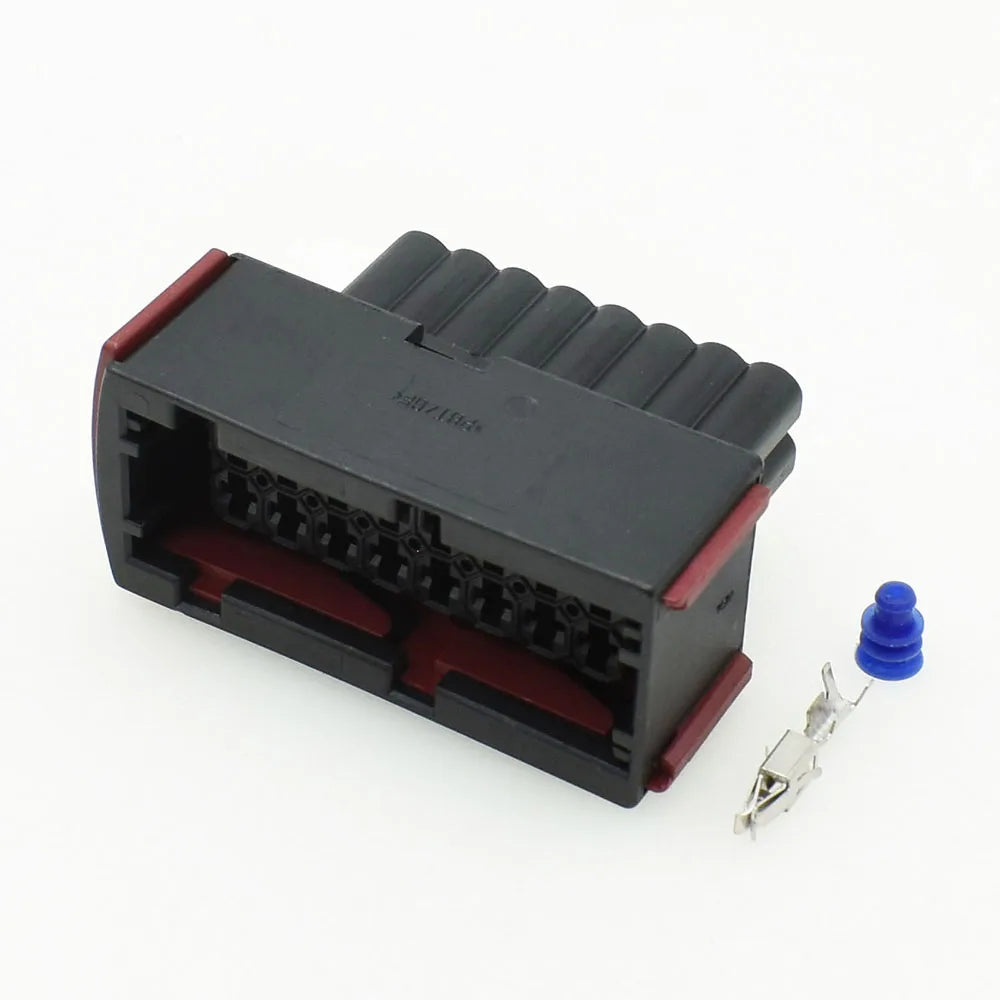
1-964449-1 / 1-965427-1 Automotive 16-Pin ECU Connector — Male Female Electrical Plug
1-964449-1 / 1-965427-1 Automotive 16-Pin ECU Connector Male Female Electrical Plug

Couldn't load pickup availability
1-964449-1 / 1-965427-1 Automotive 16-Pin ECU Connector — Male & Female
The 1-964449-1 (male plug) and 1-965427-1 (female socket) are 16-pin automotive ECU connectors from TE Connectivity, used in engine control unit, body control module, and transmission control unit wiring harness applications across multiple vehicle platforms. TE Connectivity (formerly AMP/Tyco) is one of the world’s largest automotive connector manufacturers, supplying OEM connector systems to virtually every major vehicle brand. The 16-pin configuration provides a versatile circuit count for ECU signal, power, and ground circuits in a compact housing.
The 1-964449-1 / 1-965427-1 connector family is used across Ford, GM, Chrysler, and European OEM platforms in ECU and control module applications. The unsealed design is suited for protected interior and underhood locations where direct moisture exposure is not expected.
Key Specifications
| Parameter | Value |
|---|---|
| Part Numbers | 1-964449-1 (male) / 1-965427-1 (female) |
| Manufacturer | TE Connectivity |
| Pin Count | 16-pin |
| Sealing | Unsealed |
| Housing Material | PA66 glass-filled nylon |
| Terminal Material | Tin-plated copper alloy |
| Operating Temperature | -40°C to +125°C |
| Locking | Positive snap-latch |
| Compliance | RoHS |
ECU Connector Repair — Best Practices
- Always disconnect the battery before working on ECU connectors — ECU connectors carry live signals; disconnecting with the ignition on can cause voltage spikes that damage the ECU
- Inspect before replacing — use a magnifying glass to inspect all 16 terminals for corrosion, bent pins, or push-back before ordering a replacement connector
- Clean corroded terminals first — if corrosion is minor, clean with electrical contact cleaner and a terminal cleaning brush; replace only if corrosion has caused terminal damage or reduced spring tension
- OEM dimensions ensure proper mating — aftermarket connectors with incorrect dimensions create loose connections that cause intermittent ECU faults; always use OEM-dimension replacements
- Clear DTCs after repair — always clear stored DTCs after connector repair and perform a test drive to confirm the fault does not return
Typical Applications
- ECU and BCM 16-pin connector repair on Ford, GM, Chrysler platforms
- Transmission Control Unit (TCU) connector replacement
- ABS/ESP module connector repair
- Instrument cluster and infotainment connector replacement
- Custom ECU wiring harness fabrication
Frequently Asked Questions
Q: How do I identify the correct terminal for 1-964449-1 / 1-965427-1?
Look up the part number in the TE Connectivity connector catalog (available at te.com) to find the compatible terminal part number, wire gauge range, and crimping tool specification. The catalog lists all compatible terminals and accessories for each housing. Alternatively, measure the terminal pitch in the housing cavity and match to the appropriate TE terminal series.
Q: What is the difference between 1-964449-1 (male) and 1-965427-1 (female)?
1-964449-1 is the male plug — it has pin terminals that insert into the female socket. 1-965427-1 is the female socket — it has socket terminals that accept the male pins. In automotive ECU applications, the female socket is typically on the wiring harness side and the male plug is on the ECU side — but this varies by application. Always verify the gender of your original connector before ordering.
Q: Can ECU connector corrosion cause false DTCs?
Yes — this is one of the most common diagnostic pitfalls in automotive repair. A corroded ECU connector terminal increases circuit resistance, causing the ECU to read incorrect sensor values or detect open/short circuit faults. This generates DTCs that point to the sensor or actuator rather than the connector. Before replacing any sensor or actuator based on a DTC, always inspect the associated connector for corrosion. A €10 connector replacement has resolved countless misdiagnosed sensor faults.