



Keszoox
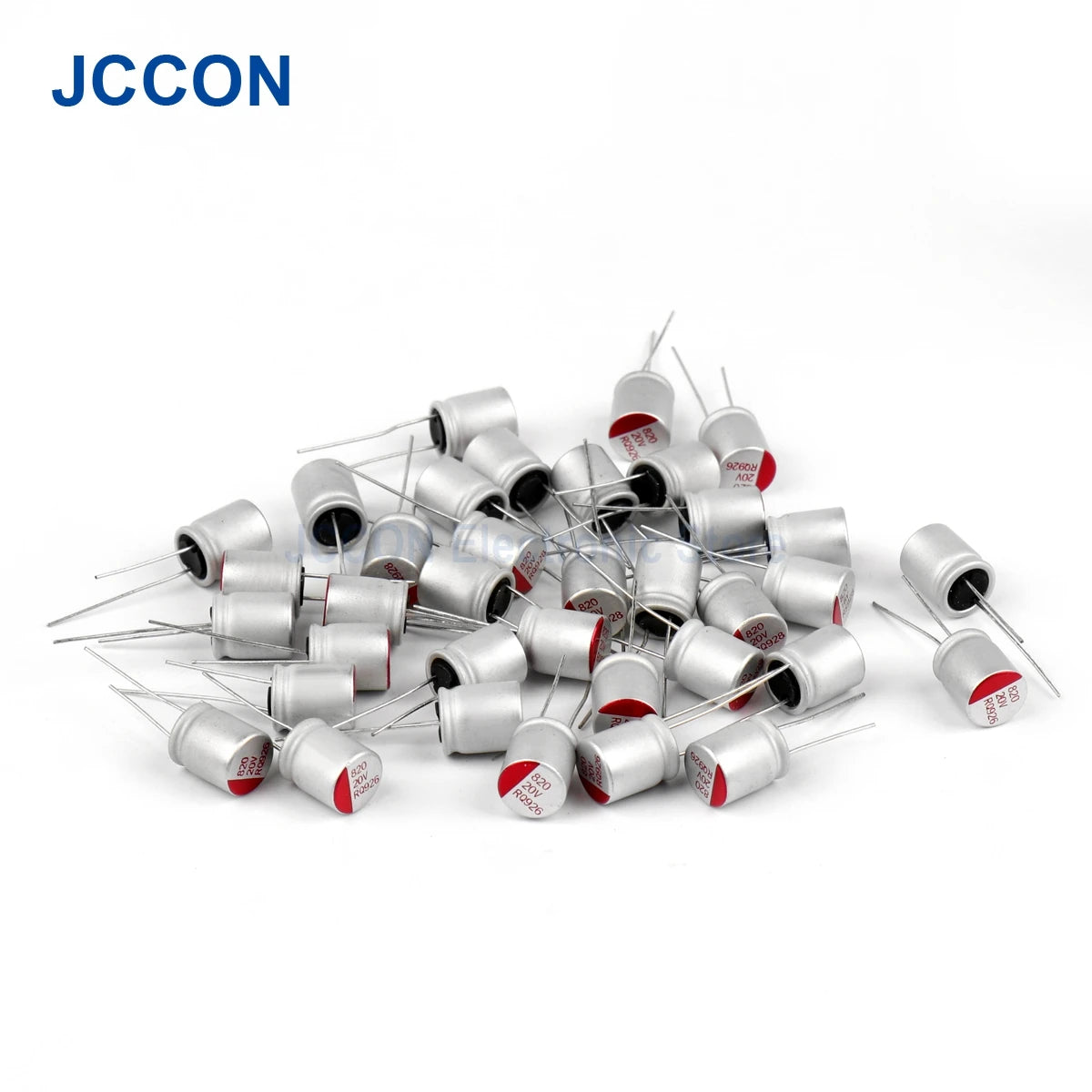
Solid Capacitor 6.3V–50V 100uF–1000uF for Motherboard and Graphics Card Applications
Solid Capacitor 6.3V–50V 100uF–1000uF for Motherboard and Graphics Card Applications

Couldn't load pickup availability
Solid Polymer Electrolytic Capacitor — 6.3V–50V, 100µF–4700µF, Motherboard & GPU Repair
Solid-state (polymer) electrolytic capacitors replace the liquid electrolyte of conventional aluminum electrolytic capacitors with a conductive polymer dielectric. This fundamental change eliminates the primary failure mode of standard electrolytic capacitors — electrolyte evaporation and venting — while delivering dramatically lower ESR, higher ripple current capability, and a rated operating life of 2000 hours at 105°C. These are the capacitors used on high-end motherboards, server boards, and graphics cards in VRM (voltage regulator module) circuits.
10 pieces per pack. Select the specific voltage/capacitance/size combination from the dropdown.
Key Specifications
- Type: Solid polymer electrolytic capacitor (plug-in / through-hole, radial leads)
- Rated Voltage Range: 6.3V, 10V, 16V, 25V, 35V, 50V, 63V, 100V
- Capacitance Range: 100µF to 4700µF (value and size as selected)
- Tolerance: +20% (M-grade, standard for electrolytic capacitors)
- ESR: Ultra-low (typically 5–30mΩ at 100kHz — 10–50× lower than standard electrolytic)
- Rated Ripple Current: High (polymer dielectric handles high ripple without heating)
- Load Life: 2000 hours at 105°C
- Shape: Cylindrical, radial lead wire
- Package: Through-hole (radial)
- RoHS Compliant: Yes
- Quantity: 10 pieces per pack
Solid Polymer vs. Standard Liquid Electrolytic Capacitors
- ESR: Solid polymer 5–30mΩ vs. liquid electrolytic 100–500mΩ at 100kHz — critical for VRM stability and transient response
- Failure mode: Solid polymer capacitors degrade gracefully (capacitance decreases, ESR increases slowly) vs. liquid electrolytic which can vent, leak, or explode
- Boiling point of dielectric: Polymer ≥350°C vs. liquid electrolyte ~100°C — solid capacitors cannot burst under normal operating conditions
- High-temperature stability: Polymer dielectric remains stable at 105°C; liquid electrolyte evaporates and degrades
- Ripple current handling: Solid polymer handles 2–5× higher ripple current for the same capacitance value
- Lifespan: Solid polymer 2000h+ at 105°C vs. liquid electrolytic 1000–1500h at 105°C
VRM and Motherboard Application Notes
In CPU and GPU voltage regulator modules (VRM), output capacitors must handle high-frequency switching ripple (100kHz–1MHz) with minimal ESR to maintain stable output voltage during load transients. Standard liquid electrolytic capacitors have ESR too high for modern VRM designs — solid polymer capacitors are mandatory for high-performance VRM output filtering.
- Replace bulging, leaking, or failed electrolytic capacitors on motherboards with the same voltage/capacitance rating in solid polymer
- Upgrade standard electrolytic capacitors in VRM output stages to solid polymer for improved transient response and stability
- Match physical dimensions (diameter × height) to the PCB footprint — multiple size options available for each capacitance value
- Polarity: longer lead = positive (+), shorter lead = negative (−). Match to PCB marking (stripe on capacitor body = negative)
Size Selection Guide
The variant name includes the physical dimensions (diameter × height in mm). Common footprints:
- 5 × 7mm: Small VRM output caps, tight PCB layouts
- 6.3 × 8–12mm: Standard motherboard VRM positions
- 8 × 8–17mm: Higher capacitance, server board and GPU VRM
- 10 × 12–17mm: Large bulk capacitance, power supply output
Typical Applications
- Motherboard VRM output capacitor replacement and upgrade
- GPU (graphics card) VRM repair — replacing failed or bulging capacitors
- Server board and workstation motherboard capacitor replacement
- DC-DC converter output filtering (buck, boost, SEPIC)
- Switching power supply output capacitor
- Industrial control board power supply decoupling
- Audio amplifier power supply filtering (low ESR reduces hum)
- Embedded system power rail decoupling
Package Contents
- 10 × solid polymer electrolytic capacitor (voltage, capacitance, and size as selected)



Blog posts
View all-

IC Chips & Discrete Components Express Shipping...
Shipping IC chips and discrete electronic components internationally requires more than choosing a carrier. ESD-safe packaging, correct HS codes, accurate customs declarations, and carrier selection for your destination all determine...
IC Chips & Discrete Components Express Shipping...
Shipping IC chips and discrete electronic components internationally requires more than choosing a carrier. ESD-safe packaging, correct HS codes, accurate customs declarations, and carrier selection for your destination all determine...
-

From Prototype to Mass Production — How to Scal...
Scaling from prototype to mass production is the most critical transition in a hardware product's lifecycle. The sourcing strategy that works for 10 prototype boards — cut tape, spot pricing,...
From Prototype to Mass Production — How to Scal...
Scaling from prototype to mass production is the most critical transition in a hardware product's lifecycle. The sourcing strategy that works for 10 prototype boards — cut tape, spot pricing,...
-

ISO 9001 Electronic Component Distributor — Wha...
ISO 9001:2015 certification is the most widely recognized quality management standard in the world — but what does it actually mean when an electronic component distributor claims to be ISO...
ISO 9001 Electronic Component Distributor — Wha...
ISO 9001:2015 certification is the most widely recognized quality management standard in the world — but what does it actually mean when an electronic component distributor claims to be ISO...


