



Solid State Relay Module 5V — 1-Channel SSR, 100–240VAC / 2A, Zero-Cross, Active-Low, Arduino
Solid State Relay Module 5V 1-Channel SSR, 100–240VAC / 2A, Zero-Cross, Active-Low, Arduino
Compatible JST cables for sensors and modules — secure & reliable. Shop now.

Couldn't load pickup availability
Solid State Relay Module — 5V, 1-Channel SSR, 100–240VAC / 2A, Zero-Cross Switching
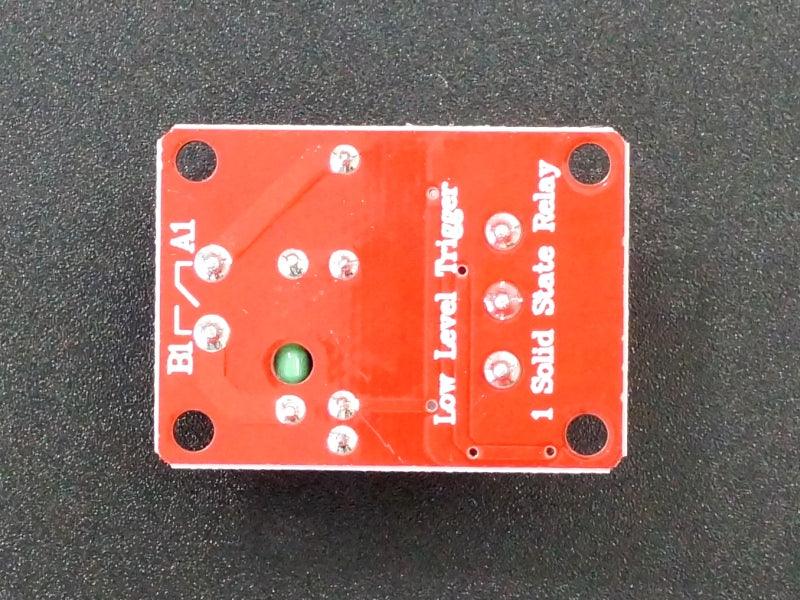
The 1-channel solid state relay (SSR) module switches 100–240VAC at up to 2A from a 5V active-LOW logic signal — no moving parts, no audible click, no contact wear. Built on the Omron G3MB-202P SSR with built-in phototriac coupler isolation and zero-cross switching, this module is the clean, silent alternative to electromechanical relay modules for controlling AC loads up to ~220W. An onboard 2A fuse provides over-current protection on the AC output side.
The module is active-LOW: driving CH1 LOW energizes the SSR (red LED ON, AC output connected). Logic HIGH or no connection de-energizes the SSR. The input draws <1mA — directly drivable from any Arduino, ESP32, or Raspberry Pi GPIO pin.
Key Features
- Zero-cross switching — switches at AC waveform zero point, minimizing electrical noise and inrush current
- Phototriac coupler isolation — built-in opto-isolation between MCU logic and AC load
- Active-LOW control — LOW = SSR ON; HIGH = SSR OFF
- <1mA GPIO drive — safe for all MCU GPIO pins, no driver transistor needed
- 2A onboard fuse — AC-side over-current protection
- Red LED indicator — illuminates when SSR is energized
- Reverse polarity protection — diode on DC power input
- Screw terminal connections — for both DC control and AC load wiring
Technical Specifications
| Supply Voltage | 4–6V DC (5V typical) |
| Supply Current | ~10mA when SSR energized |
| Control Logic | Active-LOW (LOW = SSR ON) |
| Logic HIGH threshold | >3.1V (when Vcc = 5V) |
| Logic LOW threshold | <1.2V |
| GPIO Current Required | <1mA |
| AC Output Voltage Range | 75–264VAC (recommended: 100–240VAC) |
| AC Output Current | 0.1–2A |
| Switching Type | Zero-cross |
| Switching Speed | Every half-cycle (~8.3ms @ 60Hz) |
| Onboard Fuse | 2A (AC side, soldered) |
| SSR Component | Omron G3MB-202P |
3.3V Compatibility Note
This module is 5V logic optimized. The logic HIGH threshold to turn the SSR OFF is ~3.1V when Vcc = 5V. A 3.3V MCU GPIO may or may not reach this threshold reliably — adding a pull-up resistor on the CH1 line to 3.3V improves reliability. If Vcc is reduced below 5V, the HIGH threshold scales proportionally.
Wiring Guide
DC control screw terminal (3-pin):
- DC+ → 4–6V DC supply (5V typical)
- DC− → GND (shared with MCU ground)
- CH1 → MCU GPIO (LOW = SSR ON)
AC load screw terminal (2-pin, non-polarized):
- One terminal → AC mains hot lead (incoming)
- Other terminal → Load hot lead (outgoing to load)
- AC neutral connects directly to load (not through relay)
AC safety: When switching mains voltage, ensure all AC connections are properly insulated and enclosed. Mount in a suitable electrical enclosure with terminal strips for safe AC wiring.
SSR vs Electromechanical Relay Module
- SSR (this): Silent, no moving parts, unlimited switching life, zero-cross switching reduces EMI — best for frequent switching, noise-sensitive environments, and long-life applications up to 2A AC
- Electromechanical relay module: Audible click, mechanical wear, can switch DC and higher AC currents (10A+) — best for infrequent switching and higher current loads
Typical Applications
- Arduino / ESP32 AC mains switching (lamps, fans, heaters up to ~220W @ 110V)
- Terrarium automation — heat lamp, mister, fan, UV light control
- Aquarium heater and pump control
- Christmas and decorative lighting control
- HVAC zone valve and damper control
- 3D printer heated bed control (12V DC bed — use electromechanical relay instead)
- Escape room and prop automation
Package Contents
- 1 × Solid State Relay Module 5V (1-channel, 100–240VAC / 2A, zero-cross, active-low)



Blog posts
View all-

IC Chips & Discrete Components Express Shipping...
Shipping IC chips and discrete electronic components internationally requires more than choosing a carrier. ESD-safe packaging, correct HS codes, accurate customs declarations, and carrier selection for your destination all determine...
IC Chips & Discrete Components Express Shipping...
Shipping IC chips and discrete electronic components internationally requires more than choosing a carrier. ESD-safe packaging, correct HS codes, accurate customs declarations, and carrier selection for your destination all determine...
-

From Prototype to Mass Production — How to Scal...
Scaling from prototype to mass production is the most critical transition in a hardware product's lifecycle. The sourcing strategy that works for 10 prototype boards — cut tape, spot pricing,...
From Prototype to Mass Production — How to Scal...
Scaling from prototype to mass production is the most critical transition in a hardware product's lifecycle. The sourcing strategy that works for 10 prototype boards — cut tape, spot pricing,...
-

ISO 9001 Electronic Component Distributor — Wha...
ISO 9001:2015 certification is the most widely recognized quality management standard in the world — but what does it actually mean when an electronic component distributor claims to be ISO...
ISO 9001 Electronic Component Distributor — Wha...
ISO 9001:2015 certification is the most widely recognized quality management standard in the world — but what does it actually mean when an electronic component distributor claims to be ISO...


