



TLC555I CMOS Timer IC DIP-8 — Low-Power, 2V–15V, Rail-to-Rail Output, Arduino
TLC555I CMOS Timer IC DIP-8 Low-Power, 2V–15V, Rail-to-Rail Output, Arduino
Compatible JST cables for sensors and modules — secure & reliable. Shop now.

Couldn't load pickup availability
TLC555I CMOS Timer IC — Low-Power 555 Alternative, DIP-8
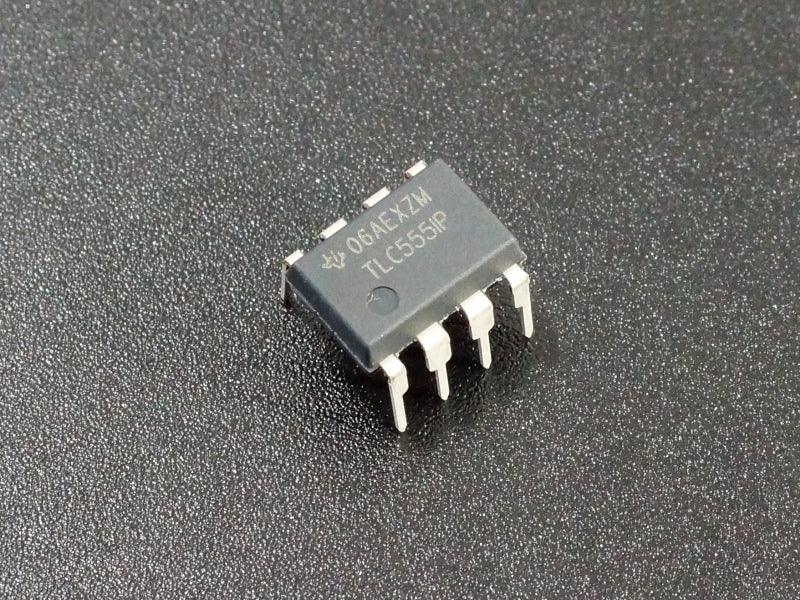
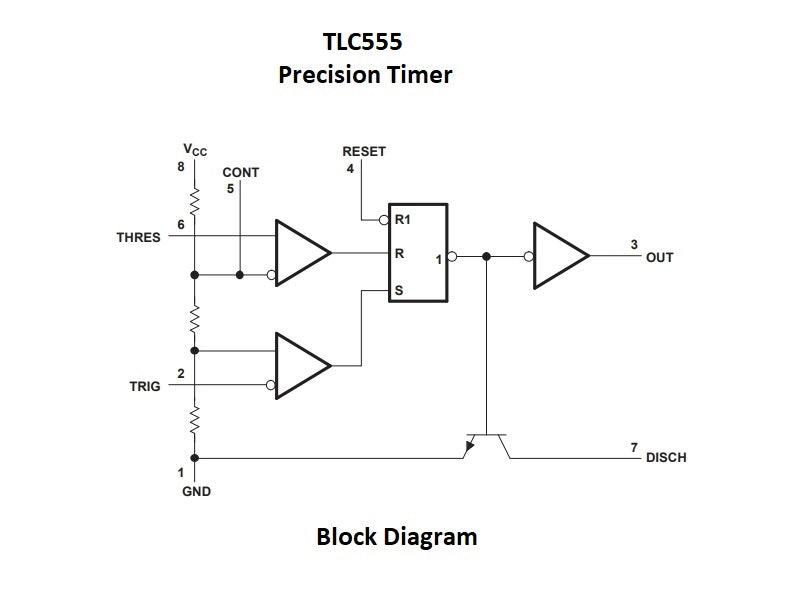
The TLC555I is a CMOS implementation of the classic 555 timer, offering the same monostable, astable, and bistable operating modes as the NE555 but with dramatically lower power consumption and a wider supply voltage range. Where the bipolar NE555 draws 6–15mA of supply current, the TLC555I draws as little as 170μA — making it the preferred choice for battery-powered timing circuits, sleep-mode wake timers, and any application where the 555 timer must run continuously from a limited power source.
The TLC555I also features rail-to-rail output swing and CMOS-compatible input thresholds, making it a direct drop-in replacement for the NE555 in most circuits while adding significant power savings.
Key Features
- CMOS low-power design — 170μA typical supply current (vs 6–15mA for NE555)
- Wide supply voltage: 2V–15V — operates from 2 × AA batteries to 12V supplies
- Rail-to-rail output — output swings close to VCC and GND
- CMOS-compatible inputs — works with 3.3V and 5V logic
- Same pinout as NE555 — direct drop-in replacement in most circuits
- Monostable, astable, and bistable modes
- DIP-8 package — breadboard and through-hole PCB compatible
Technical Specifications
| Supply Voltage | 2V – 15V |
| Supply Current (typical) | 170μA @ 5V |
| Output Current (sink/source) | 100mA |
| Max Frequency (astable) | ~2MHz |
| Input Threshold | CMOS-compatible (VCC/3 and 2×VCC/3) |
| Output Swing | Rail-to-rail |
| Package | DIP-8 (through-hole) |
| Manufacturer | Texas Instruments |
TLC555I vs NE555 — When to Choose Each
- NE555 (bipolar): 6–15mA supply current, 200mA output drive, 4.5–16V — best for high-output-current applications (relay drivers, buzzers)
- TLC555I (CMOS, this): 170μA supply current, 100mA output, 2–15V — best for battery-powered circuits, low-power timers, and 3.3V systems
Typical Applications
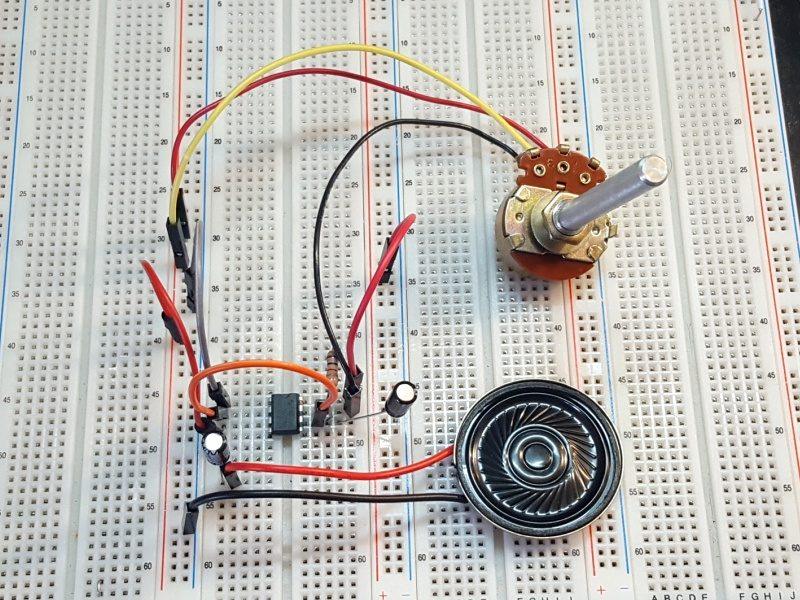
- Battery-powered LED flasher and blinker (ultra-low quiescent current)
- Sleep-mode wake timer for microcontroller power management
- Low-power PWM signal generator
- Precision delay timer in portable instruments
- Tone generator for battery-powered alarms
- 3.3V system timing circuits (CMOS-compatible thresholds)
- Drop-in NE555 replacement with power savings
Package Contents
- 1 × TLC555I CMOS Timer IC (DIP-8, Texas Instruments)

Blog posts
View all-

IC Chips & Discrete Components Express Shipping...
Shipping IC chips and discrete electronic components internationally requires more than choosing a carrier. ESD-safe packaging, correct HS codes, accurate customs declarations, and carrier selection for your destination all determine...
IC Chips & Discrete Components Express Shipping...
Shipping IC chips and discrete electronic components internationally requires more than choosing a carrier. ESD-safe packaging, correct HS codes, accurate customs declarations, and carrier selection for your destination all determine...
-

From Prototype to Mass Production — How to Scal...
Scaling from prototype to mass production is the most critical transition in a hardware product's lifecycle. The sourcing strategy that works for 10 prototype boards — cut tape, spot pricing,...
From Prototype to Mass Production — How to Scal...
Scaling from prototype to mass production is the most critical transition in a hardware product's lifecycle. The sourcing strategy that works for 10 prototype boards — cut tape, spot pricing,...
-

ISO 9001 Electronic Component Distributor — Wha...
ISO 9001:2015 certification is the most widely recognized quality management standard in the world — but what does it actually mean when an electronic component distributor claims to be ISO...
ISO 9001 Electronic Component Distributor — Wha...
ISO 9001:2015 certification is the most widely recognized quality management standard in the world — but what does it actually mean when an electronic component distributor claims to be ISO...


