

Keszoox
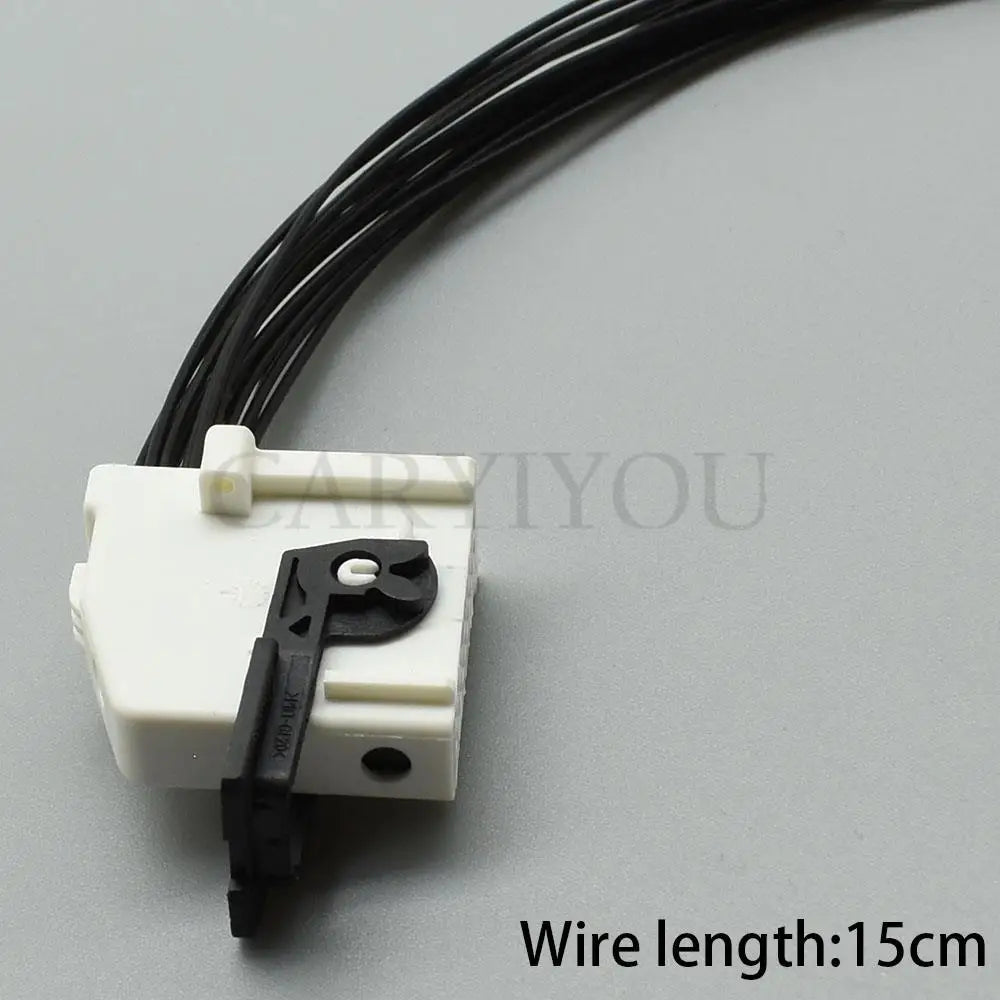
965778-1 / 1379100-2 / 2-967416-1 / 2-965777-1 Automotive 18-Pin Miniature Unsealed Connector — Car Wire Cable Socket
965778-1 / 1379100-2 / 2-967416-1 / 2-965777-1 Automotive 18-Pin Miniature Unsealed Connector Car Wire Cable Socket

Couldn't load pickup availability
965778-1 / 1379100-2 / 2-967416-1 / 2-965777-1 Automotive 18-Pin Miniature Unsealed Connector
The 965778-1, 1379100-2, 2-967416-1, and 2-965777-1 are 18-pin miniature unsealed automotive connector housings from TE Connectivity, used for low-current signal and control wiring harness applications in ECU, body control module, and instrument panel circuits. The miniature housing format provides high pin density in a compact footprint — suitable for instrument panel locations where space is limited and multiple connectors must be routed in close proximity. These part numbers represent male/female variants and minor dimensional revisions within the same 18-pin miniature connector family.
Key Specifications
| Parameter | Value |
|---|---|
| Part Numbers | 965778-1 / 1379100-2 / 2-967416-1 / 2-965777-1 |
| Manufacturer | TE Connectivity |
| Pin Count | 18-pin |
| Format | Miniature (compact housing) |
| Sealing | Unsealed |
| Housing Material | PA66 glass-filled nylon |
| Terminal Material | Tin-plated copper alloy |
| Operating Temperature | -40°C to +85°C |
| Compliance | RoHS |
Miniature Connector Design — Why It Matters
- Space-constrained instrument panel locations — modern vehicle instrument panels contain dozens of connectors in a limited space; miniature connectors allow higher circuit density without increasing harness bulk
- Low-current signal circuits — miniature terminals are optimized for signal circuits (CAN bus, LIN bus, sensor inputs, switch outputs) rather than high-current power circuits
- Multiple cross-references — the four part numbers represent male/female variants and revision levels within the same connector family; all share the same 18-pin mating interface
- TE Connectivity OEM standard — used across multiple vehicle brands and platforms in instrument panel and BCM wiring harnesses
Typical Applications
- ECU and BCM 18-pin signal connector repair
- Instrument panel wiring harness replacement
- CAN bus and LIN bus circuit connector repair
- Switch and sensor signal circuit connector replacement
Frequently Asked Questions
Q: How do I identify which of the four part numbers I need?
The four part numbers represent male/female variants and revision levels: 965778-1 and 2-965777-1 are typically the female socket variants; 1379100-2 and 2-967416-1 are typically the male plug variants (or later revisions). Check the part number stamped on your original connector housing. If the housing is damaged and unreadable, measure the terminal pitch and count the pins to confirm the 18-pin configuration, then order both male and female variants if unsure.
Q: What causes miniature connector terminal failure in instrument panel locations?
The most common causes are: fretting corrosion from dashboard vibration (micro-movement between terminal and housing creates an insulating oxide layer), heat cycling from the HVAC system causing terminal spring fatigue, and moisture from condensation or spilled liquids. Fretting corrosion is particularly insidious because the connector appears visually clean but has high contact resistance — symptoms include intermittent CAN bus faults, random warning lights, and BCM communication errors that clear when the connector is wiggled.
Q: Can I use dielectric grease to prevent terminal corrosion in miniature connectors?
Yes — a thin application of dielectric grease (silicone-based, e.g. Dow Corning DC-4 or equivalent) on the terminal contact surfaces before assembly provides a moisture barrier that prevents oxidation and fretting corrosion. Apply sparingly — excess grease can attract dust and debris. Do not use petroleum-based greases, which can degrade the PA66 housing material over time.