

Keszoox
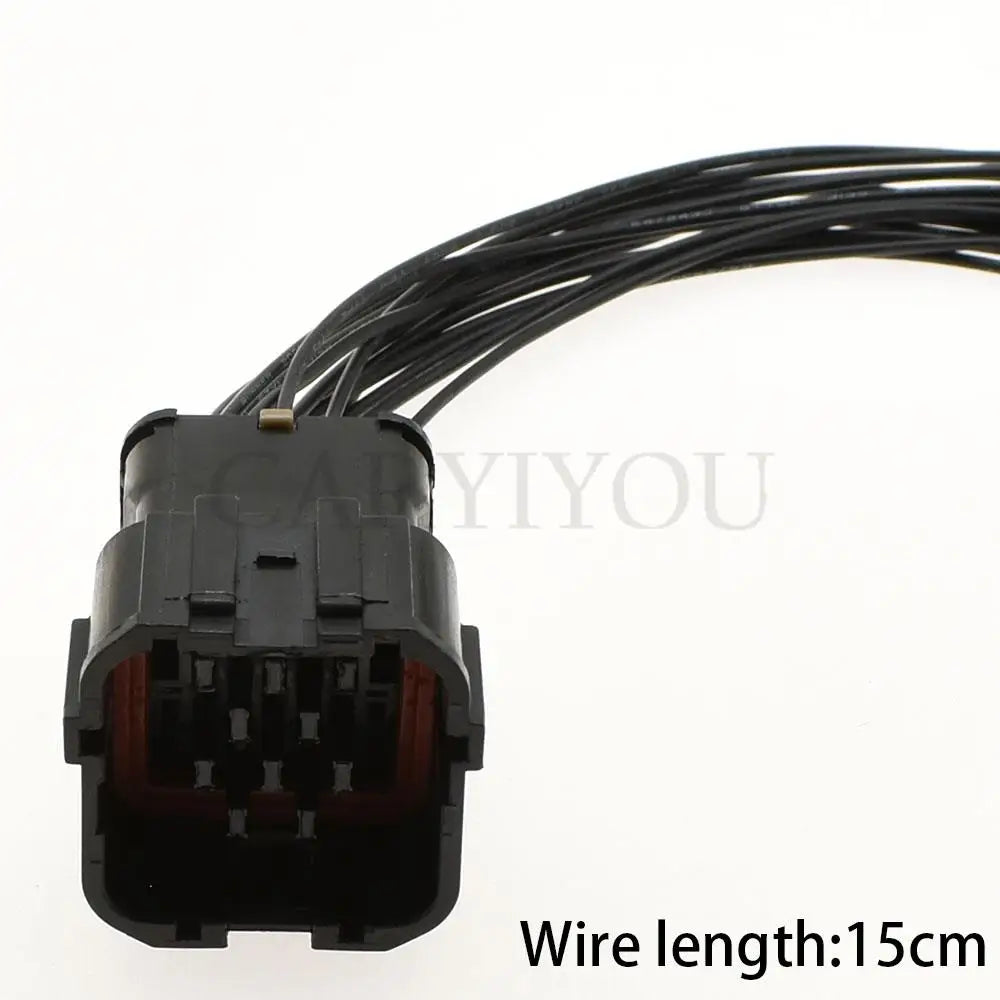
MG640352 / MG610350 Automotive 14-Pin Waterproof Connector — Sealed Male Female Terminal Cable Socket
MG640352 / MG610350 Automotive 14-Pin Waterproof Connector Sealed Male Female Terminal Cable Socket

Couldn't load pickup availability
MG640352 / MG610350 Automotive 14-Pin Waterproof Connector — Sealed Male & Female
The MG640352 (female socket) and MG610350 (male plug) are 14-pin waterproof automotive connectors from the KET (Korea Electric Terminal) series, used in Hyundai, KIA, and affiliated OEM wiring harness applications. KET is the dominant automotive connector manufacturer in South Korea, supplying sealed and unsealed connector systems to Hyundai Motor Group (Hyundai, KIA, Genesis) for ECU, sensor, and body control module applications. The MG-series sealed connectors provide IP67 moisture protection for underhood and chassis wiring circuits.
The 14-pin configuration is used in KET-harness vehicles for ECU signal connectors, multi-function sensor assemblies, and body control module interfaces requiring a moderate pin count with full moisture protection. The sealed design with individual wire seals ensures reliable operation in underhood environments subject to water splash, condensation, and temperature cycling.
Key Specifications
| Parameter | Value |
|---|---|
| OEM Part Numbers | MG640352 (female) / MG610350 (male) |
| Series | KET MG-series (sealed) |
| Pin Count | 14-pin |
| Sealing | Waterproof (sealed housing + wire seals) |
| Housing Material | PA66 glass-filled nylon |
| Terminal Material | Tin-plated copper alloy |
| Operating Temperature | -40°C to +125°C |
| Compatible Platforms | Hyundai, KIA, Genesis (KET harness) |
| Compliance | RoHS |
KET MG-Series — Hyundai/KIA Sealed Connector Standard
- KET OEM standard — Korea Electric Terminal (KET) supplies sealed connector systems to Hyundai Motor Group; the MG-series is the standard sealed connector for underhood ECU and sensor applications
- MG prefix = sealed series — in KET’s naming convention, the MG prefix indicates a sealed (waterproof) connector; unsealed KET connectors use different prefix designations
- Individual wire seals — each terminal position has an individual wire seal that provides IP67 moisture protection at the wire entry point; critical for underhood applications
- 14-pin for ECU signal density — accommodates sensor inputs, actuator outputs, CAN bus, LIN bus, power, and ground circuits in a single sealed connector
Typical Applications
- Hyundai / KIA ECU and BCM sealed connector repair
- Multi-function sensor assembly connector replacement
- Underhood sealed wiring harness repair on KET-harness vehicles
- ABS/ESP module connector repair
- Custom wiring harness fabrication for Hyundai/KIA platforms
Frequently Asked Questions
Q: How do I identify KET MG-series connectors on my Hyundai/KIA?
KET connectors are typically identified by the “KET” logo or part number stamped on the housing. The MG-series sealed connectors have a distinctive sealed housing with visible wire seal entry holes at the wire entry face. The part number format MG6XXXXX (female) / MG6XXXXX (male) is stamped on the housing. Alternatively, consult the Hyundai/KIA GDS (Global Diagnostic System) parts catalog with your vehicle’s VIN to identify the correct connector part number.
Q: What is the difference between MG640352 (female) and MG610350 (male)?
The MG640352 is the female socket — it has socket terminals that accept the male pins and is typically on the wiring harness side. The MG610350 is the male plug — it has pin terminals and is typically on the component (ECU, sensor) side. In a connector pair, the female socket mates with the male plug. Always verify the gender of your original connector before ordering — the housing shape and terminal type are different between male and female variants.
Q: Do I need to replace the wire seals when replacing the MG640352/MG610350 connector?
Yes — always install new wire seals when replacing a KET MG-series sealed connector. The wire seals are the primary moisture barrier; reusing old seals risks moisture ingress that will corrode the new terminals. Thread the new wire seal onto the wire before stripping and crimping the terminal. After crimping, slide the wire seal up to the terminal insulation barrel and insert the terminal into the housing — the wire seal seats in the housing entry hole to create the waterproof seal.