

Keszoox
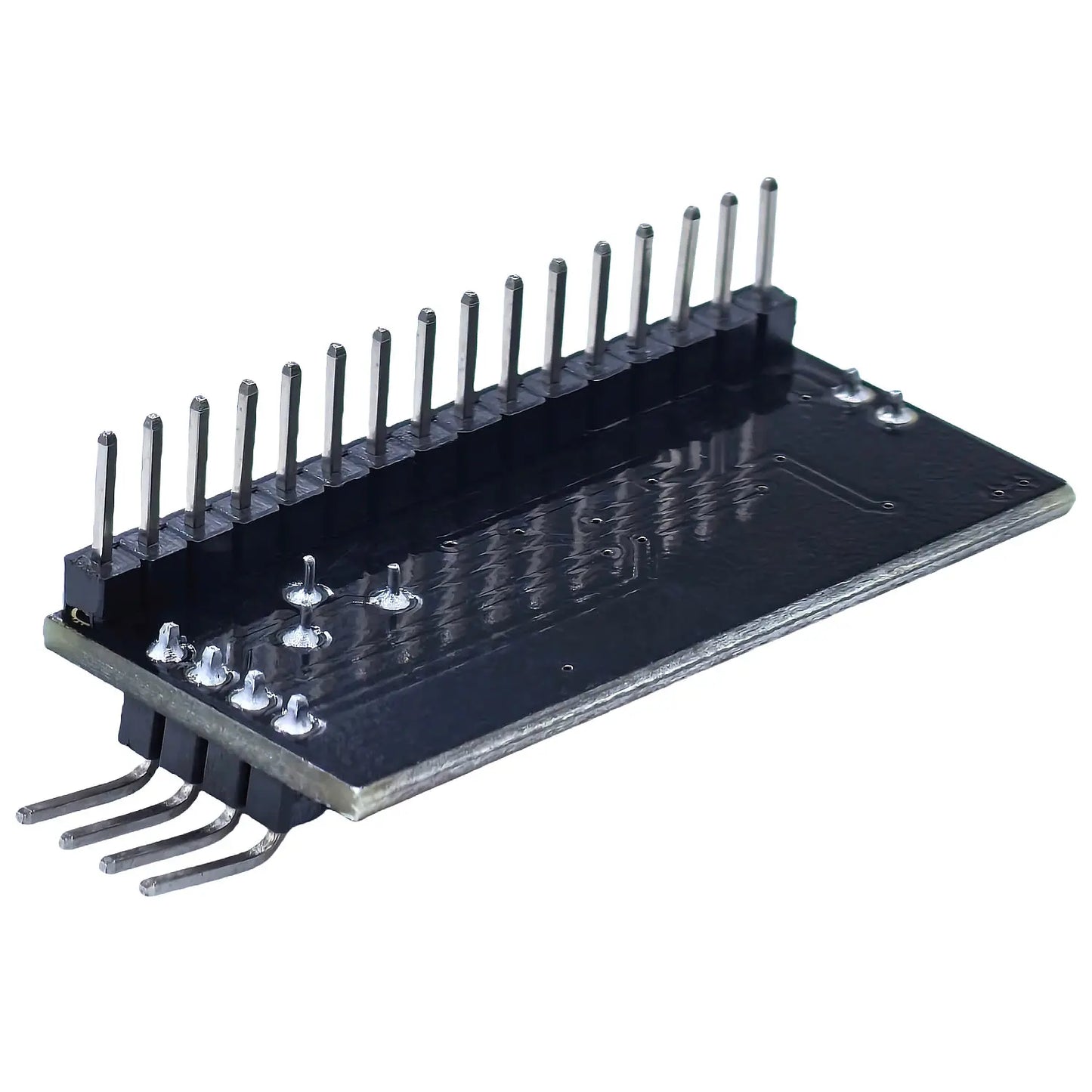
I2C/IIC/SPI LCD Adapter Module for 1602/2004 Displays PCF8574 Serial Interface for Arduino
I2C/IIC/SPI LCD Adapter Module for 1602/2004 Displays PCF8574 Serial Interface for Arduino

Couldn't load pickup availability
PCF8574 I2C / IIC LCD Adapter Module — 1602 & 2004 Display Interface
Reduce your LCD wiring from 12 pins to just 4 (VCC, GND, SDA, SCL) with this PCF8574-based I2C adapter module. Compatible with standard HD44780 1602 and 2004 character LCD displays, it plugs directly onto the LCD's 16-pin header and exposes a standard I2C interface — freeing up GPIO pins on your Arduino, ESP32, STM32, or Raspberry Pi for other peripherals.
Available in 1-piece or 3-piece packs.
Specifications
- IC: PCF8574 / PCF8574T I2C I/O expander
- Supply Voltage: 2.5V – 6V DC
- Interface: I2C (SDA + SCL, 2-wire)
- Default I2C Address: 0x27 (PCF8574) or 0x3F (PCF8574A)
- Address Configuration: A0/A1/A2 solder jumpers — up to 8 modules cascadable on one I2C bus
- Compatible Displays: HD44780 1602 (16×2) and 2004 (20×4) character LCDs
- Backlight Control: Jumper-selectable (insert jumper = backlight ON; remove = backlight OFF)
- Contrast Adjustment: Blue potentiometer (clockwise = increase contrast)
- I2C Connectors: 2 × 4-pin I2C headers (Dupont or dedicated I2C cable compatible)
Wiring (Arduino)
- VCC → 5V
- GND → GND
- SDA → Arduino A4 (Uno) / D20 (Mega) / D21 (Leonardo)
- SCL → Arduino A5 (Uno) / D21 (Mega) / D20 (Leonardo)
Arduino Library
Use the LiquidCrystal_I2C library (Frank de Brabander). Initialize with:
LiquidCrystal_I2C lcd(0x27, 16, 2); for 1602, or LiquidCrystal_I2C lcd(0x27, 20, 4); for 2004.
If address 0x27 doesn’t work, try 0x3F (PCF8574A variant). Use an I2C scanner sketch to confirm your module’s address.
Address Configuration (A0/A1/A2)
Short-circuit A0, A1, or A2 solder pads to change the I2C address. Default (all open) = 0x27. Up to 8 modules can share one I2C bus with unique addresses — useful for multi-display projects.
Contrast & Backlight Adjustment
- Turn the blue potentiometer clockwise to increase contrast (darker characters), counterclockwise to decrease
- If display shows blocks or nothing, adjust contrast first before debugging code
- Backlight jumper: installed = ON, removed = OFF (saves ~20mA)
Typical Applications
- Arduino Uno/Mega/Nano LCD display with minimal GPIO usage
- ESP8266/ESP32 status display (I2C native support)
- STM32 and AVR microcontroller LCD interface
- Multi-display I2C bus with cascaded modules
- Sensor data display, menu systems, and debug output
Package Contents
- 1 or 3 × PCF8574 I2C LCD adapter module (quantity as selected)