



OLED Display 0.96″ 128×64 Blue — I2C, SSD1306, Arduino
OLED Display 0.96″ 128×64 Blue I2C, SSD1306, Arduino
Compatible JST cables for sensors and modules — secure & reliable. Shop now.

Couldn't load pickup availability
OLED Display 0.96″ 128×64 Blue — I2C, SSD1306, Arduino
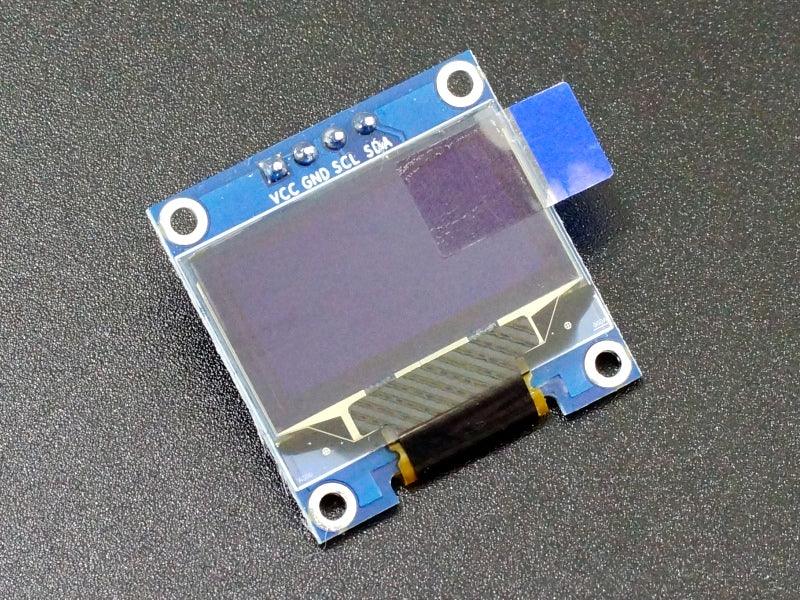
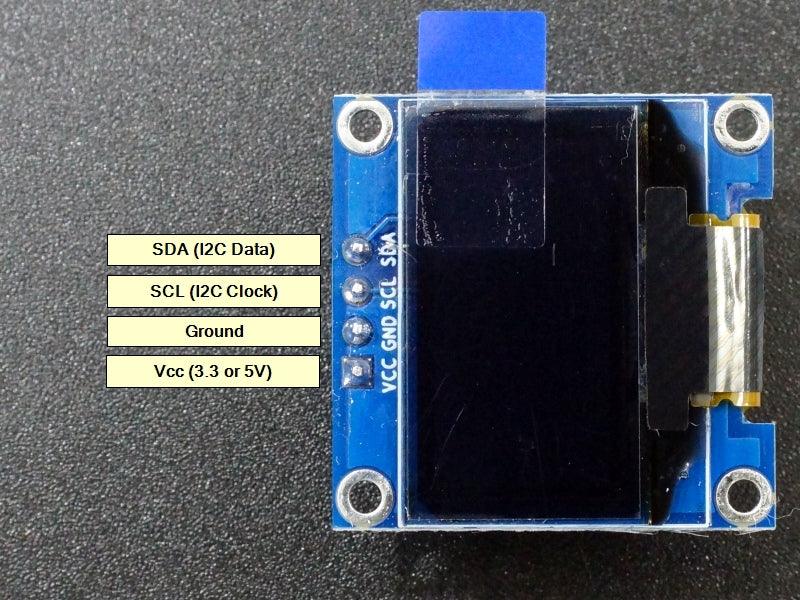
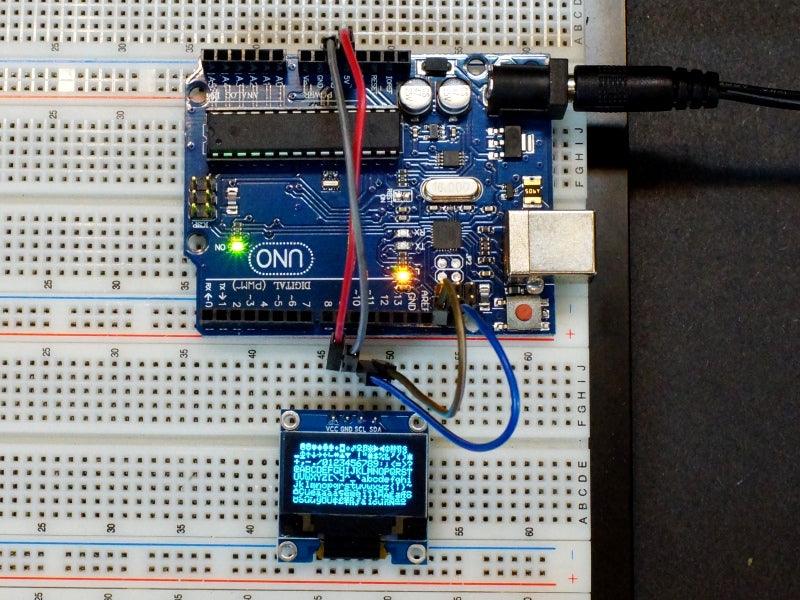
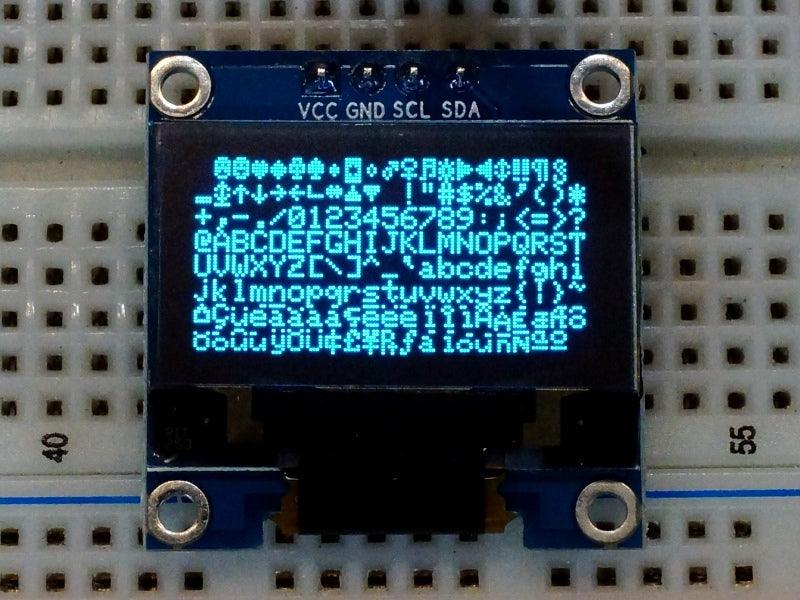
The most popular OLED display for Arduino projects — a 0.96-inch OLED with 128×64 pixel resolution and blue pixels, driven by the SSD1306 I2C controller. OLED displays emit their own light with no backlight required, delivering perfect black levels, extremely high contrast, and lower power consumption than LCD displays. Connect with just 2 wires (SDA + SCL) and display graphics, text, and sensor data in minutes with the Adafruit SSD1306 library.
Key Specifications
- Size: 0.96 inches | Resolution: 128×64 pixels
- Panel: OLED (self-emitting) | Color: Blue
- Driver IC: SSD1306 | Interface: I2C
- I2C address: 0x3C (default) | Supply: 3.3–5V
- Library: Adafruit SSD1306 / U8g2 (Arduino)
- Compliance: RoHS compliant
Why This Is the Most Popular Arduino OLED
- ✅ 128×64 resolution — enough pixels for graphics, icons, and multiple lines of text
- ✅ No backlight — true black pixels, infinite contrast ratio
- ✅ I2C interface — only 2 wires needed, freeing Arduino pins
- ✅ Ultra-low power — ideal for battery-powered projects
- ✅ Adafruit SSD1306 library — extensive examples and community support
Typical Applications
- Arduino project status and sensor data display
- Wearable electronics and smartwatch display
- IoT device status and notification display
- Battery-powered sensor node display
- Mini oscilloscope and data visualizer

Blog posts
View all-

IC Chips & Discrete Components Express Shipping...
Shipping IC chips and discrete electronic components internationally requires more than choosing a carrier. ESD-safe packaging, correct HS codes, accurate customs declarations, and carrier selection for your destination all determine...
IC Chips & Discrete Components Express Shipping...
Shipping IC chips and discrete electronic components internationally requires more than choosing a carrier. ESD-safe packaging, correct HS codes, accurate customs declarations, and carrier selection for your destination all determine...
-

From Prototype to Mass Production — How to Scal...
Scaling from prototype to mass production is the most critical transition in a hardware product's lifecycle. The sourcing strategy that works for 10 prototype boards — cut tape, spot pricing,...
From Prototype to Mass Production — How to Scal...
Scaling from prototype to mass production is the most critical transition in a hardware product's lifecycle. The sourcing strategy that works for 10 prototype boards — cut tape, spot pricing,...
-

ISO 9001 Electronic Component Distributor — Wha...
ISO 9001:2015 certification is the most widely recognized quality management standard in the world — but what does it actually mean when an electronic component distributor claims to be ISO...
ISO 9001 Electronic Component Distributor — Wha...
ISO 9001:2015 certification is the most widely recognized quality management standard in the world — but what does it actually mean when an electronic component distributor claims to be ISO...


