



ESP8266 NodeMCU V1.0 ESP-12E WiFi Development Board
ESP8266 NodeMCU V1.0 ESP-12E WiFi Development Board
Compatible JST cables for sensors and modules — secure & reliable. Shop now.

Couldn't load pickup availability
ESP8266 NodeMCU V1.0 ESP-12E WiFi Development Board
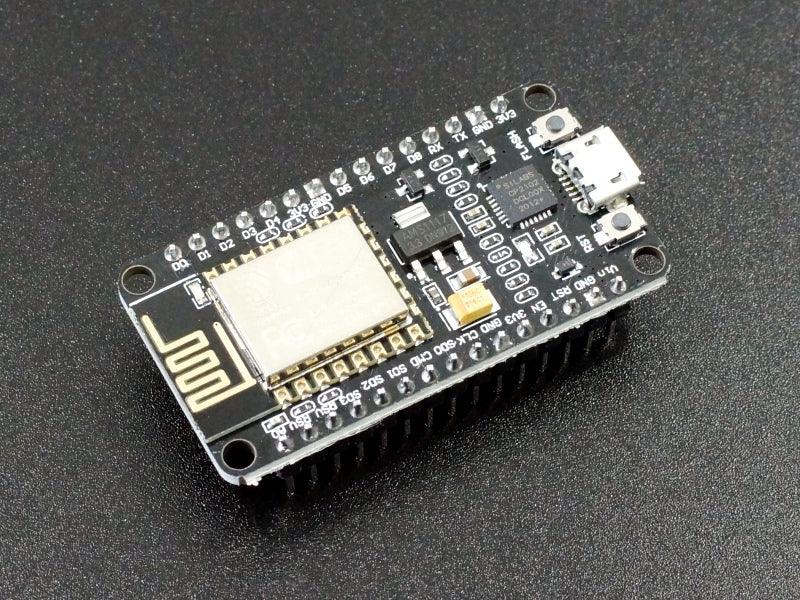
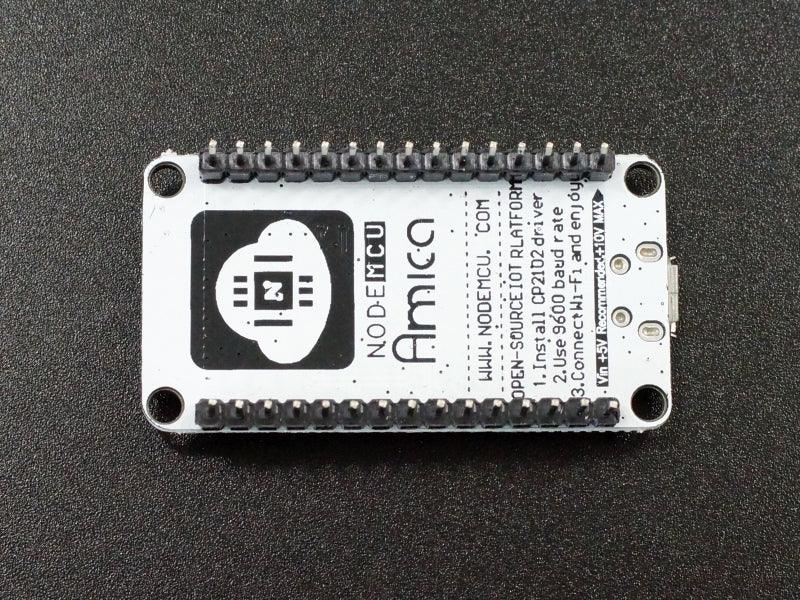
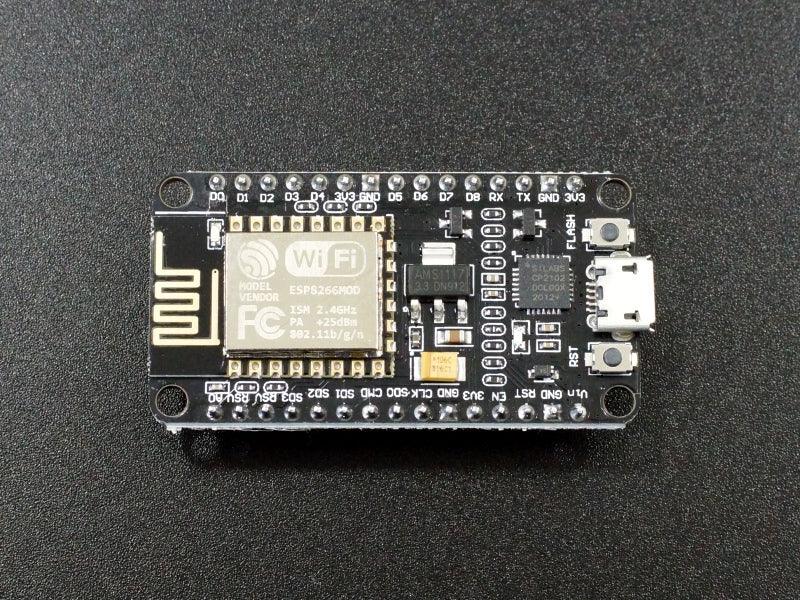
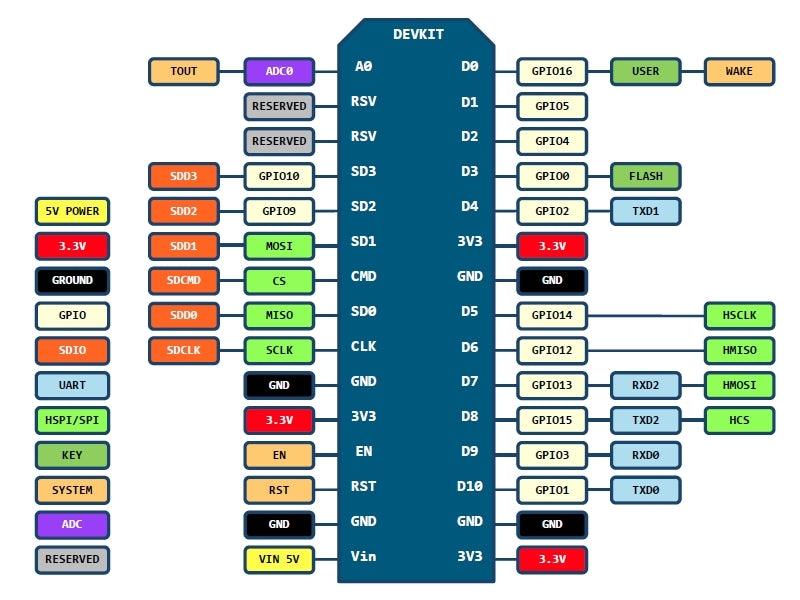
The ESP8266 NodeMCU V1.0 is the most popular ESP8266 development board worldwide. Built around the ESP-12E module with 4MB flash, it features 13 GPIO pins, Micro USB programming via CH340, and breadboard-compatible 2.54mm headers. Program with Arduino IDE, MicroPython, or NodeMCU Lua — the go-to board for WiFi IoT projects.
Key Specifications
- MCU: ESP8266EX (ESP-12E) | Clock: 80MHz (up to 160MHz)
- Flash: 4MB | WiFi: 802.11 b/g/n
- GPIO: 13 pins | Analog in: 1 (10-bit, 0–3.3V)
- Interfaces: UART / SPI / I2C / I2S | USB: Micro USB (CH340)
- Operating voltage: 3.3V | Input: 5V via USB
- IDE: Arduino IDE / MicroPython / NodeMCU Lua
- Compliance: RoHS compliant
Why Choose This?
- ✅ Most popular ESP8266 board — largest community, most tutorials and libraries available
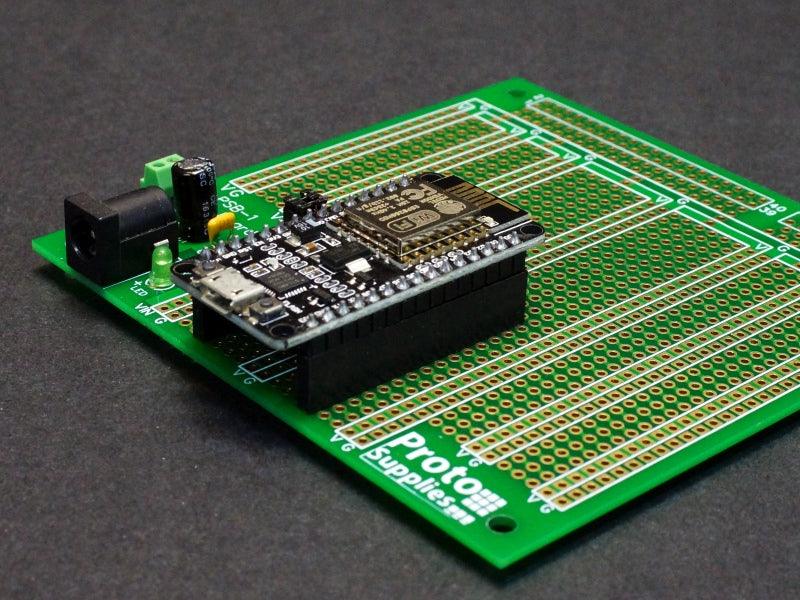
- ✅ Breadboard compatible — standard 2.54mm headers, fits standard breadboards
- ✅ Arduino IDE compatible — use familiar Arduino libraries and sketches
- ✅ 4MB flash — ample space for OTA updates and SPIFFS file system
Typical Applications
- Home automation and smart home sensor nodes
- WiFi-connected data loggers and web servers
- MQTT IoT clients and cloud-connected devices
- Beginner WiFi IoT learning and prototyping

Blog posts
View all-

IC Chips & Discrete Components Express Shipping...
Shipping IC chips and discrete electronic components internationally requires more than choosing a carrier. ESD-safe packaging, correct HS codes, accurate customs declarations, and carrier selection for your destination all determine...
IC Chips & Discrete Components Express Shipping...
Shipping IC chips and discrete electronic components internationally requires more than choosing a carrier. ESD-safe packaging, correct HS codes, accurate customs declarations, and carrier selection for your destination all determine...
-

From Prototype to Mass Production — How to Scal...
Scaling from prototype to mass production is the most critical transition in a hardware product's lifecycle. The sourcing strategy that works for 10 prototype boards — cut tape, spot pricing,...
From Prototype to Mass Production — How to Scal...
Scaling from prototype to mass production is the most critical transition in a hardware product's lifecycle. The sourcing strategy that works for 10 prototype boards — cut tape, spot pricing,...
-

ISO 9001 Electronic Component Distributor — Wha...
ISO 9001:2015 certification is the most widely recognized quality management standard in the world — but what does it actually mean when an electronic component distributor claims to be ISO...
ISO 9001 Electronic Component Distributor — Wha...
ISO 9001:2015 certification is the most widely recognized quality management standard in the world — but what does it actually mean when an electronic component distributor claims to be ISO...


