

Keszoox
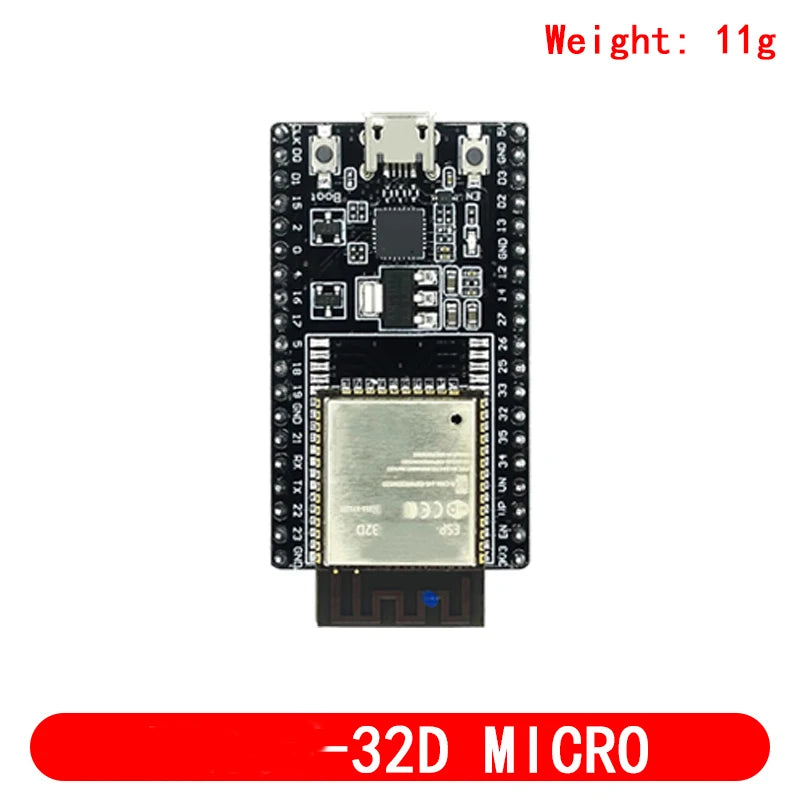
ESP32-DevKitC Development Board — ESP32-32D/32U, WiFi + Bluetooth, IoT, Arduino IDE
ESP32-DevKitC Development Board ESP32-32D/32U, WiFi + Bluetooth, IoT, Arduino IDE

Couldn't load pickup availability
ESP32-DevKitC Development Board - ESP32-32D/32U, WiFi + Bluetooth, IoT
The ESP32-DevKitC is Espressif's official development board for the ESP32 dual-core 240MHz SoC, featuring integrated WiFi 802.11 b/g/n and Bluetooth 4.2 / BLE. With 38 GPIO pins, multiple communication interfaces, and full support for Arduino IDE and ESP-IDF, it is the most capable and popular IoT development platform available.
Key Specifications
| Parameter | Value |
|---|---|
| Module | ESP32-WROOM-32D (with PCB antenna) or 32U (with IPEX connector) |
| CPU | Dual-core Xtensa LX6, up to 240MHz |
| Flash Memory | 4MB (SPI flash) |
| SRAM | 520KB |
| WiFi | 802.11 b/g/n (2.4GHz), WPA/WPA2 |
| Bluetooth | Classic BT 4.2 + BLE |
| GPIO Pins | 38 (including ADC, DAC, touch, PWM, UART, SPI, I2C) |
| ADC | 18-channel 12-bit SAR ADC |
| DAC | 2-channel 8-bit |
| USB Interface | Micro USB (CP2102 or CH340 USB-UART bridge) |
| Supply Voltage | 5V via USB or 3.3V via 3V3 pin |
| Operating Temperature | -40C to +80C |
ESP32 vs ESP8266 - Why Upgrade?
| Feature | ESP32-DevKitC | ESP8266 NodeMCU |
|---|---|---|
| CPU Cores | Dual-core 240MHz | Single-core 80/160MHz |
| Bluetooth | Yes (BT + BLE) | No |
| GPIO Pins | 38 | 17 |
| ADC Channels | 18 (12-bit) | 1 (10-bit) |
| DAC | 2-channel | None |
| Touch Sensors | 10 capacitive | None |
Why Choose ESP32-DevKitC?
- Dual-Core 240MHz - Run WiFi stack on core 0, application on core 1 simultaneously
- WiFi + Bluetooth - Single chip covers all wireless protocols for IoT
- 38 GPIO Pins - Enough for complex projects without GPIO expanders
- Arduino IDE Compatible - Install ESP32 board package; use familiar Arduino syntax
- Espressif Official Board - Reference design with stable power supply and USB interface
Typical Applications
- WiFi-connected sensor node (temperature, humidity, air quality)
- BLE beacon and proximity sensor
- MQTT IoT gateway and data logger
- Web server and REST API endpoint
- OTA (over-the-air) firmware update system
- Voice assistant and audio processing (I2S)
Getting Started
Install ESP32 board package in Arduino IDE: File > Preferences > Additional Board URLs: https://raw.githubusercontent.com/espressif/arduino-esp32/gh-pages/package_esp32_index.json. Select board: ESP32 Dev Module. Upload speed: 921600. Connect via Micro USB.
FAQ
Q: What is the difference between ESP32-32D and ESP32-32U? ESP32-WROOM-32D has a built-in PCB antenna (no external antenna needed). ESP32-WROOM-32U has an IPEX/U.FL connector for an external antenna (better range in metal enclosures).
Q: Can ESP32-DevKitC run MicroPython? Yes - flash MicroPython firmware via esptool.py. Use Thonny IDE or uPyCraft for development.
Package Contents
- 1x ESP32-DevKitC Development Board (ESP32-32D or 32U per selected variant)