

Keszoox
NodeMCU V2/V3 ESP8266 ESP-12E WiFi Development Board | CH340 / CP2102 / CH9102X | Arduino IoT
NodeMCU V2/V3 ESP8266 ESP-12E WiFi Development Board | CH340 / CP2102 / CH9102X | Arduino IoT

Couldn't load pickup availability
NodeMCU V2/V3 ESP8266 ESP-12E WiFi Development Board — CH340 / CP2102 / CH9102X
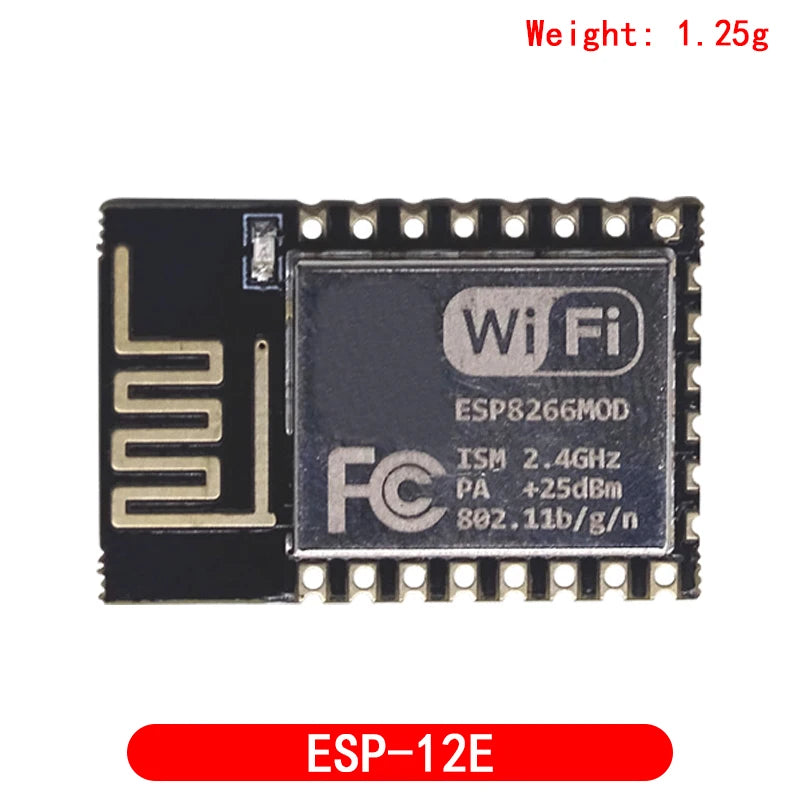
The NodeMCU ESP8266 is the most popular low-cost WiFi development board in the maker and IoT community — combining the powerful ESP8266 WiFi SoC with a USB-to-UART bridge (CH340, CP2102, or CH9102X), 3.3V regulator, and all GPIO pins broken out on breadboard-compatible headers. Program it with the Arduino IDE, MicroPython, or Lua (NodeMCU firmware) to build WiFi-connected sensors, home automation devices, web servers, and IoT nodes. Available in V2 (narrower, breadboard-friendly) and V3 (wider, more GPIO access) form factors, with multiple USB-UART chip options for different OS compatibility requirements.
Specifications
| SoC | Espressif ESP8266 (ESP-12E / ESP-12F / ESP-12S module) |
| CPU | Tensilica L106 32-bit RISC, 80/160MHz |
| WiFi | 802.11 b/g/n, 2.4GHz |
| Flash Memory | 4MB (ESP-12E/F/S) |
| RAM | 80KB user data RAM |
| GPIO Pins | 11 digital I/O, 1 analogue input (ADC, 0–1V) |
| USB-UART Options | CH340G / CP2102 / CH9102X |
| Supply Voltage | 3.3V – 5V (via USB or VIN pin) |
| Operating Temperature | -45°C to +85°C |
| Certification | CE |
| Programming | Arduino IDE, MicroPython, Lua (NodeMCU) |
USB-UART Chip Comparison
| Chip | Windows | macOS | Linux | Notes |
|---|---|---|---|---|
| CH340G | ✅ (driver required) | ✅ (driver required) | ✅ (built-in) | Most common, lowest cost |
| CP2102 | ✅ (driver required) | ✅ (driver required) | ✅ (built-in) | More reliable on macOS, higher quality |
| CH9102X | ✅ (driver required) | ✅ (driver required) | ✅ (built-in) | Newer chip, good macOS compatibility |
V2 vs. V3 Form Factor
| Version | Width | Breadboard | Notes |
|---|---|---|---|
| NodeMCU V2 | Narrower | Fits standard breadboard with 1 row free each side | Preferred for breadboard prototyping |
| NodeMCU V3 | Wider | Spans full breadboard width | More GPIO access, larger USB connector |
Key Features
- ✅ ESP8266 WiFi SoC — full TCP/IP stack, 802.11 b/g/n WiFi, 80/160MHz CPU
- ✅ Arduino IDE compatible — program with familiar Arduino syntax using the ESP8266 Arduino core
- ✅ MicroPython support — run Python scripts directly on the board for rapid prototyping
- ✅ USB programming — no external programmer needed, program directly via USB
- ✅ 3.3V and 5V compatible — power via USB or external 3.3–5V supply
- ✅ 4MB flash — ample storage for firmware, web pages, and data logging
- ✅ CE certified — meets European radio and electrical safety standards
- ✅ Multiple USB-UART options — choose CH340, CP2102, or CH9102X for your OS and driver preference
Common Applications
- WiFi-connected temperature and humidity sensors (DHT11/DHT22)
- Home automation and smart home control nodes
- MQTT IoT data publishing to cloud platforms (AWS, Azure, Home Assistant)
- Web server hosting on local network
- WiFi relay and smart switch control
- OTA (over-the-air) firmware update systems
- Wireless data logging and monitoring
- ESP-NOW peer-to-peer wireless communication
Arduino IDE Setup
- Open Arduino IDE → File → Preferences → Additional Boards Manager URLs.
- Add:
http://arduino.esp8266.com/stable/package_esp8266com_index.json - Go to Tools → Board → Boards Manager, search “ESP8266”, install.
- Select Tools → Board → NodeMCU 1.0 (ESP-12E Module).
- Select the correct COM port and upload your sketch.
Frequently Asked Questions
Q: What is the difference between ESP-12E, ESP-12F, and ESP-12S?
A: All three are ESP8266 modules with 4MB flash. ESP-12F has improved antenna performance over ESP-12E. ESP-12S has a simplified design. For most projects, the differences are negligible.
Q: Can I power this from a 5V supply?
A: Yes. The onboard 3.3V regulator accepts 5V input via the VIN pin or USB. The ESP8266 GPIO pins operate at 3.3V — do not connect 5V signals directly to GPIO pins.
Package Contents
- 1× NodeMCU ESP8266 Development Board (version and USB-UART chip as selected)