

Keszoox
Molex Mini-SPOX MX5264 2.5mm 2-12Pin Single-Head Cable 22AWG UL1007
Molex Mini-SPOX MX5264 2.5mm 2-12Pin Single-Head Cable 22AWG UL1007

Couldn't load pickup availability
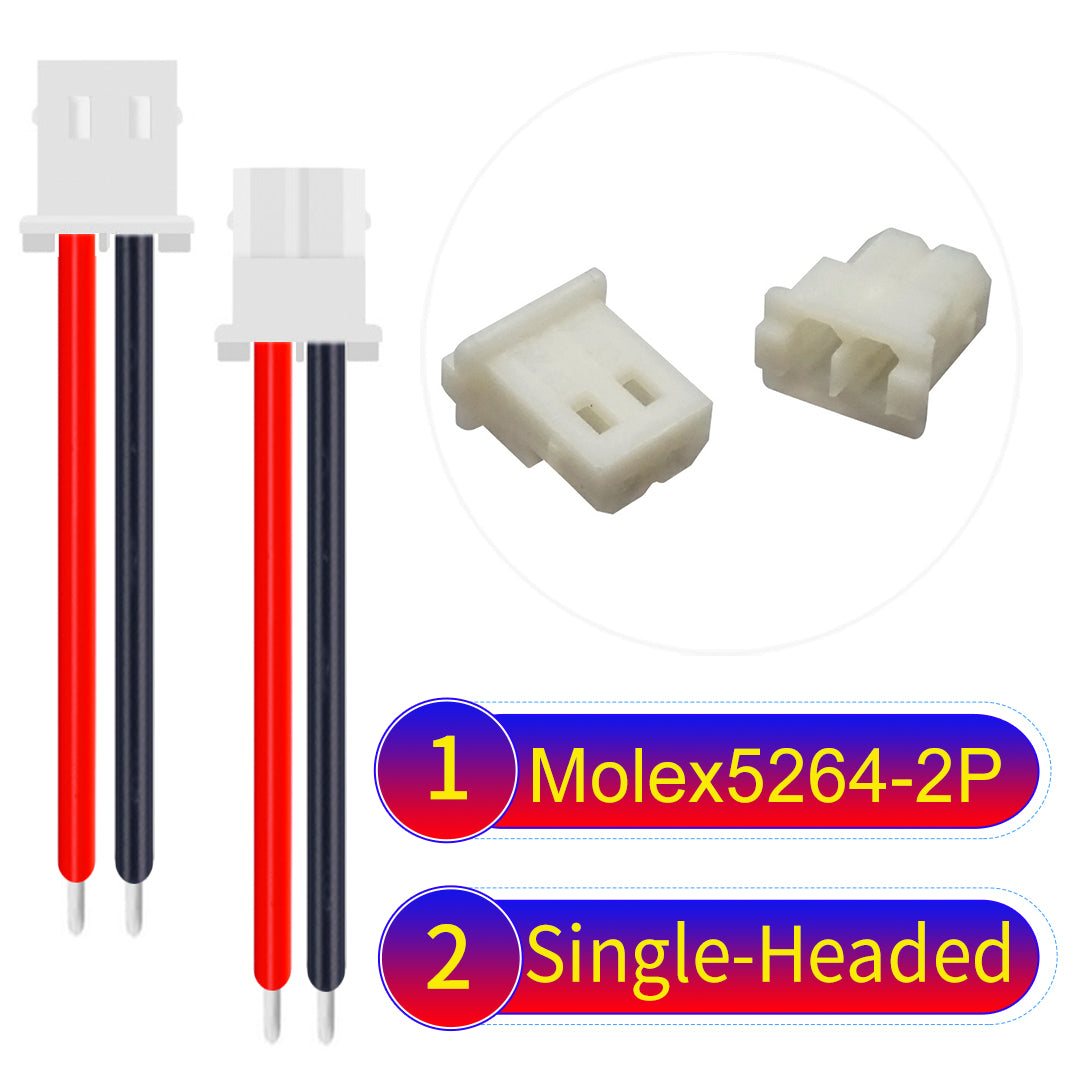
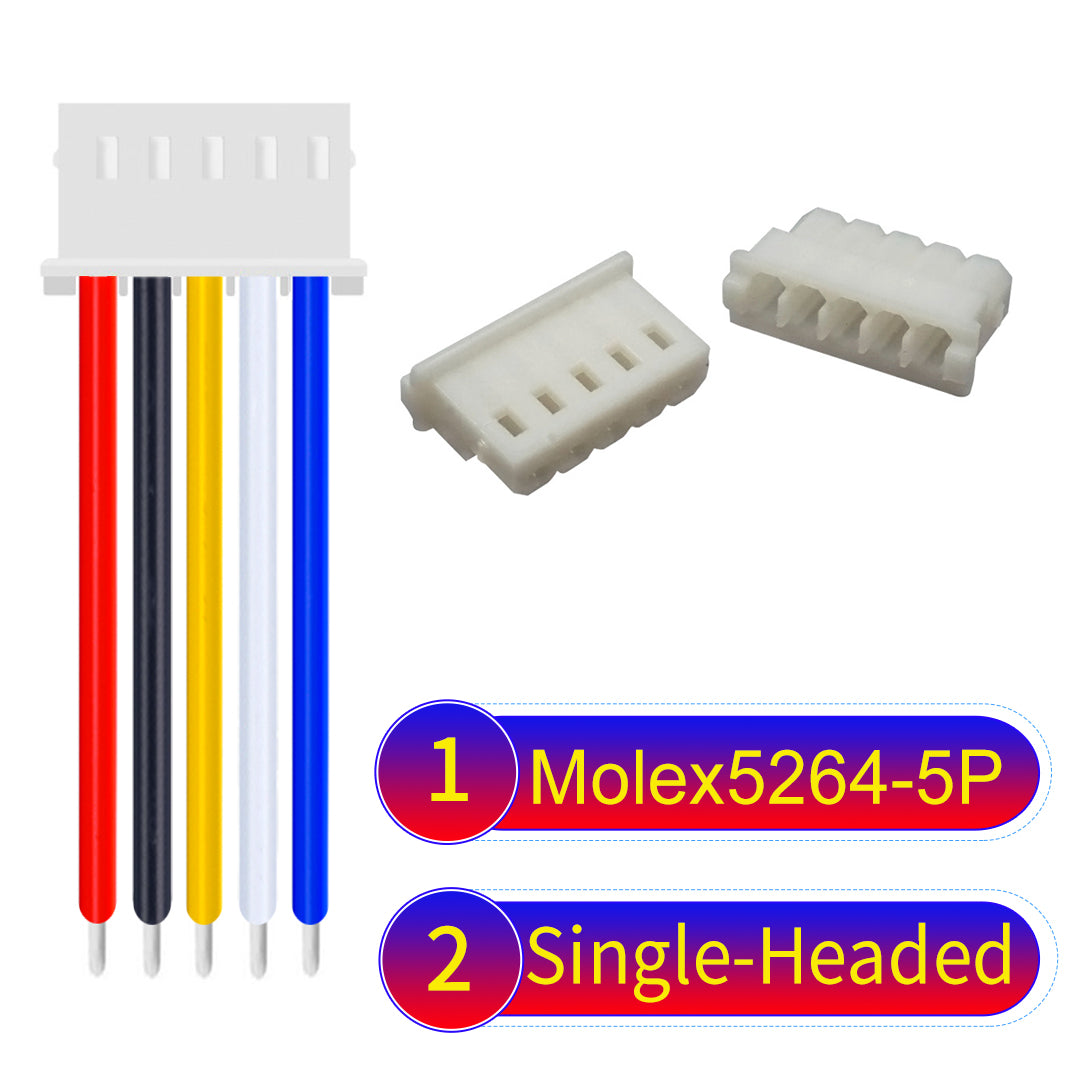
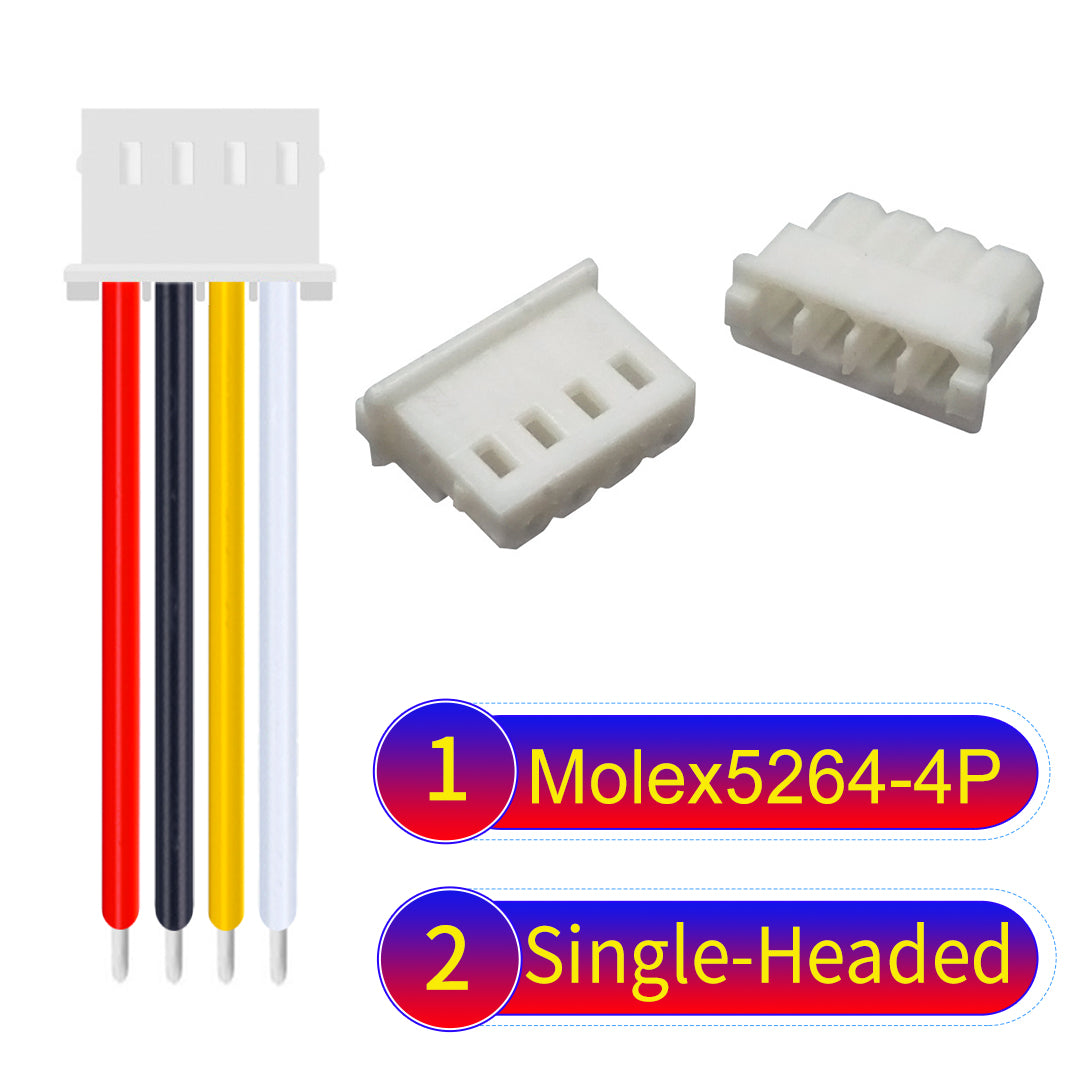
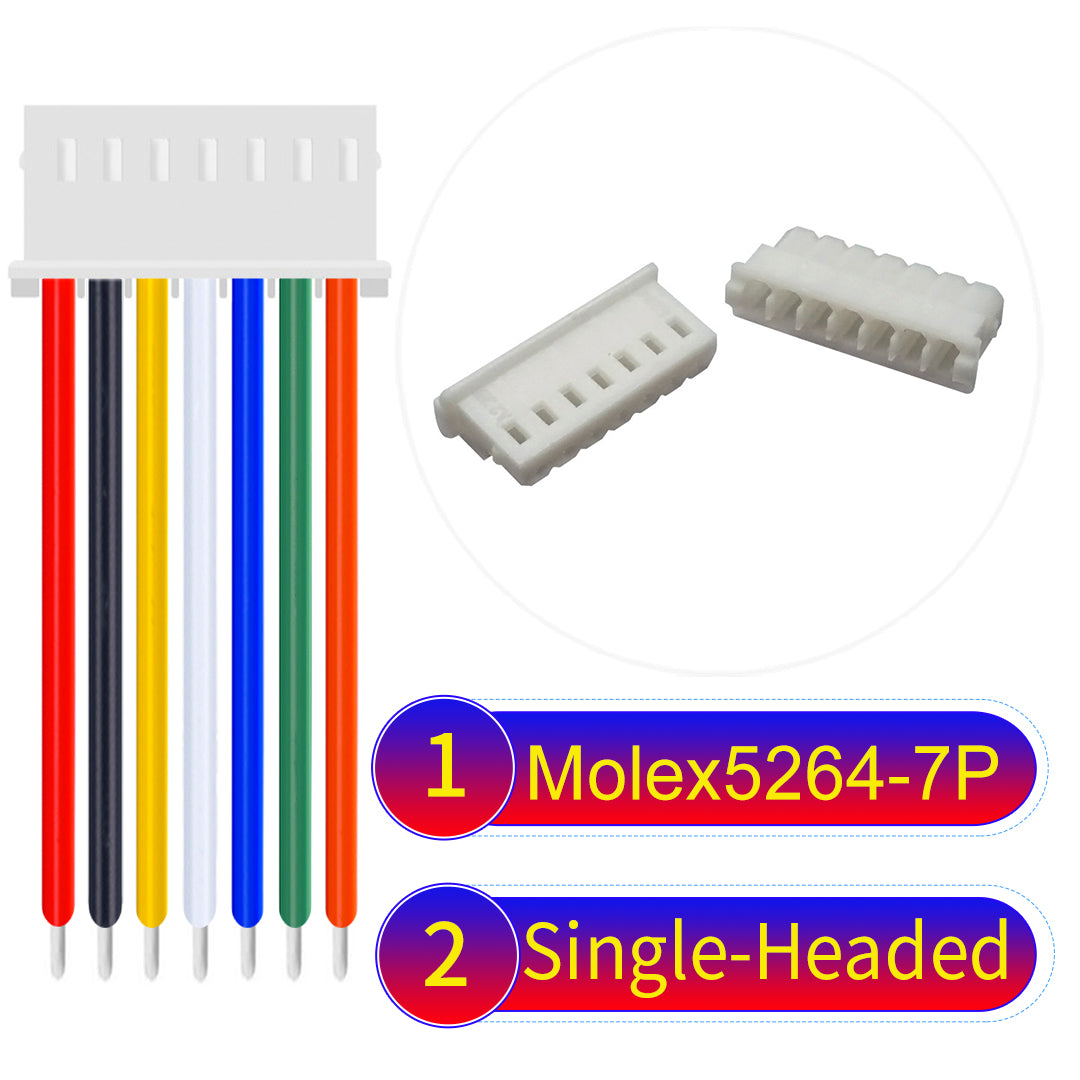
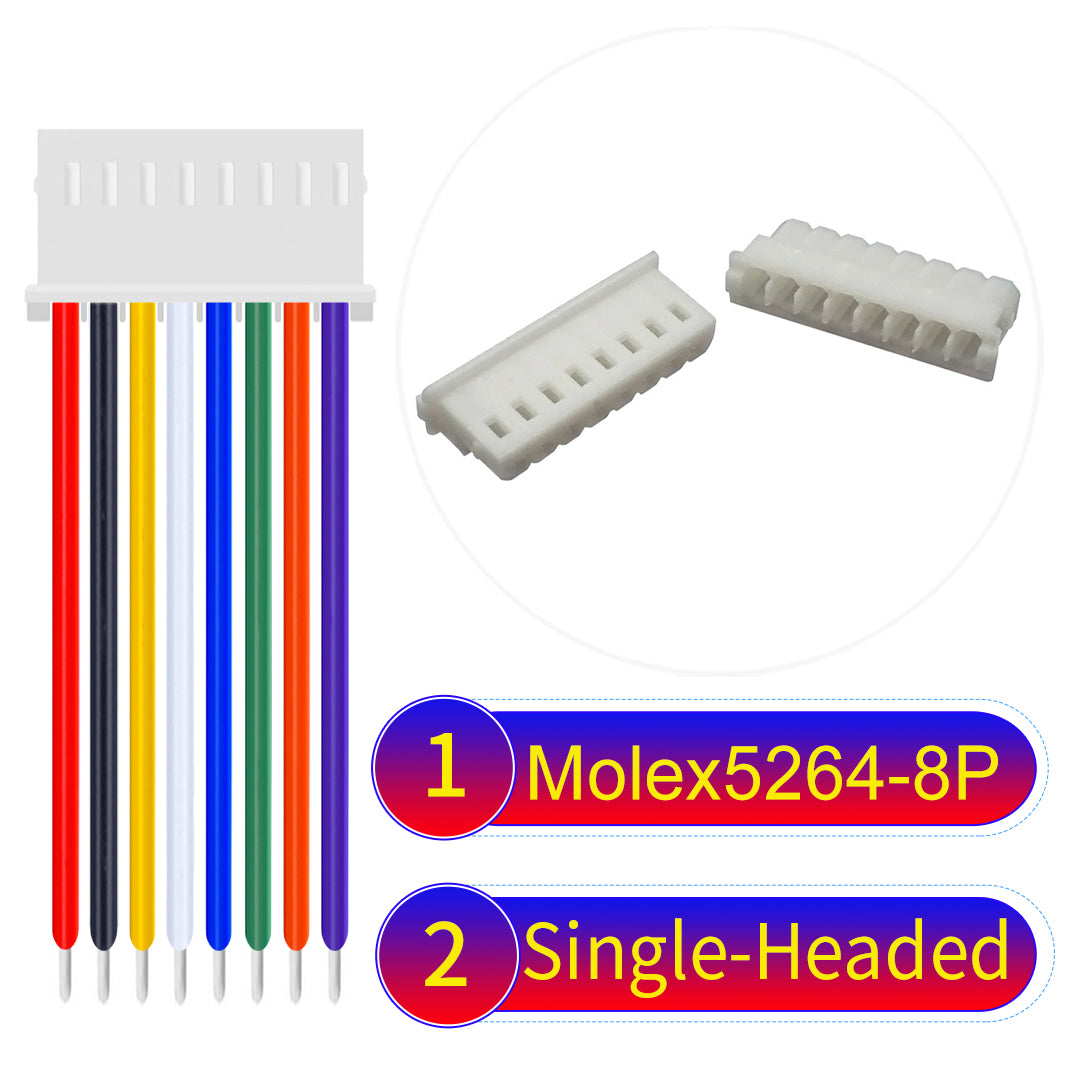
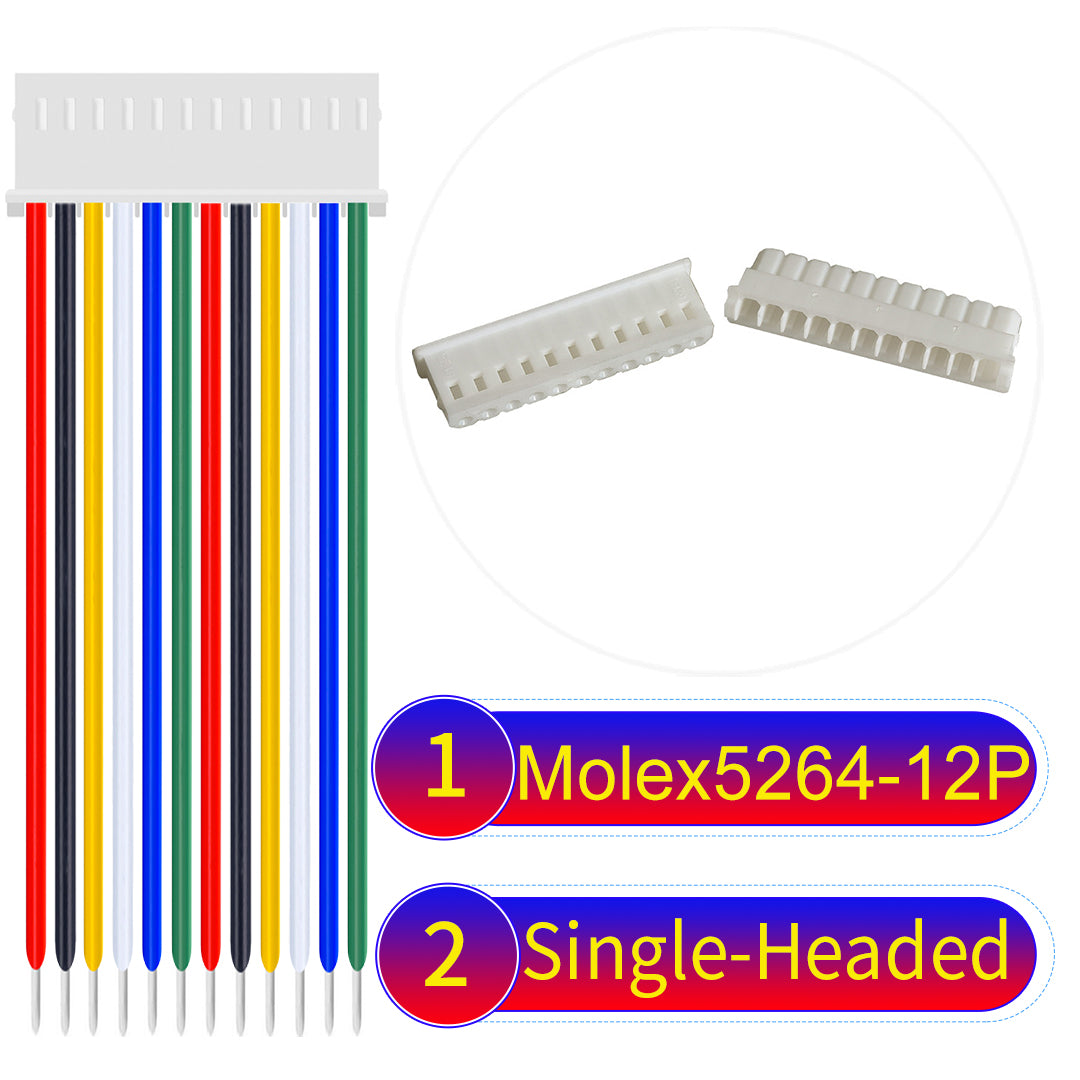
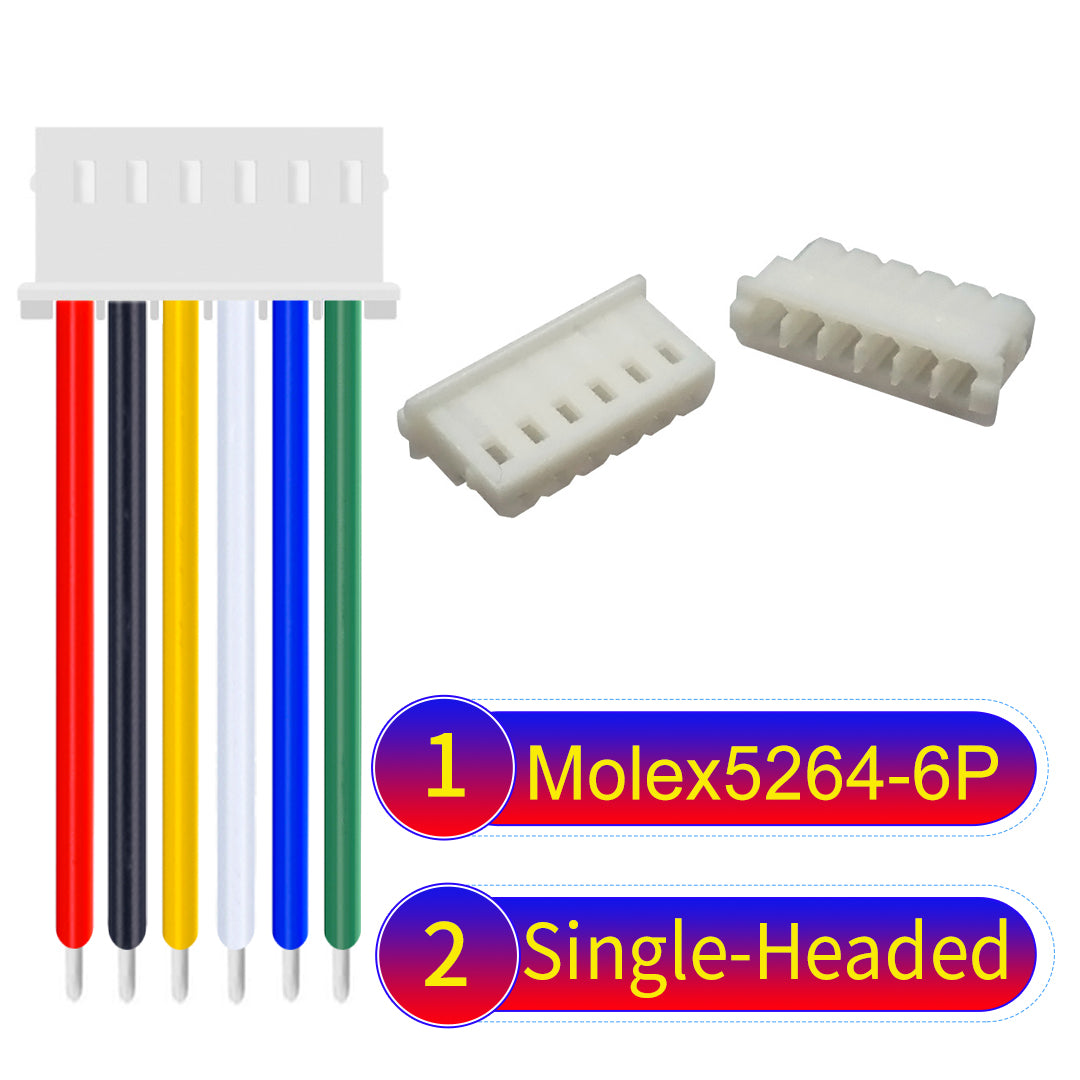
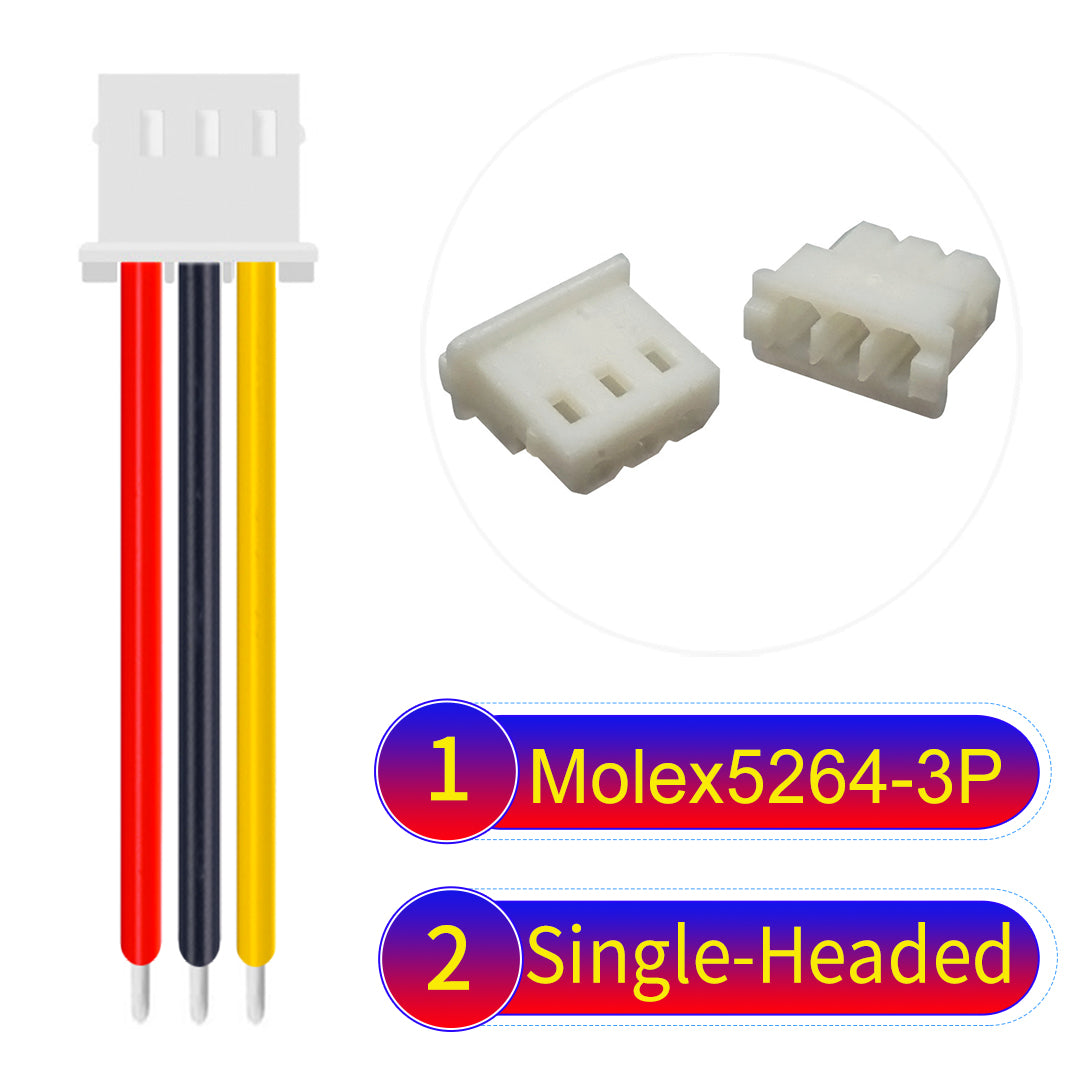
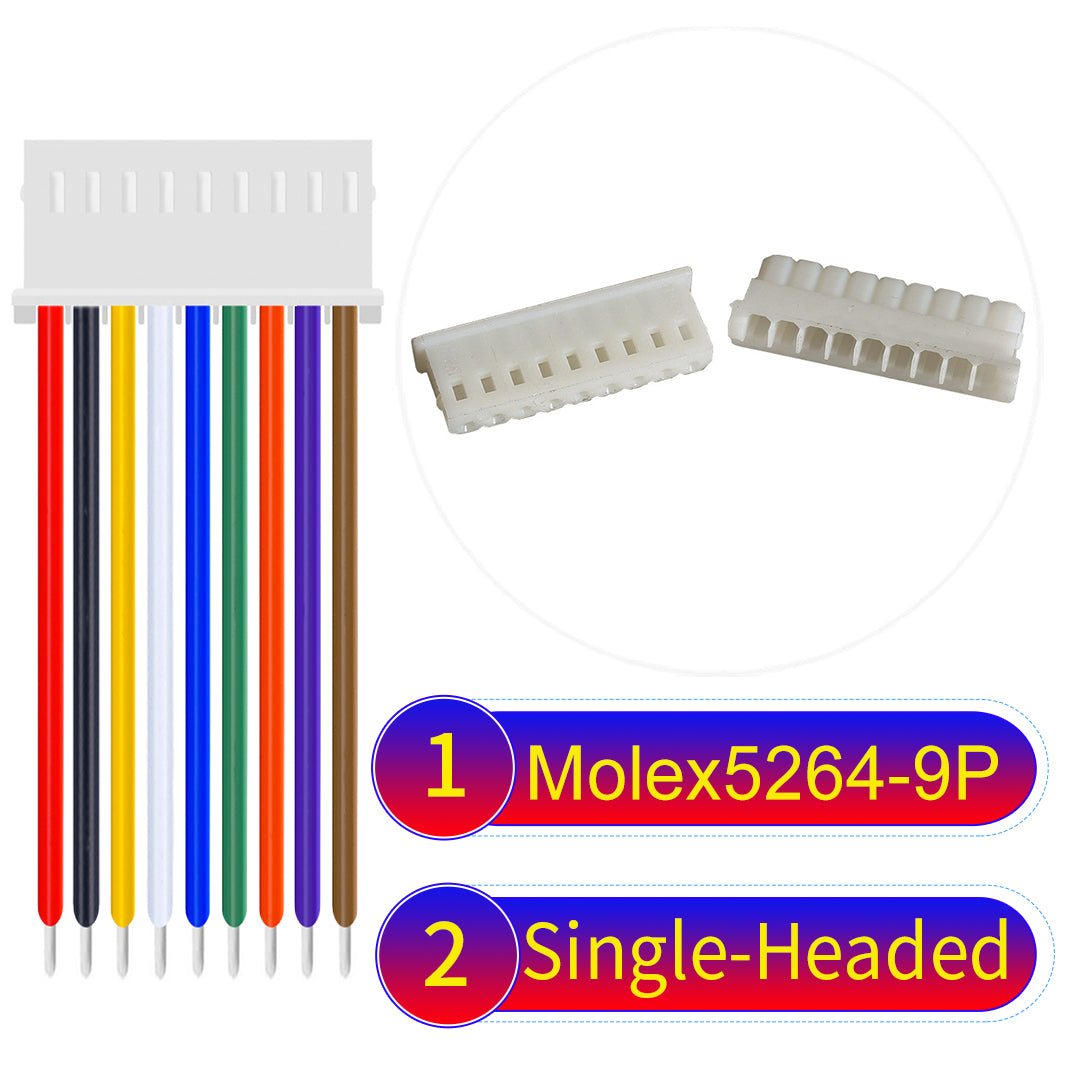
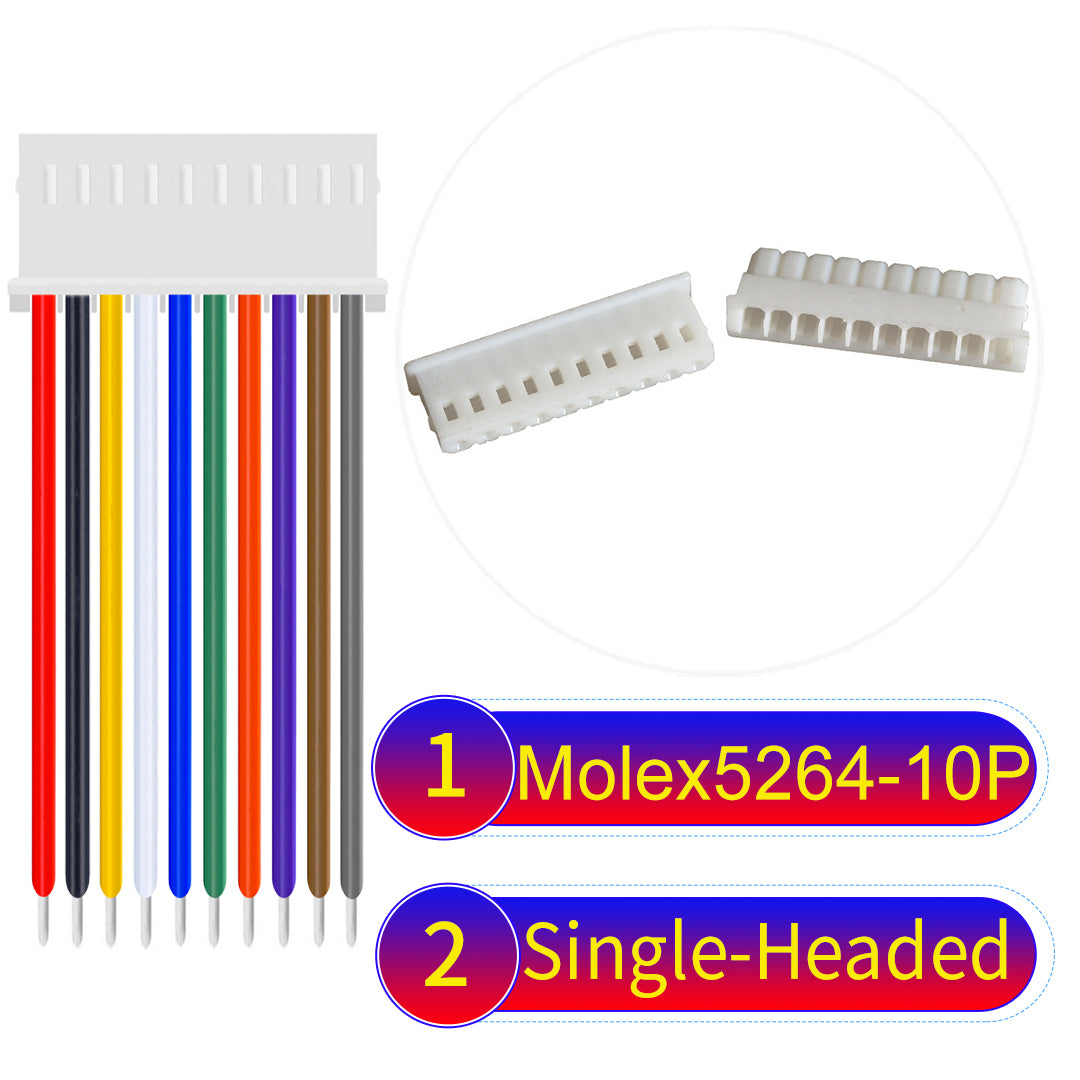
The Molex Mini-SPOX MX5264 2.5mm Single-Head Pre-Crimped Cable features a genuine 5264 series friction-lock receptacle housing on one end and bare stripped-and-tinned leads on the other — the standard single-ended pigtail format for wire-to-board connections where one end solders directly to a PCB pad, screw terminal, or custom connector.
Built on 22AWG UL1007 PVC wire with phosphor-bronze 5263 crimp terminals, this assembly mates directly to Molex 5267 (vertical) or 5268 (right-angle) PCB headers. The 2.50 mm pitch and friction-lock housing make it the engineering-grade alternative to JST XH and KK 2510 assemblies at the same pitch.
Key Features
- Molex 5264 friction-lock housing — 2.50 mm pitch, single-row, polarized; mates to 5267 vertical and 5268 right-angle PCB headers
- Bare tinned pigtail other end — pre-tinned for direct PCB pad soldering or custom termination
- 2–12 pin options — select the exact circuit count for your application
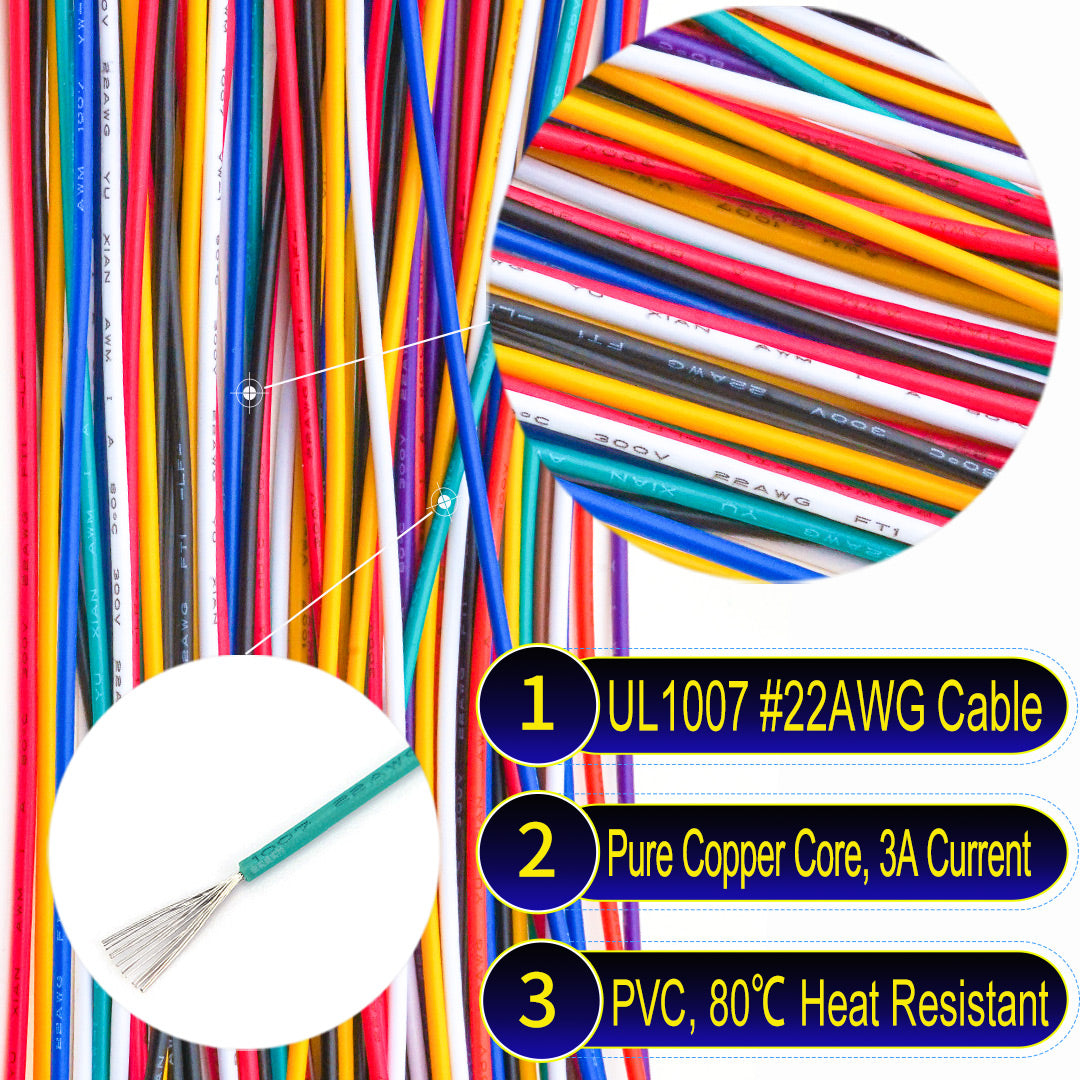
- 22AWG UL1007 PVC wire — rated 300V, -25°C to +80°C, color-coded conductors
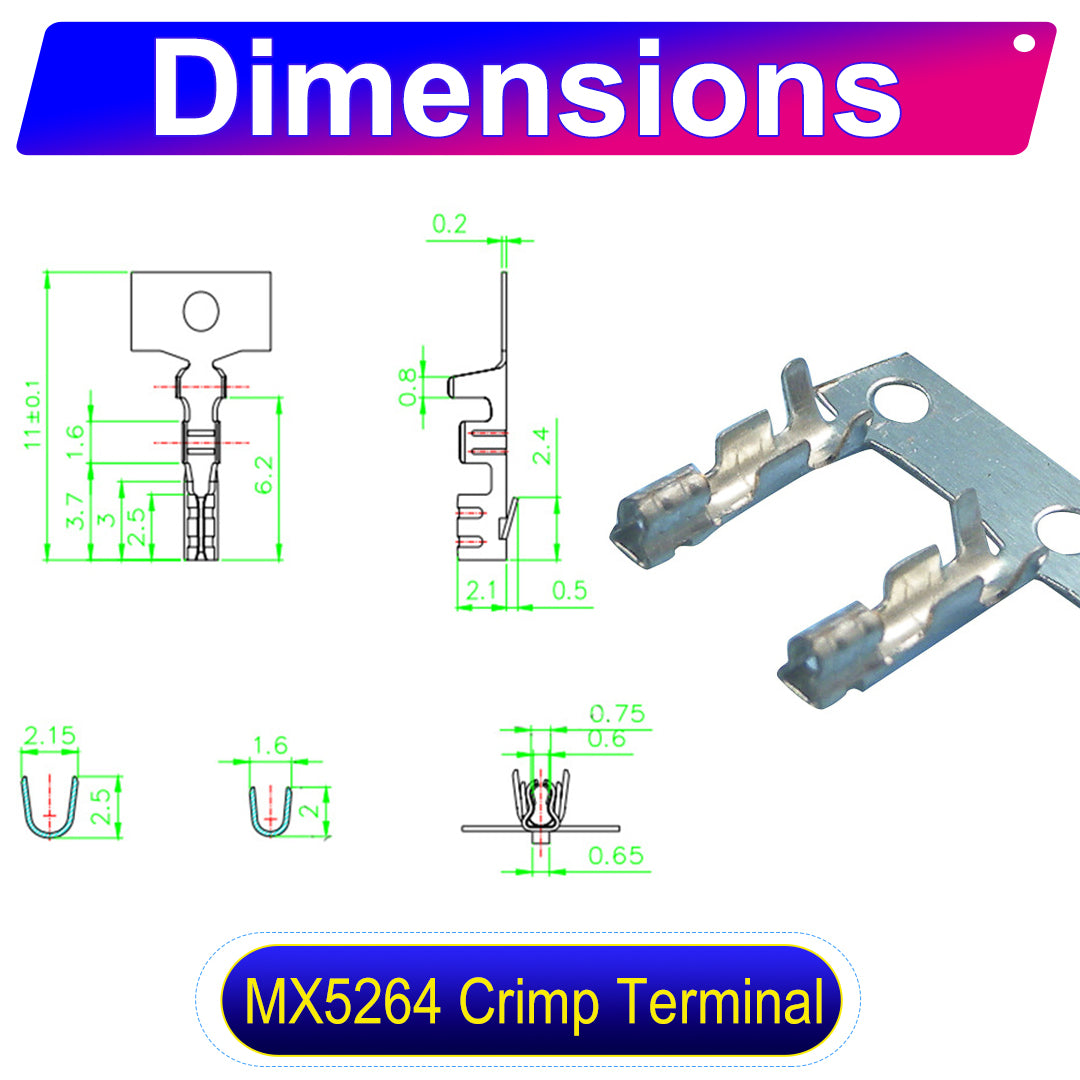
- Phosphor bronze 5263 terminals — tin-plated (min 0.889 μm), superior spring retention vs brass alternatives
- 3A / 250V rating — suitable for signal and low-power lines
- Connector operating temperature: -55°C to +105°C — wider than JST XH (-25°C) and KK 2510 (-40°C)
- EU RoHS (2015/863), China RoHS, REACH SVHC Not Contained (Feb 2026), Low-Halogen IEC 61249-2-21
Technical Specifications
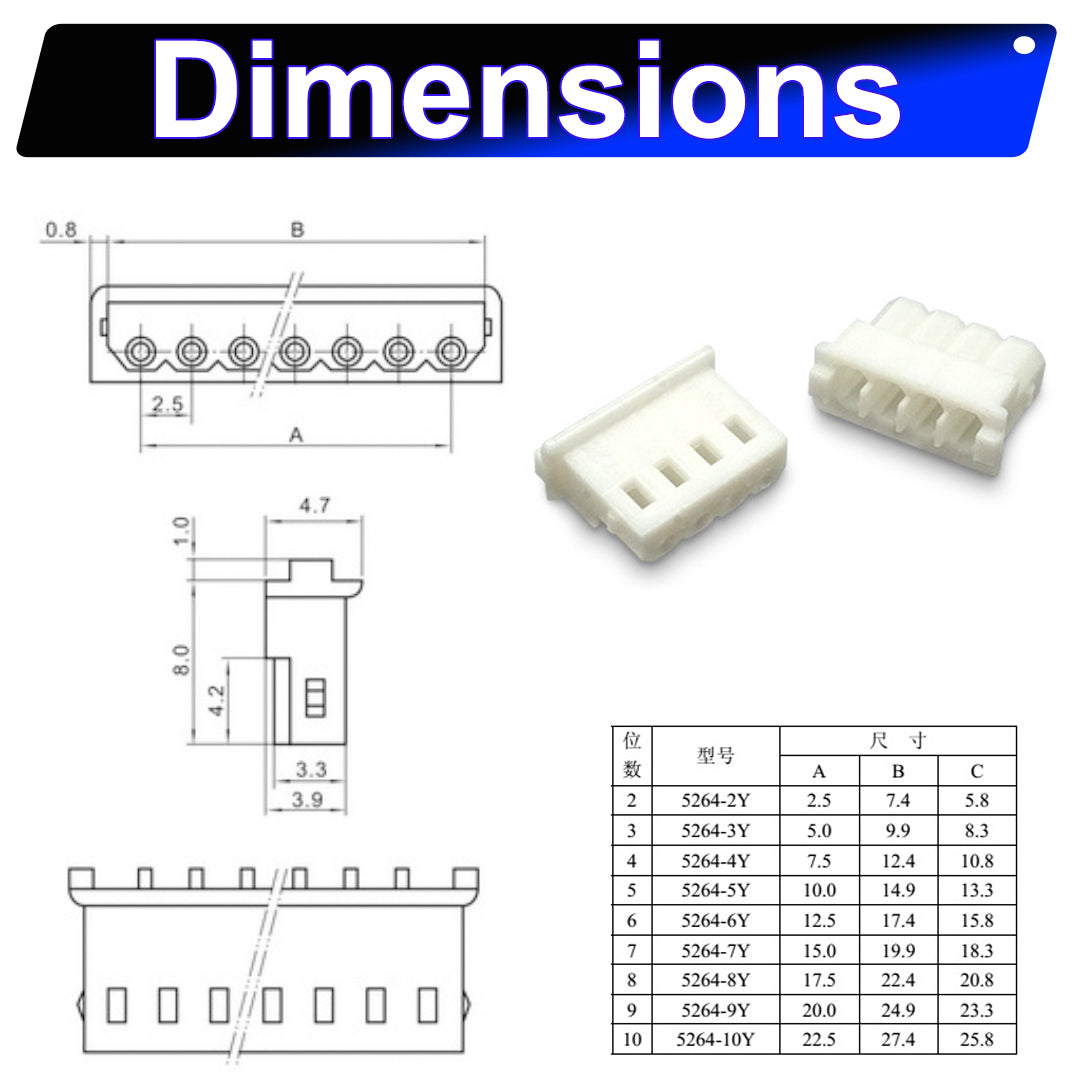
- Connector series: Molex Mini-SPOX 5264 (MX5264), 2.50 mm pitch
- Assembly type: Single-ended — 5264 housing one end, bare tinned pigtail other end
- Pin count: 2–12 (select variant)
- Wire gauge: 22 AWG | Wire standard: UL1007 PVC, 300V
- Current: 3A per circuit | Voltage: 250V AC/DC
- Connector operating temperature: -55°C to +105°C
- Wire temperature rating: -25°C to +80°C (UL1007)
- Terminal material: Phosphor Bronze, tin-plated | Housing: Nylon PA66, UL 94V-0
- Locking: Friction lock (no positive latch) | Mating headers: Molex 5267 / 5268
- Mating cycles: 30 minimum | UL file: E29179
Typical Applications
- Consumer electronics internal signal harnesses (display, button, LED, sensor wiring)
- Battery management system (BMS) cell-voltage monitoring leads
- Industrial instrumentation and data loggers
- Medical device internal wiring (IEC 60601-1 compliant designs)
- Robotics: encoder feedback, limit switch, sensor bus connections
- PCB prototyping — no crimp tooling required
- LED lighting and display panel connections
Mating headers: Molex 5267 (vertical through-hole) or 5268 (right-angle through-hole). Housing is polarized — one mating orientation only.



Blog posts
View all-

IC Chips & Discrete Components Express Shipping...
Shipping IC chips and discrete electronic components internationally requires more than choosing a carrier. ESD-safe packaging, correct HS codes, accurate customs declarations, and carrier selection for your destination all determine...
IC Chips & Discrete Components Express Shipping...
Shipping IC chips and discrete electronic components internationally requires more than choosing a carrier. ESD-safe packaging, correct HS codes, accurate customs declarations, and carrier selection for your destination all determine...
-

From Prototype to Mass Production — How to Scal...
Scaling from prototype to mass production is the most critical transition in a hardware product's lifecycle. The sourcing strategy that works for 10 prototype boards — cut tape, spot pricing,...
From Prototype to Mass Production — How to Scal...
Scaling from prototype to mass production is the most critical transition in a hardware product's lifecycle. The sourcing strategy that works for 10 prototype boards — cut tape, spot pricing,...
-

ISO 9001 Electronic Component Distributor — Wha...
ISO 9001:2015 certification is the most widely recognized quality management standard in the world — but what does it actually mean when an electronic component distributor claims to be ISO...
ISO 9001 Electronic Component Distributor — Wha...
ISO 9001:2015 certification is the most widely recognized quality management standard in the world — but what does it actually mean when an electronic component distributor claims to be ISO...


