



74HC595 8-Bit Serial-In Parallel-Out Shift Register IC DIP-16 – Output Latch, 3-State
74HC595 8-Bit Serial-In Parallel-Out Shift Register IC DIP-16 – Output Latch, 3-State
Compatible JST cables for sensors and modules — secure & reliable. Shop now.

Couldn't load pickup availability
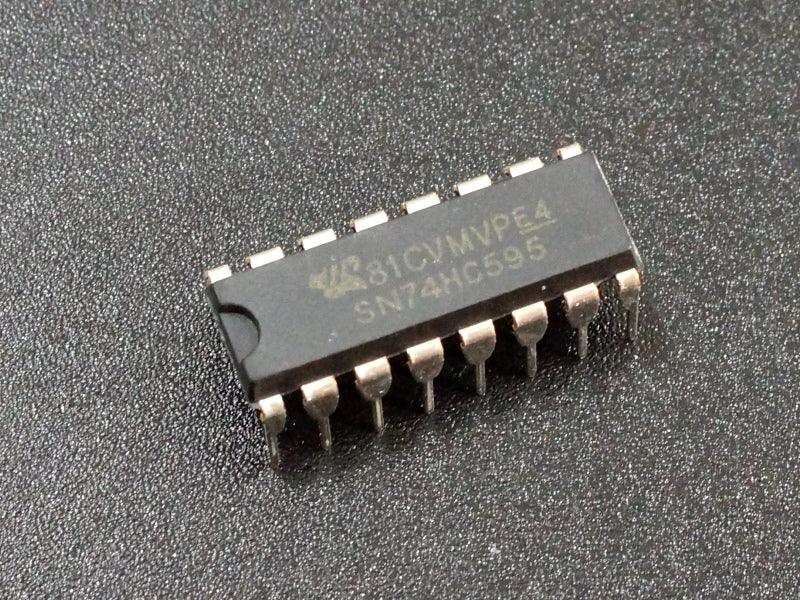
74HC595 8-Bit Serial-In Parallel-Out Shift Register IC – DIP-16
The 74HC595 is the most popular output expander IC in the maker and embedded systems world – it takes serial data from a microcontroller over 3 wires (DATA, CLOCK, LATCH) and drives 8 parallel outputs simultaneously. Connect one to an Arduino and drive 8 LEDs, relays, or digital outputs using only 3 GPIO pins. Cascade multiple ICs to drive 16, 24, or 32 outputs with the same 3-wire interface. The output latch ensures all 8 outputs update simultaneously, preventing glitches during data shifting.
Electrical Specifications
- Part Number: 74HC595 / SN74HC595N / MC74HC595AN
- Package: DIP-16 (through-hole, 2.54mm pitch)
- Function: 8-bit serial-in, parallel-out shift register with output latch
- Supply Voltage: 2V – 6V
- Clock Frequency: Up to 25MHz at 4.5V
- Output Drive Current: ±25mA per pin (70mA total)
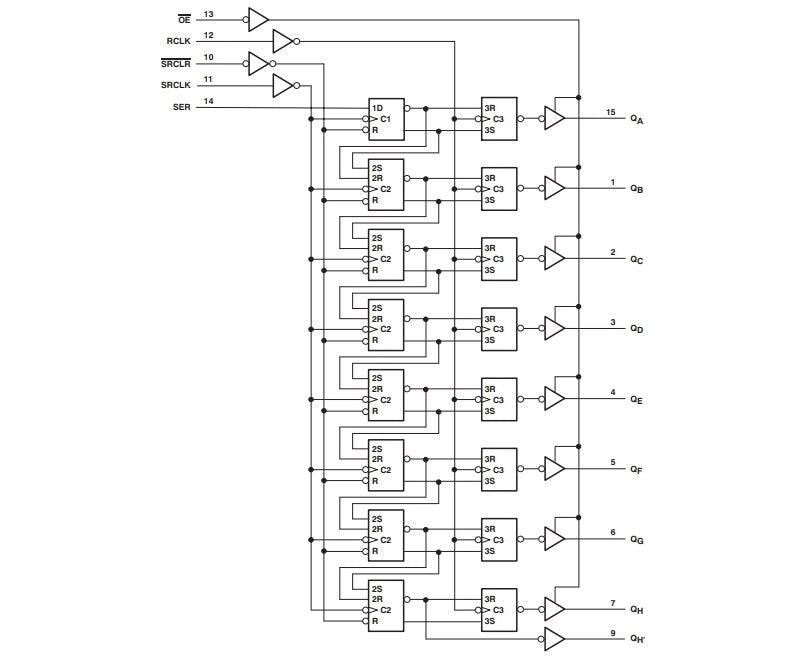
- Output Enable (̅O̅E̅): Active LOW – tri-state all outputs when HIGH
- Master Reset (̅M̅R̅): Active LOW – clears shift register (not output latch)
- Operating Temperature: −40°C to +125°C
How the 74HC595 Works
- Step 1 – Shift: Clock in 8 bits of data via DS (serial data) and SHCP (shift clock) – data enters the shift register
- Step 2 – Latch: Pulse STCP (storage clock / latch) – all 8 bits transfer to output latch simultaneously
- Result: Q0–Q7 outputs update all at once – no glitches during shifting
- Cascade: Connect Q7S (serial output) of IC1 to DS of IC2 for 16-bit expansion
Arduino Wiring (3 Pins)
- DS (Pin 14) → Arduino data pin (e.g., D11)
- SHCP (Pin 11) → Arduino clock pin (e.g., D13)
- STCP (Pin 12) → Arduino latch pin (e.g., D8)
- ̅O̅E̅ (Pin 13) → GND (always enabled)
- ̅M̅R̅ (Pin 10) → VCC (no reset)
Typical Applications
- Arduino GPIO expansion: Drive 8 LEDs, relays, or digital outputs with 3 pins
- LED matrix driver: Row or column driver for LED matrix displays
- 7-segment display driver: Drive 7-segment displays via serial interface
- Relay board control: Control 8 relays from 3 microcontroller pins
- Cascaded expansion: Chain for 16, 24, 32+ digital outputs
Package Contents
- 1 × 74HC595 DIP-16 8-bit serial-in parallel-out shift register IC
3 pins in, 8 outputs out – the 74HC595 is the essential output expander for Arduino, Raspberry Pi, and any microcontroller project needing more digital outputs.

Blog posts
View all-

IC Chips & Discrete Components Express Shipping...
Shipping IC chips and discrete electronic components internationally requires more than choosing a carrier. ESD-safe packaging, correct HS codes, accurate customs declarations, and carrier selection for your destination all determine...
IC Chips & Discrete Components Express Shipping...
Shipping IC chips and discrete electronic components internationally requires more than choosing a carrier. ESD-safe packaging, correct HS codes, accurate customs declarations, and carrier selection for your destination all determine...
-

From Prototype to Mass Production — How to Scal...
Scaling from prototype to mass production is the most critical transition in a hardware product's lifecycle. The sourcing strategy that works for 10 prototype boards — cut tape, spot pricing,...
From Prototype to Mass Production — How to Scal...
Scaling from prototype to mass production is the most critical transition in a hardware product's lifecycle. The sourcing strategy that works for 10 prototype boards — cut tape, spot pricing,...
-

ISO 9001 Electronic Component Distributor — Wha...
ISO 9001:2015 certification is the most widely recognized quality management standard in the world — but what does it actually mean when an electronic component distributor claims to be ISO...
ISO 9001 Electronic Component Distributor — Wha...
ISO 9001:2015 certification is the most widely recognized quality management standard in the world — but what does it actually mean when an electronic component distributor claims to be ISO...


