



AC Power Adapter 7.5V DC 1A — 5.5×2.1mm Barrel, Universal 100–240V AC Input, Right-Angle Plug
AC Power Adapter 7.5V DC 1A 5.5×2.1mm Barrel, Universal 100–240V AC Input, Right-Angle Plug
Compatible JST cables for sensors and modules — secure & reliable. Shop now.

Couldn't load pickup availability
AC Power Adapter — 7.5V DC / 1A, Universal Input, 5.5×2.1mm Barrel Plug
The 7.5V DC 1A AC power adapter is the optimal power supply for breadboard power supply modules, Arduino boards, and any project using linear voltage regulators in the 3.3V–6V output range. The 7.5V output voltage is deliberately chosen: it provides enough headroom for 5V linear regulators (7805, AMS1117-5.0) to regulate cleanly, while minimizing the voltage drop across the regulator — reducing heat dissipation and allowing the regulator to deliver more current safely compared to a 9V or 12V adapter.
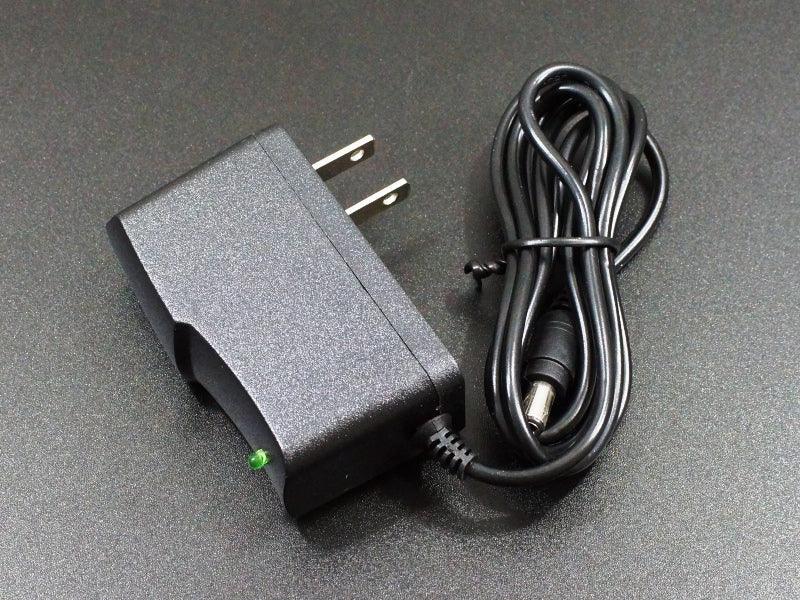
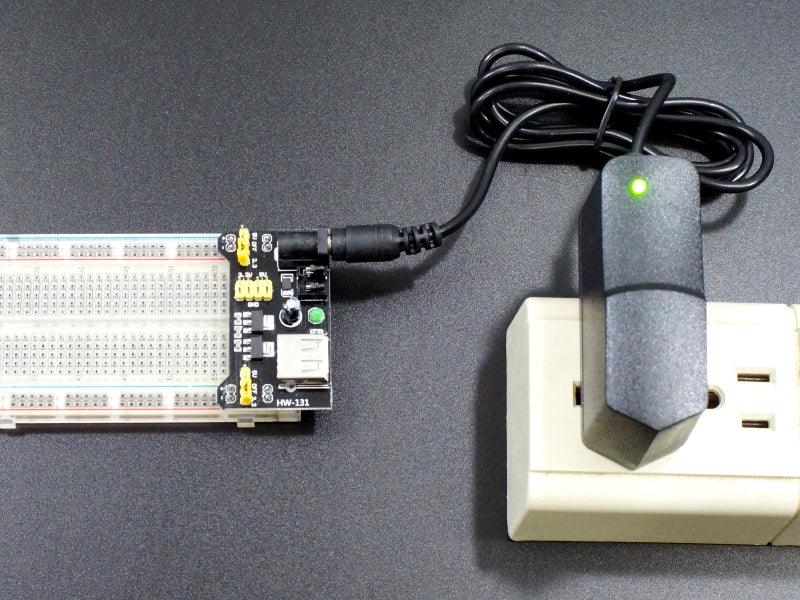
The right-angle slim housing mounts parallel to the wall outlet or power strip, occupying only one socket position instead of blocking adjacent outlets. Universal 100–240V AC input works worldwide without adapters.
Key Specifications
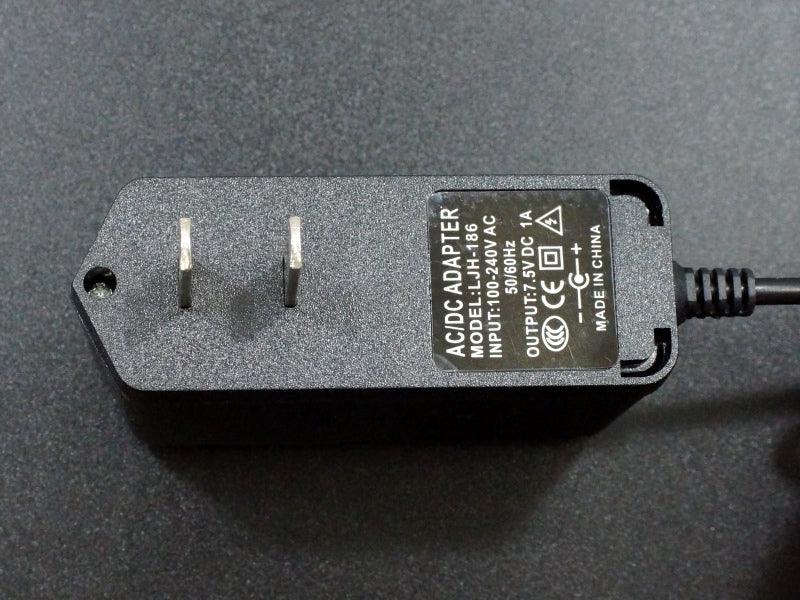
| Input Voltage | 100–240V AC, 50/60Hz (universal) |
| Output Voltage (nominal) | 7.5V DC |
| Output Voltage (measured) | 7.6V no load → 7.4V @ 500mA → 7.2V @ 1A |
| Output Current (max) | 1A continuous |
| Output Ripple | 100–300mV (varies with load) |
| Switching Frequency | ~62kHz |
| Efficiency | ~76% typical |
| DC Plug | 5.5mm O.D. × 2.1mm I.D. barrel (center positive) |
| Cable Length | 105cm (42″) |
| Housing | Right-angle slim, saves outlet space |
| Dimensions | 73 × 26 × 43mm (2.9″ × 1″ × 1.7″) |
| Power LED | Green LED indicator when AC power applied |
Why 7.5V Instead of 9V or 12V?
Linear voltage regulators dissipate power as heat: P = (Vin – Vout) × Iout. With a 9V adapter powering a 5V regulator at 500mA: P = (9–5) × 0.5 = 2W of heat. With a 7.5V adapter: P = (7.5–5) × 0.5 = 1.25W — a 37% reduction in heat. This means the regulator runs cooler, can deliver more current without a heatsink, and the overall system is more efficient. For breadboard power supply modules (MB102, YwRobot) and Arduino boards with onboard 5V regulators, 7.5V is the ideal input voltage.
Typical Applications
- Breadboard power supply modules (MB102, YwRobot, HW-131) — optimal input voltage for 3.3V and 5V output
- Arduino Uno, Mega, and Leonardo — powers via DC barrel jack, onboard regulator runs cooler than with 9V/12V
- Linear regulator projects (7805, 7806, AMS1117) — minimizes regulator heat dissipation
- Raspberry Pi via barrel-to-USB adapter — with appropriate step-down converter
- Sensor and IoT node power supply — clean regulated 7.5V input for onboard regulators
- Electronics lab bench supply — general-purpose 7.5V / 1A regulated DC source
Compatibility
The 5.5×2.1mm center-positive barrel plug is the most common DC power connector standard, compatible with Arduino Uno/Mega DC jacks, MB102 breadboard power supplies, most DC-DC converter modules, and the majority of electronics project enclosures and development boards worldwide.
Package Contents
- 1 × AC Power Adapter 7.5V DC / 1A (5.5×2.1mm barrel, right-angle plug, 105cm cable)

Blog posts
View all-

IC Chips & Discrete Components Express Shipping...
Shipping IC chips and discrete electronic components internationally requires more than choosing a carrier. ESD-safe packaging, correct HS codes, accurate customs declarations, and carrier selection for your destination all determine...
IC Chips & Discrete Components Express Shipping...
Shipping IC chips and discrete electronic components internationally requires more than choosing a carrier. ESD-safe packaging, correct HS codes, accurate customs declarations, and carrier selection for your destination all determine...
-

From Prototype to Mass Production — How to Scal...
Scaling from prototype to mass production is the most critical transition in a hardware product's lifecycle. The sourcing strategy that works for 10 prototype boards — cut tape, spot pricing,...
From Prototype to Mass Production — How to Scal...
Scaling from prototype to mass production is the most critical transition in a hardware product's lifecycle. The sourcing strategy that works for 10 prototype boards — cut tape, spot pricing,...
-

ISO 9001 Electronic Component Distributor — Wha...
ISO 9001:2015 certification is the most widely recognized quality management standard in the world — but what does it actually mean when an electronic component distributor claims to be ISO...
ISO 9001 Electronic Component Distributor — Wha...
ISO 9001:2015 certification is the most widely recognized quality management standard in the world — but what does it actually mean when an electronic component distributor claims to be ISO...


