



24C02N I2C EEPROM — 2K-Bit (256×8), DIP-8, 5V, Arduino Compatible
24C02N I2C EEPROM 2K-Bit (256×8), DIP-8, 5V, Arduino Compatible
Compatible JST cables for sensors and modules — secure & reliable. Shop now.

Couldn't load pickup availability
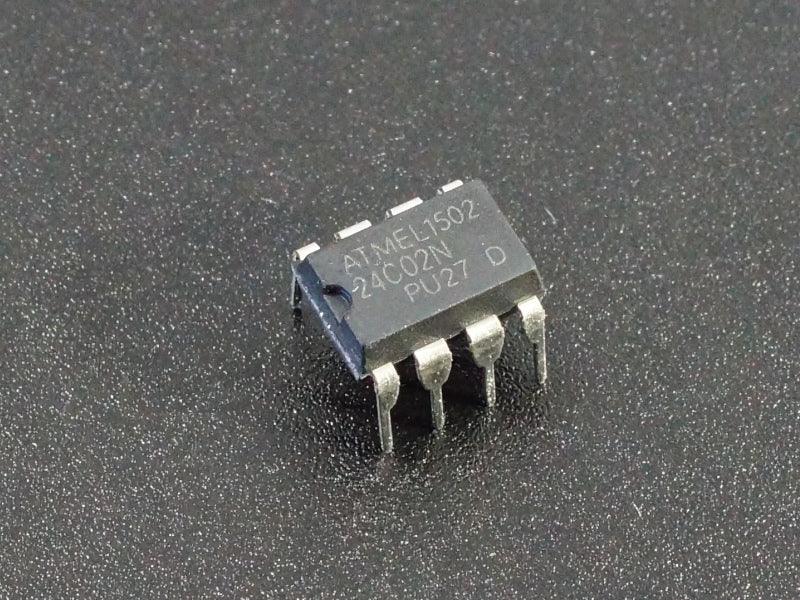
24C02N I2C EEPROM — 2K-Bit (256×8 Bytes), DIP-8
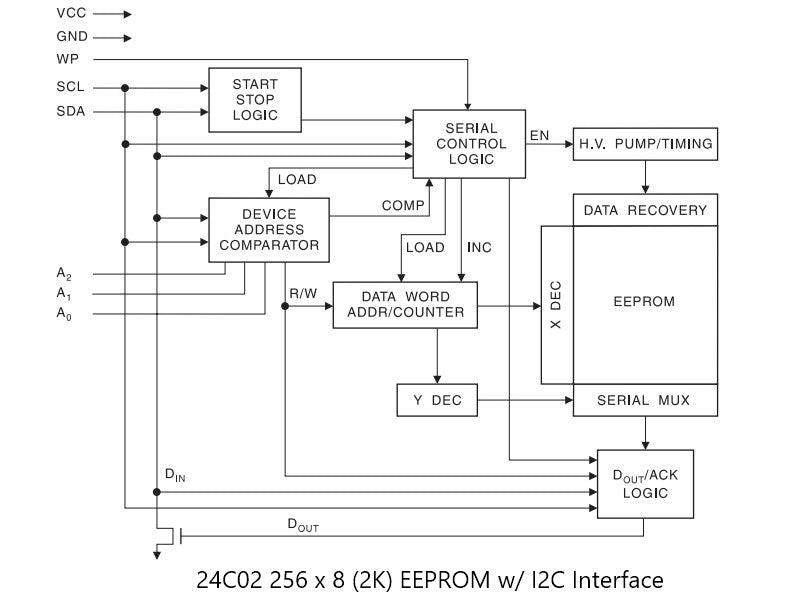
The 24C02N is a 2K-bit (256 × 8 bytes) serial EEPROM with an I2C two-wire interface, packaged in a standard DIP-8 through-hole package. It provides simple, reliable non-volatile memory storage for microcontroller projects — ideal for storing configuration data, calibration values, user settings, and small data logs that must survive power cycles. Up to 8 devices can share the same I2C bus using the three address pins (A0–A2).
Key Specifications
| Parameter | Value |
|---|---|
| Memory Size | 2K-bit (256 × 8 bytes) |
| Interface | I2C (2-wire serial) |
| Base I2C Address | 0x50 |
| Address Pins | A0, A1, A2 (up to 8 devices per bus) |
| Supply Voltage | 4.5V – 5.5V |
| Write Protect | WP pin (pull high to enable write protection) |
| Page Write Size | 8 bytes |
| Write Endurance | 1,000,000 cycles |
| Data Retention | 100 years |
| Package | DIP-8 (through-hole) |
Why Use External EEPROM?
- Non-volatile storage — data survives power loss, unlike SRAM or variables in RAM
- Preserve MCU flash — store frequently-changing data in EEPROM instead of wearing out MCU flash
- Multiple devices on one bus — up to 8 × 24C02 on a single I2C bus = 2KB total addressable EEPROM
- Write protection — WP pin allows hardware write-locking of stored data
- Simple I2C interface — works with Arduino Wire.h library out of the box
Wiring (Arduino)
| 24C02N Pin | Connection |
|---|---|
| VCC (pin 8) | 5V |
| GND (pin 4) | GND |
| SCL (pin 6) | Arduino SCL (A5 on Uno) |
| SDA (pin 5) | Arduino SDA (A4 on Uno) |
| A0, A1, A2 (pins 1–3) | GND (for address 0x50) |
| WP (pin 7) | GND (write enabled) |
Typical Applications
- Storing device configuration and calibration data
- User settings and preferences in embedded systems
- Small data logging (sensor readings, event counters)
- Boot configuration storage for microcontrollers
- Unique device ID and serial number storage
Frequently Asked Questions
Q: How do I use this with Arduino?
Use the Arduino Wire.h library for raw I2C read/write, or install the extEEPROM library for a higher-level interface. Ground all address pins (A0–A2) and WP for basic single-device operation at address 0x50.
Q: Can I use multiple 24C02N chips on the same I2C bus?
Yes — up to 8 devices. Set each chip to a unique address by connecting A0–A2 to different combinations of VCC and GND (addresses 0x50–0x57).
Package Contents
- 1× 24C02N I2C EEPROM DIP-8 IC

Blog posts
View all-

IC Chips & Discrete Components Express Shipping...
Shipping IC chips and discrete electronic components internationally requires more than choosing a carrier. ESD-safe packaging, correct HS codes, accurate customs declarations, and carrier selection for your destination all determine...
IC Chips & Discrete Components Express Shipping...
Shipping IC chips and discrete electronic components internationally requires more than choosing a carrier. ESD-safe packaging, correct HS codes, accurate customs declarations, and carrier selection for your destination all determine...
-

From Prototype to Mass Production — How to Scal...
Scaling from prototype to mass production is the most critical transition in a hardware product's lifecycle. The sourcing strategy that works for 10 prototype boards — cut tape, spot pricing,...
From Prototype to Mass Production — How to Scal...
Scaling from prototype to mass production is the most critical transition in a hardware product's lifecycle. The sourcing strategy that works for 10 prototype boards — cut tape, spot pricing,...
-

ISO 9001 Electronic Component Distributor — Wha...
ISO 9001:2015 certification is the most widely recognized quality management standard in the world — but what does it actually mean when an electronic component distributor claims to be ISO...
ISO 9001 Electronic Component Distributor — Wha...
ISO 9001:2015 certification is the most widely recognized quality management standard in the world — but what does it actually mean when an electronic component distributor claims to be ISO...


