



3W High-Power LED Deep Red 650–670nm — 10-Pack
3W High-Power LED Deep Red 650–670nm 10-Pack
Compatible JST cables for sensors and modules — secure & reliable. Shop now.

Couldn't load pickup availability
3W High-Power LED Deep Red 650–670nm — 10-Pack
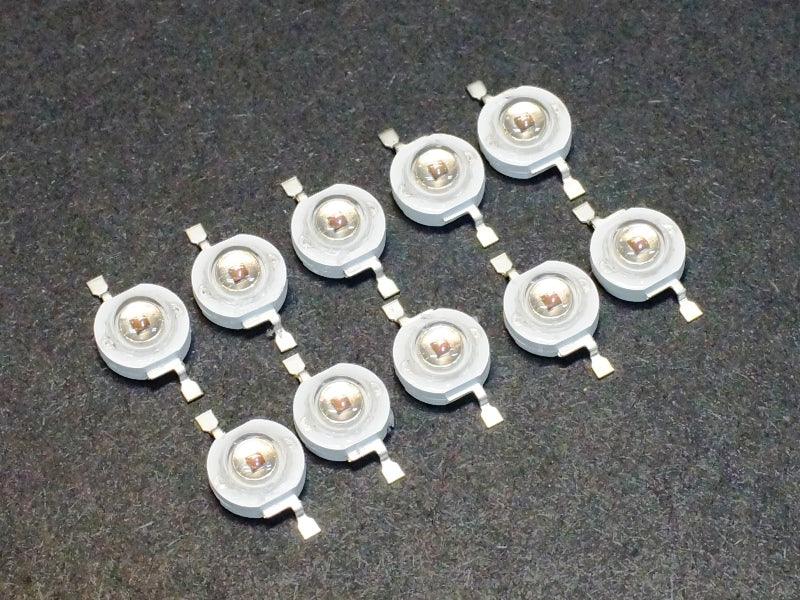
3W high-power deep red LEDs at 650–670nm — pack of 10. The 660nm deep red wavelength is the primary absorption peak of chlorophyll-a — the most important wavelength for plant photosynthesis, flowering, and fruiting. Deep red LEDs at 650–670nm are the single most effective wavelength for plant grow lights, driving photosynthesis more efficiently than any other color. Essential for DIY grow light panels targeting maximum plant growth.
Key Specifications
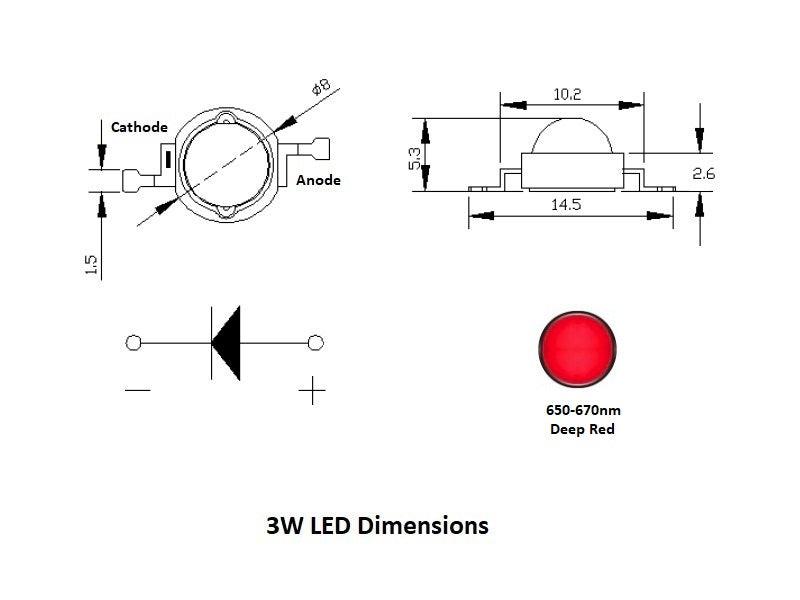
- Power: 3W | Wavelength: 650–670nm (Deep Red)
- Luminous flux: 100–150lm @ 700mA
- Forward voltage (Vf): 2.0–2.4V | Forward current (If): 700mA
- Viewing angle: 120°
- Mounting: Star PCB (20mm) or direct solder
- Pack: 10 LEDs
- Compliance: RoHS compliant
⚠️ Important: Heat Management Required
3W LEDs generate significant heat. Always mount on a heatsink and use a constant-current LED driver (700mA). Do not drive from Arduino directly.
Why 660nm Deep Red for Plants?
- ✅ Chlorophyll-a peak absorption — 660nm is the most efficient wavelength for photosynthesis
- ✅ Flowering and fruiting — red light triggers phytochrome Pr→Pfr conversion for flowering
- ✅ Highest photosynthetic efficiency — more plant growth per watt than any other wavelength
- ✅ 10-pack value — enough for a full grow light panel
Recommended Grow Light Spectrum Mix
- Blue (440–470nm): 20–30% — vegetative growth
- Deep Red (650–670nm, this pack): 60–70% — primary photosynthesis
- Orange (600–605nm): 10–20% — supplemental PAR
Typical Applications
- DIY plant grow light panel (primary red spectrum)
- Indoor farming and vertical garden LED lighting
- Seedling and clone propagation lighting
- Flowering and fruiting stage grow light
- Scientific plant research illumination at 660nm

Blog posts
View all-

IC Chips & Discrete Components Express Shipping...
Shipping IC chips and discrete electronic components internationally requires more than choosing a carrier. ESD-safe packaging, correct HS codes, accurate customs declarations, and carrier selection for your destination all determine...
IC Chips & Discrete Components Express Shipping...
Shipping IC chips and discrete electronic components internationally requires more than choosing a carrier. ESD-safe packaging, correct HS codes, accurate customs declarations, and carrier selection for your destination all determine...
-

From Prototype to Mass Production — How to Scal...
Scaling from prototype to mass production is the most critical transition in a hardware product's lifecycle. The sourcing strategy that works for 10 prototype boards — cut tape, spot pricing,...
From Prototype to Mass Production — How to Scal...
Scaling from prototype to mass production is the most critical transition in a hardware product's lifecycle. The sourcing strategy that works for 10 prototype boards — cut tape, spot pricing,...
-

ISO 9001 Electronic Component Distributor — Wha...
ISO 9001:2015 certification is the most widely recognized quality management standard in the world — but what does it actually mean when an electronic component distributor claims to be ISO...
ISO 9001 Electronic Component Distributor — Wha...
ISO 9001:2015 certification is the most widely recognized quality management standard in the world — but what does it actually mean when an electronic component distributor claims to be ISO...


