



MT3608 Mini Adjustable DC-DC Boost Module
MT3608 Mini Adjustable DC-DC Boost Module
Compatible JST cables for sensors and modules — secure & reliable. Shop now.

Couldn't load pickup availability
MT3608 Mini Adjustable DC-DC Boost Module — 2.5–24V In / 5–28V Out / 1.5A
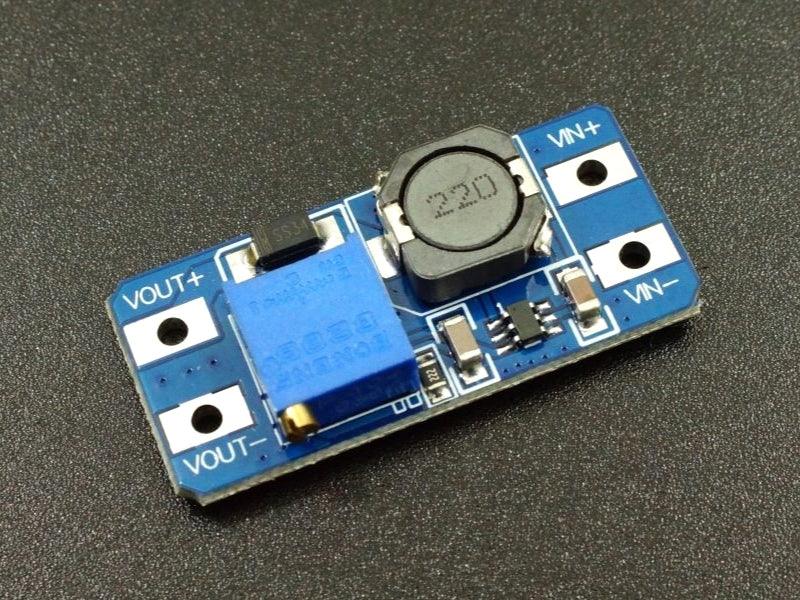
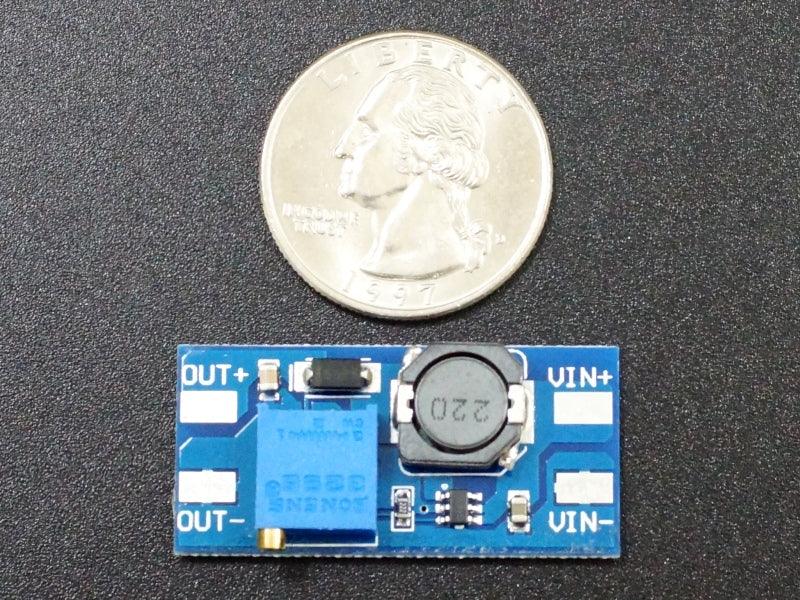
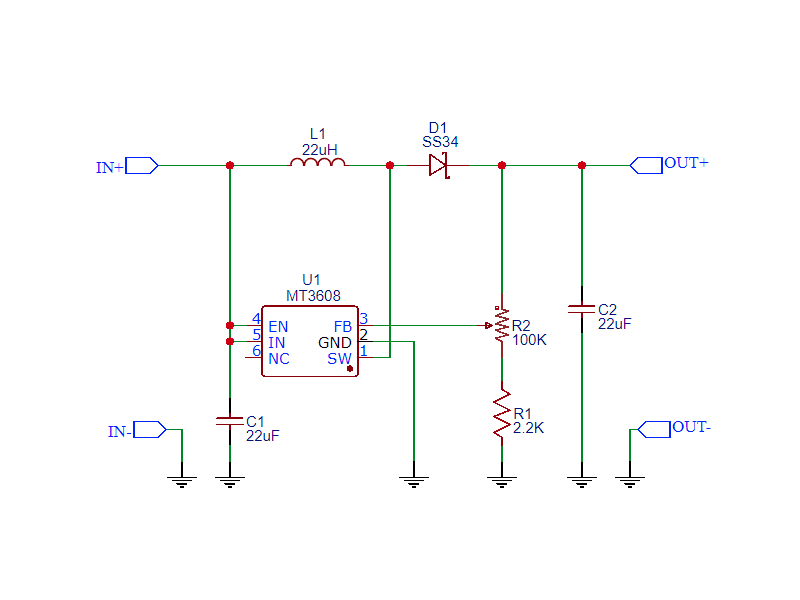
The MT3608 is a compact, low-cost DC-DC boost (step-up) converter module measuring just 37×17mm — small enough to fit on a breadboard or inside a compact enclosure. Based on the MT3608 boost converter IC running at 1.2MHz, it uses ceramic capacitors instead of electrolytic caps for long-term reliability and compact packaging. Output voltage is adjustable from 5V to 28V via a multi-turn potentiometer, with input voltage range of 2.5–24V.
Best suited for low-to-moderate current applications (up to 500mA–1A) where compact size and low cost are priorities. For higher current requirements, consider the LTC1871 (6A) or LM2577 (2A) modules.
Key Specifications
- Controller IC: MT3608
- Topology: Non-isolated boost (step-up) converter
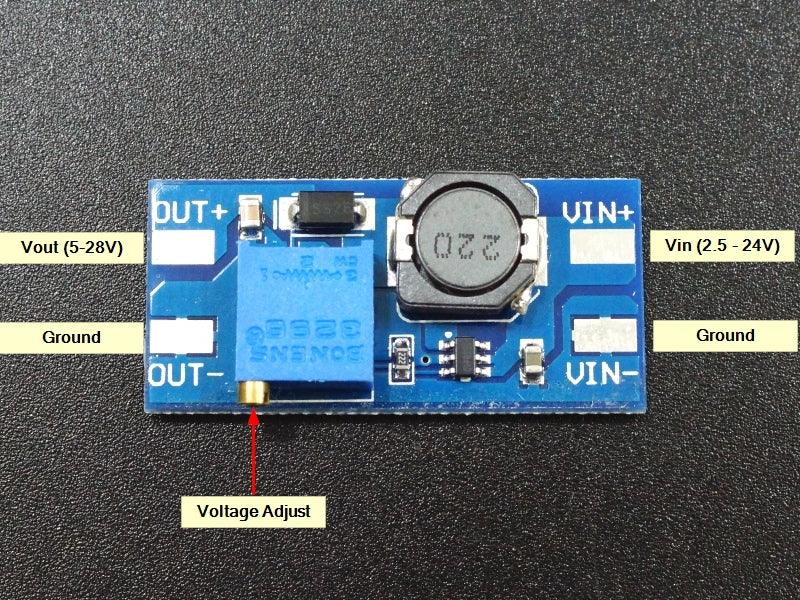
- Input Voltage Range: 2.5V – 24V
- Output Voltage Range: 5V – 28V (must be higher than input)
- Output Current: 1.5A peak / 1.0A recommended continuous
- Switching Frequency: 1.2MHz
- Efficiency: Up to 92%
- Output Ripple: ~500mV typical (add 100µF output cap to reduce to ~30mV)
- Voltage Adjustment: Multi-turn potentiometer (CCW = increase, CW = decrease)
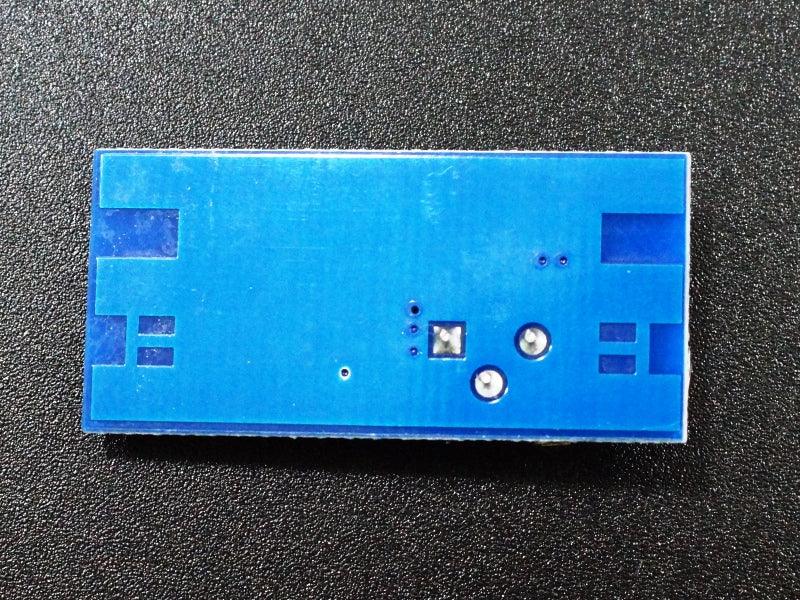
- Connections: Solder pads with through-holes (VIN+, VIN−, OUT+, OUT−)
- Idle Current Draw: ~1mA (disconnect from battery when not in use)
- Dimensions: 37 × 17 × 7mm
- Electrical Isolation: Non-isolated (VIN− and OUT− are common)
Performance Notes
- Best performance: Output current ≤500mA — good voltage and load regulation
- At 1A load: Output may drop ~1.3V from no-load setting — adjust pot accordingly
- Ripple reduction: Add 100µF electrolytic capacitor across output — reduces ripple from 900mV to 30mV in worst case
- Voltage regulation: 5–9V input variation causes ~0.11V output change at 500mA load
- Thermal protection: Built-in overcurrent and thermal shutdown in MT3608 IC
Wiring
- VIN+: Positive input (2.5–24V)
- VIN−: Input ground
- OUT+: Positive output (5–28V)
- OUT−: Output ground (common with VIN−)
- Solder wires or short jumper pins to pads for breadboard use
MT3608 vs. LM2577 vs. LTC1871
- MT3608: 2.5–24V in, 5–28V out, 1A. Smallest, lowest cost. For compact low-current boost applications.
- LM2577: 3.5–35V in, 5–56V out, 2A. Higher output voltage (up to 56V). For 48V applications.
- LTC1871: 3.5–30V in/out, 6A continuous. Highest current, built-in voltmeter. For high-power applications.
Typical Applications
- 3.7V LiPo → 5V USB output (power bank circuit)
- 5V USB → 9V/12V for Arduino projects requiring higher voltage
- 3.3V MCU supply → 5V for peripherals
- Solar panel (low voltage) → 5V/12V regulated output
- Compact embedded system voltage boost
- LED driver supply boost (5V → 12V for LED strips)
Package Contents
- 1 × MT3608 mini adjustable DC-DC boost module

Blog posts
View all-

IC Chips & Discrete Components Express Shipping...
Shipping IC chips and discrete electronic components internationally requires more than choosing a carrier. ESD-safe packaging, correct HS codes, accurate customs declarations, and carrier selection for your destination all determine...
IC Chips & Discrete Components Express Shipping...
Shipping IC chips and discrete electronic components internationally requires more than choosing a carrier. ESD-safe packaging, correct HS codes, accurate customs declarations, and carrier selection for your destination all determine...
-

From Prototype to Mass Production — How to Scal...
Scaling from prototype to mass production is the most critical transition in a hardware product's lifecycle. The sourcing strategy that works for 10 prototype boards — cut tape, spot pricing,...
From Prototype to Mass Production — How to Scal...
Scaling from prototype to mass production is the most critical transition in a hardware product's lifecycle. The sourcing strategy that works for 10 prototype boards — cut tape, spot pricing,...
-

ISO 9001 Electronic Component Distributor — Wha...
ISO 9001:2015 certification is the most widely recognized quality management standard in the world — but what does it actually mean when an electronic component distributor claims to be ISO...
ISO 9001 Electronic Component Distributor — Wha...
ISO 9001:2015 certification is the most widely recognized quality management standard in the world — but what does it actually mean when an electronic component distributor claims to be ISO...


