



HRS1H-S-DC5V Miniature PCB Relay — 5V Coil, 3A SPDT, 125/250VAC, 0.1″ Pitch, Through-Hole
HRS1H-S-DC5V Miniature PCB Relay 5V Coil, 3A SPDT, 125/250VAC, 0.1″ Pitch, Through-Hole
Compatible JST cables for sensors and modules — secure & reliable. Shop now.

Couldn't load pickup availability
HRS1H-S-DC5V — Miniature PCB Relay, 5V Coil, 3A SPDT, 125/250VAC
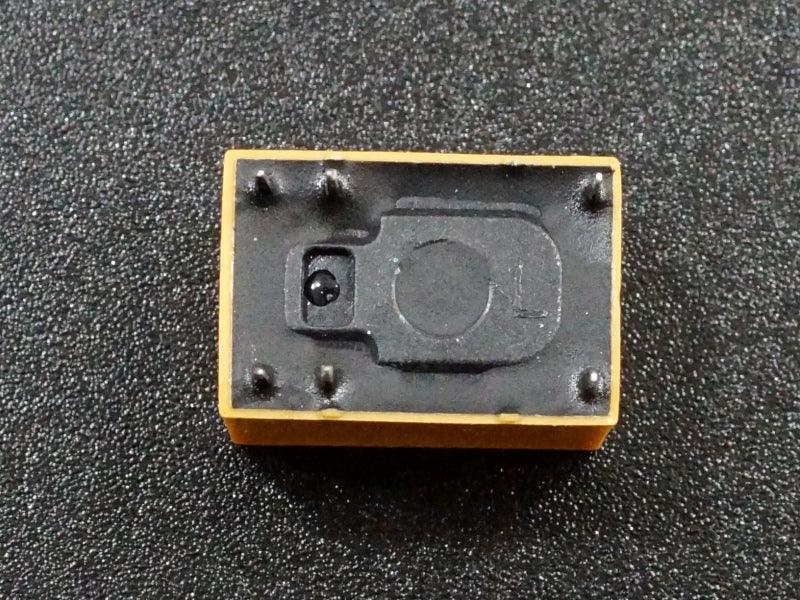
The HRS1H-S-DC5V is a miniature SPDT electromechanical relay with a 5V DC coil, rated to switch up to 125/250VAC or 24VDC at 3A (90W maximum). Its six pins are spaced on standard 0.1″ (2.54mm) centers, making it directly compatible with perfboard and prototype PCBs. This is the relay used in the majority of Chinese-made solid state relay modules and relay breakout boards — available here as a standalone component for custom relay circuit design, module repair, or homebrew switching applications.
Important power limit: Maximum switching power is 90W total. At 110VAC, maximum current is 0.8A. At 12VDC, full 3A is available. At 24VDC, full 3A is available.
Key Specifications
| Coil Voltage | 5V DC |
| Coil Resistance | 125Ω |
| Coil Current | 40mA @ 5V |
| Energize Voltage | ≥3.75V |
| Release Voltage | ≤0.5V |
| Contact Type | SPDT (NO + NC + COM) |
| Switching Voltage (AC) | 125V / 250V AC |
| Switching Voltage (DC) | 24V DC max |
| Switching Current | 3A max |
| Maximum Switching Power | 90W |
| Pin Spacing | 0.1″ (2.54mm) — perfboard compatible |
| Dimensions | 15.6 × 10.6 × 11.8mm |
| Manufacturer | HKE (Hongfa / HRS series) |
Pinout (viewed from pin side / bottom)
- COM — Common contact. Connect to load power source or ground. Two COM pins are provided; only one needs to be connected.
- NC — Normally Closed. Connected to COM when relay is de-energized. Opens when relay energizes.
- NO — Normally Open. Disconnected from COM when relay is de-energized. Closes when relay energizes.
- COIL (2 pins) — Connect one to 5V, other to ground (or transistor collector). Pins are interchangeable.
Driving the Relay from a Microcontroller
The relay coil draws 40mA at 5V — exceeding the 20–40mA maximum of most MCU GPIO pins. Do not drive directly from Arduino or ESP32 GPIO. Use a small NPN transistor (2N3904, 2N2222, PN2222A) as a driver:
- MCU GPIO → 2.2KΩ base resistor → transistor base
- Transistor collector → relay coil pin
- Relay coil other pin → 5V
- Transistor emitter → GND
- Flyback diode (1N4148 or 1N4001) across coil pins (cathode to 5V side) — protects transistor from back-EMF when relay de-energizes
Logic HIGH on MCU pin → transistor saturates → relay energizes. Logic LOW → relay de-energizes.
Inductive Load Protection
When switching inductive DC loads (motors, solenoids), add a flyback diode (1N4001 or larger) directly across the load terminals to prevent contact welding when the relay de-energizes.
Typical Applications
- Custom relay breakout board design (homebrew relay module)
- Relay module repair and replacement
- Low-current AC switching (lamps, fans, small appliances up to 90W)
- 12V/24V DC load switching (solenoids, motors, LED strips)
- Arduino and ESP32 relay driver circuits (with transistor driver)
- Industrial control panel relay replacement
Package Contents
- 1 × HRS1H-S-DC5V Miniature PCB Relay (5V coil, 3A SPDT, through-hole)



Blog posts
View all-

IC Chips & Discrete Components Express Shipping...
Shipping IC chips and discrete electronic components internationally requires more than choosing a carrier. ESD-safe packaging, correct HS codes, accurate customs declarations, and carrier selection for your destination all determine...
IC Chips & Discrete Components Express Shipping...
Shipping IC chips and discrete electronic components internationally requires more than choosing a carrier. ESD-safe packaging, correct HS codes, accurate customs declarations, and carrier selection for your destination all determine...
-

From Prototype to Mass Production — How to Scal...
Scaling from prototype to mass production is the most critical transition in a hardware product's lifecycle. The sourcing strategy that works for 10 prototype boards — cut tape, spot pricing,...
From Prototype to Mass Production — How to Scal...
Scaling from prototype to mass production is the most critical transition in a hardware product's lifecycle. The sourcing strategy that works for 10 prototype boards — cut tape, spot pricing,...
-

ISO 9001 Electronic Component Distributor — Wha...
ISO 9001:2015 certification is the most widely recognized quality management standard in the world — but what does it actually mean when an electronic component distributor claims to be ISO...
ISO 9001 Electronic Component Distributor — Wha...
ISO 9001:2015 certification is the most widely recognized quality management standard in the world — but what does it actually mean when an electronic component distributor claims to be ISO...


