



Keszoox
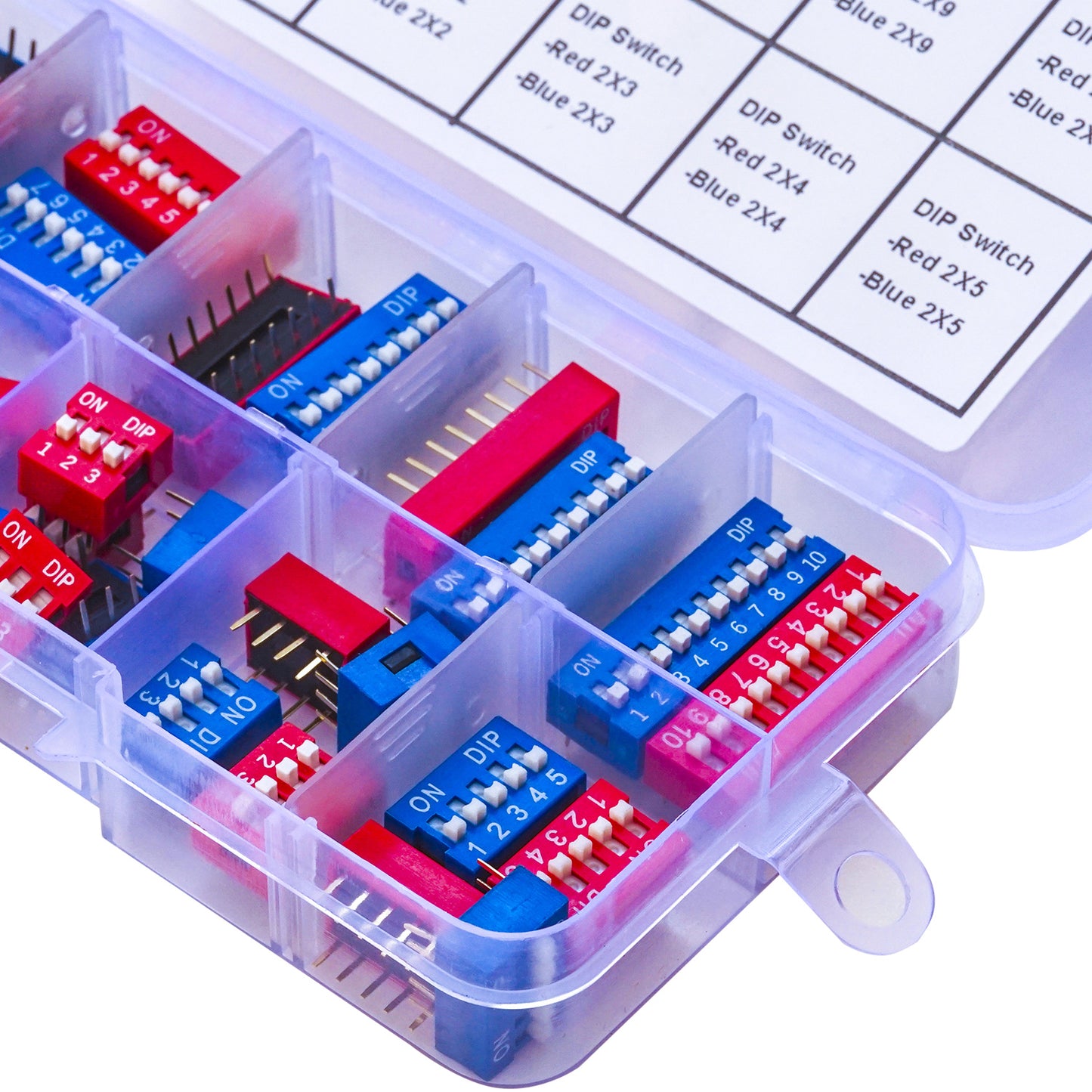
DIP Switch Assorted Kit — SPST, 2/3/4/6/8/10-Position, PCB Through-Hole
DIP Switch Assorted Kit SPST, 2/3/4/6/8/10-Position, PCB Through-Hole

Couldn't load pickup availability
DIP Switch Assorted Kit — SPST, 2/3/4/6/8/10-Position, PCB Through-Hole
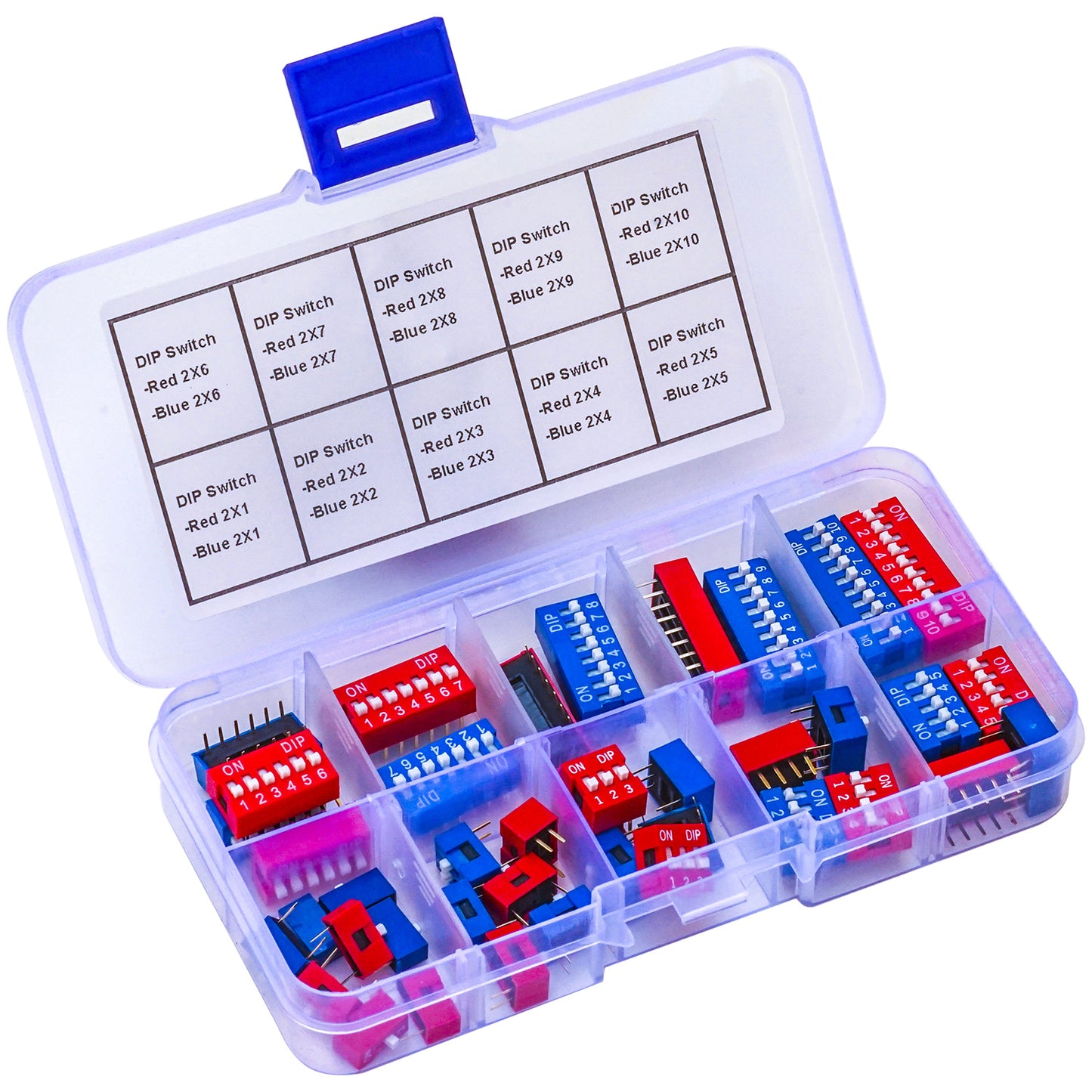
A comprehensive assorted kit of SPST (Single Pole Single Throw) DIP switches covering the most common position counts used in electronics design. DIP switches are the go-to solution for setting hardware configuration options, address selection, mode selection, and feature enable/disable on PCBs — without requiring firmware changes or external tools. Simply flip the switch to set the configuration, and it stays set until you change it.
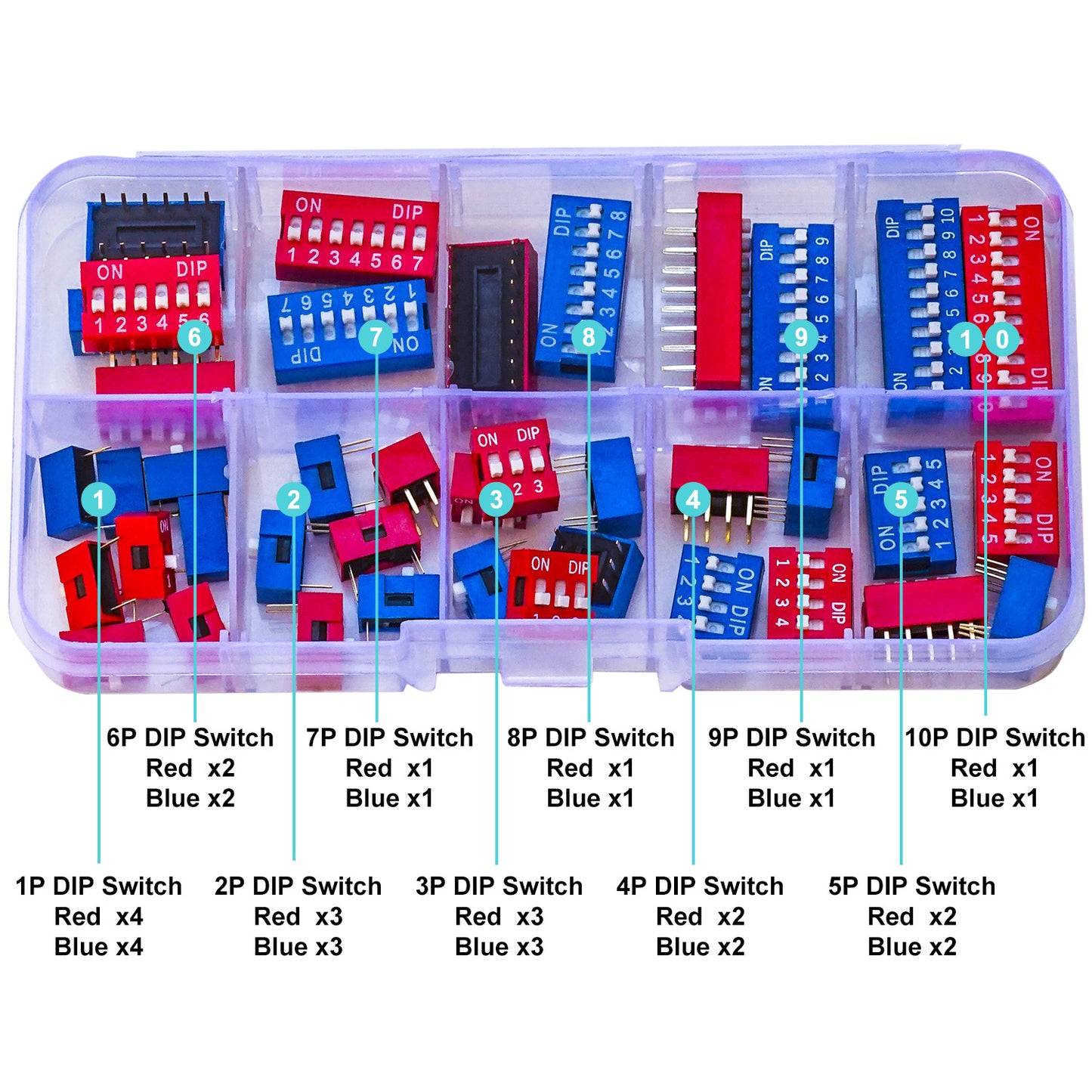
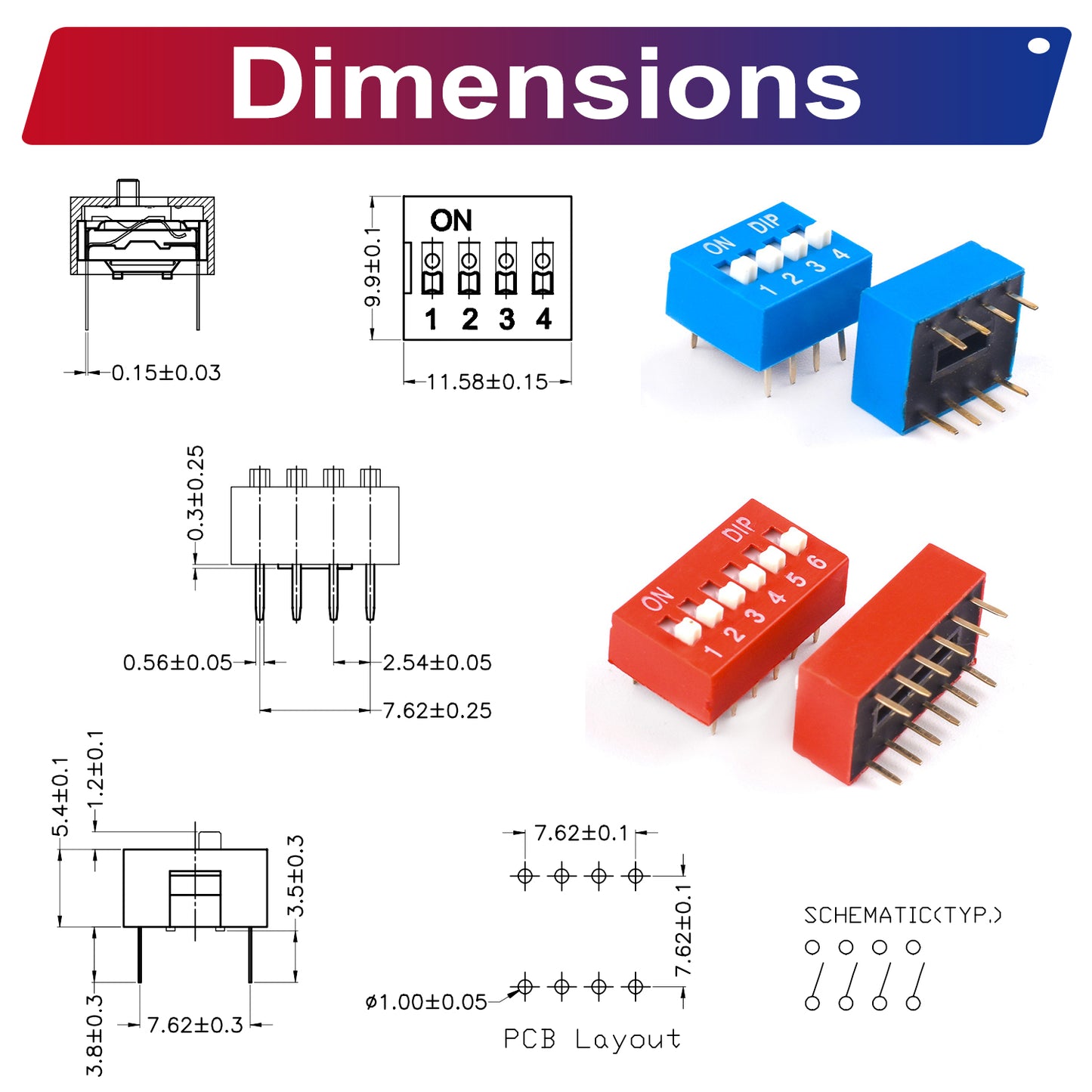
With a 2.54mm (0.1") pitch and standard through-hole PCB footprint, these DIP switches are compatible with all standard PCB layouts and breadboards. The kit covers 2, 3, 4, 6, 8, and 10-position variants, providing the right switch for every application from simple 2-bit address selection to complex 10-bit configuration panels.
Key Specifications
- Type: SPST (Single Pole Single Throw) | Positions: 2, 3, 4, 6, 8, 10
- Pitch: 2.54mm (0.1") | Mounting: Through-hole PCB
- Rated current: 25mA | Rated voltage: 24V DC
- Contact resistance: <100mΩ | Insulation resistance: >100MΩ
- Operating temperature: -20°C to +70°C | Mechanical life: 1,000 cycles
- Housing material: PA nylon, UL94 V-0 | Compliance: RoHS
Why Choose This Kit?
- ✅ Assorted position counts — 2, 3, 4, 6, 8, 10-position in one kit, covers every common configuration scenario
- ✅ 2.54mm standard pitch — compatible with all standard PCB layouts, breadboards, and DIP switch footprints
- ✅ SPST design — simple ON/OFF per position, ideal for binary configuration and address selection
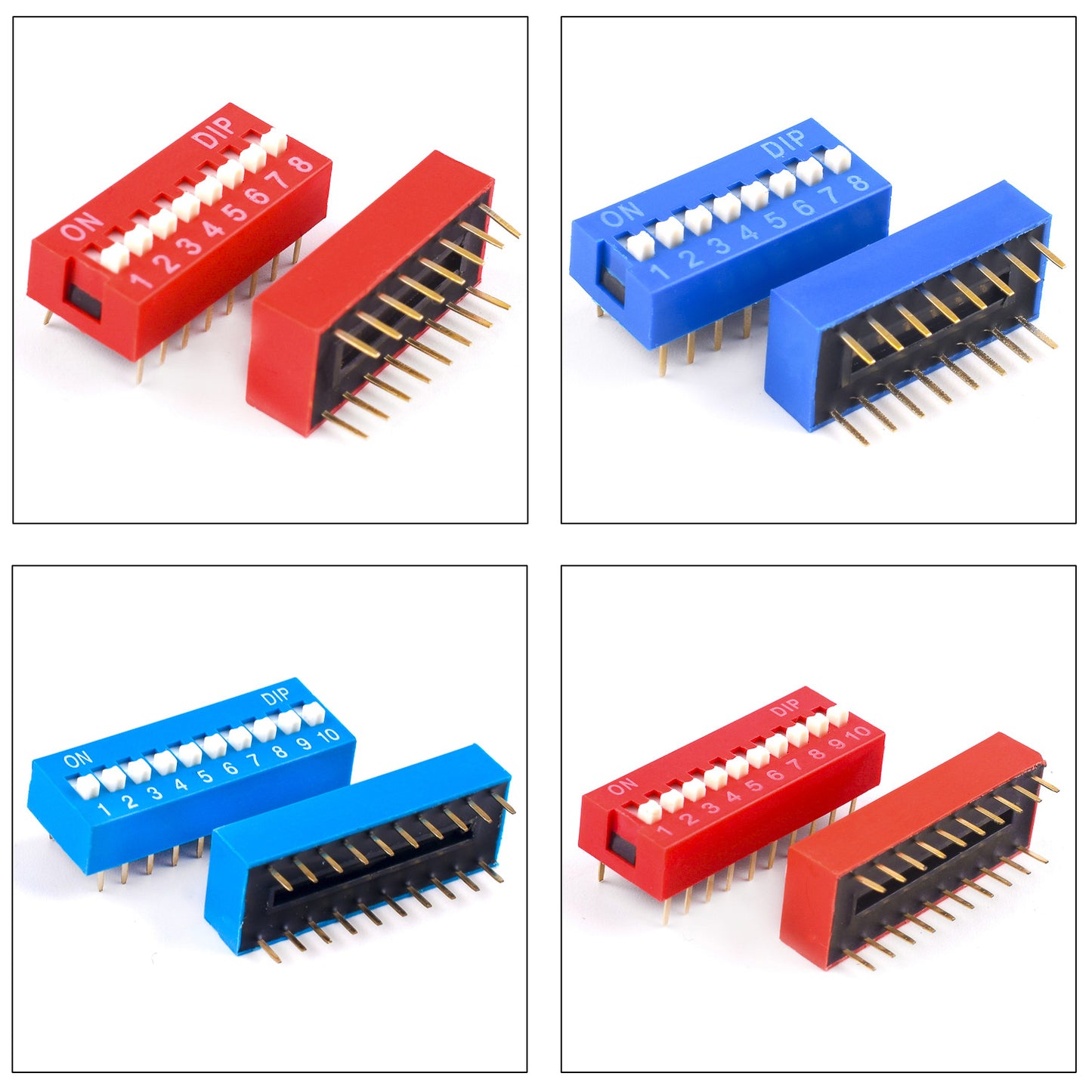
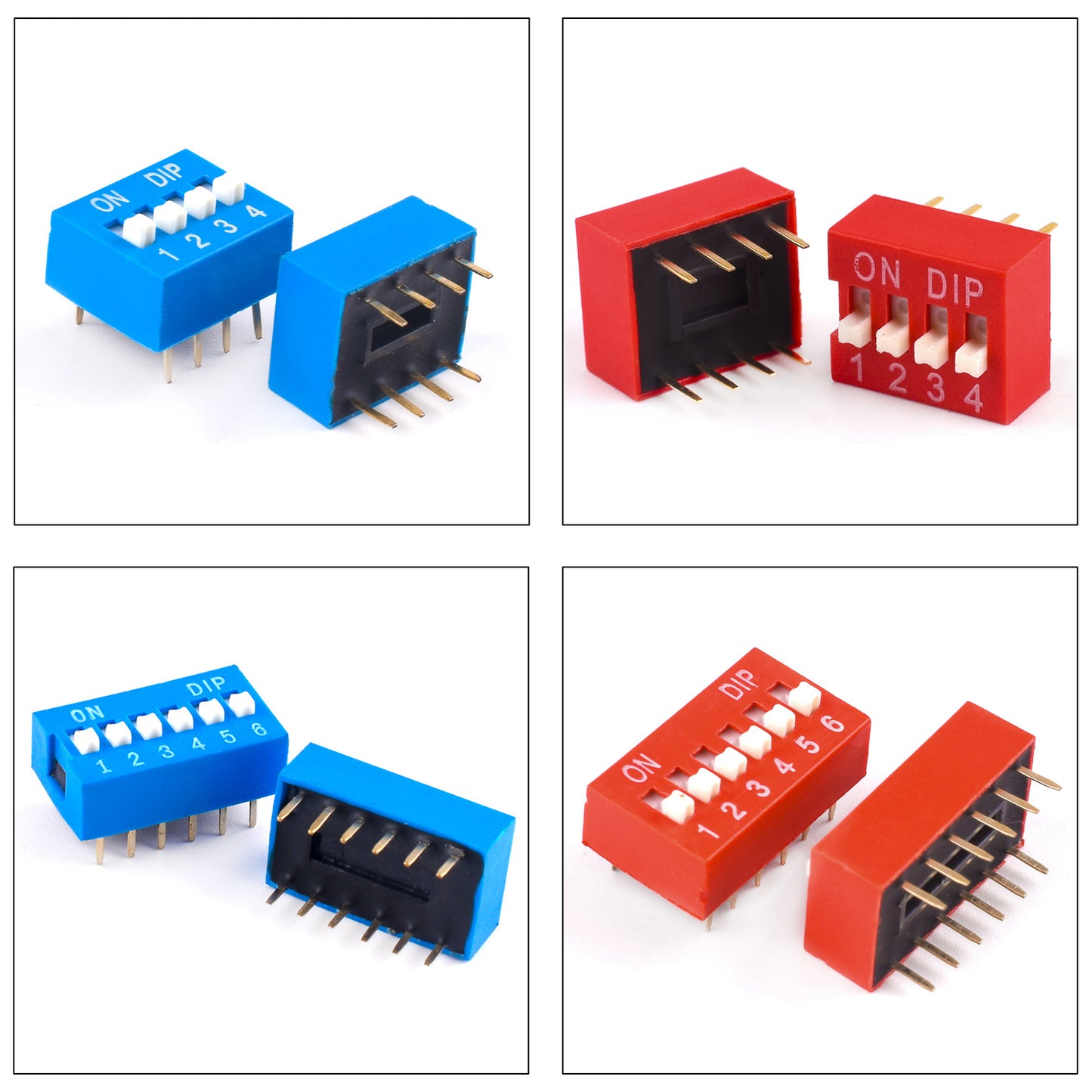
- ✅ Clearly marked positions — numbered positions and ON/OFF labels for easy configuration
- ✅ Low-profile design — minimal PCB height, suitable for compact enclosures
- ✅ RoHS compliant — PA nylon housing, tin-plated copper contacts
Typical Applications
- Hardware address selection for I2C, SPI, and RS-485 devices
- PCB configuration and feature enable/disable
- Mode selection for industrial control and automation equipment
- Arduino and microcontroller project configuration
- Network equipment and router DIP switch configuration
- Elevator, HVAC, and building automation control panels
- Educational electronics and STEM projects
How to Use DIP Switches
Each position on a DIP switch is an independent SPST switch. Use a small flathead screwdriver or pen tip to toggle each position between ON (closed, logic LOW or HIGH depending on circuit) and OFF (open). The switch state is maintained mechanically — no power required to hold the setting. For I2C address selection, refer to your device's datasheet for the address bit mapping to DIP switch positions.

Blog posts
View all-

IC Chips & Discrete Components Express Shipping...
Shipping IC chips and discrete electronic components internationally requires more than choosing a carrier. ESD-safe packaging, correct HS codes, accurate customs declarations, and carrier selection for your destination all determine...
IC Chips & Discrete Components Express Shipping...
Shipping IC chips and discrete electronic components internationally requires more than choosing a carrier. ESD-safe packaging, correct HS codes, accurate customs declarations, and carrier selection for your destination all determine...
-

From Prototype to Mass Production — How to Scal...
Scaling from prototype to mass production is the most critical transition in a hardware product's lifecycle. The sourcing strategy that works for 10 prototype boards — cut tape, spot pricing,...
From Prototype to Mass Production — How to Scal...
Scaling from prototype to mass production is the most critical transition in a hardware product's lifecycle. The sourcing strategy that works for 10 prototype boards — cut tape, spot pricing,...
-

ISO 9001 Electronic Component Distributor — Wha...
ISO 9001:2015 certification is the most widely recognized quality management standard in the world — but what does it actually mean when an electronic component distributor claims to be ISO...
ISO 9001 Electronic Component Distributor — Wha...
ISO 9001:2015 certification is the most widely recognized quality management standard in the world — but what does it actually mean when an electronic component distributor claims to be ISO...


