



Microswitch with Roller Lever SPDT — 5A @ 250VAC, End-Stop & Limit Switch (2-Pack)
Microswitch with Roller Lever SPDT 5A @ 250VAC, End-Stop & Limit Switch (2-Pack)
Compatible JST cables for sensors and modules — secure & reliable. Shop now.

Couldn't load pickup availability
Microswitch with Roller Lever SPDT — 5A @ 250VAC, End-Stop & Limit Switch (2-Pack)
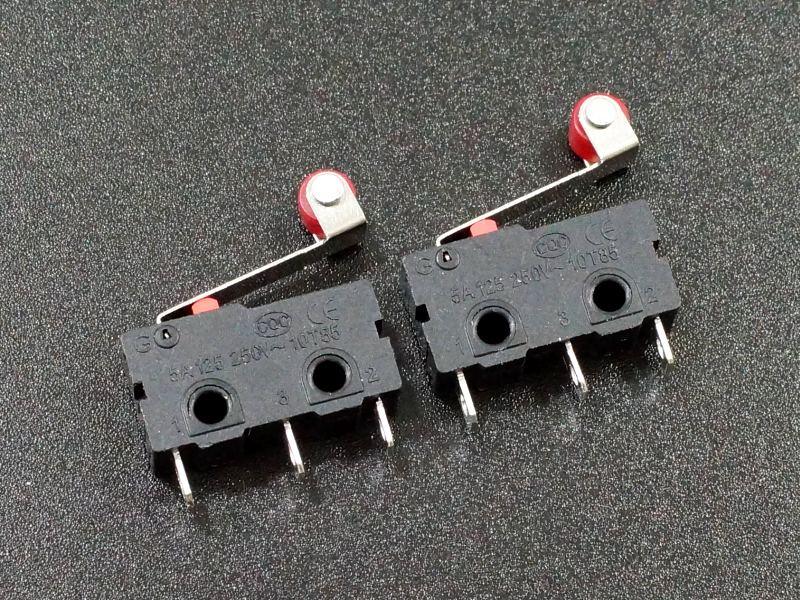
These SPDT microswitches with roller ball levers are the heavy-duty version of the standard lever microswitch — rated 5A @ 250VAC with a roller ball on the lever end for smooth, low-friction actuation by cams, ramps, and moving parts. The roller ball reduces wear on both the lever and the actuating surface, making these ideal for high-cycle applications like 3D printer end stops, CNC axis limits, and conveyor position detection. Pack of 2.
Electrical Specifications
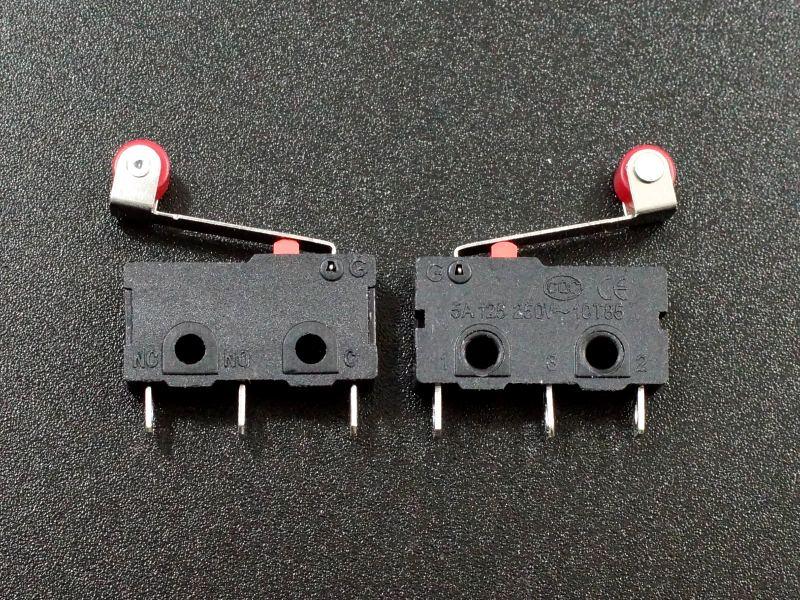
- Configuration: SPDT (Single Pole Double Throw) — COM, NO, NC terminals
- Maximum Current: 5A
- Maximum Voltage: 250VAC
- Tested: 4A @ 30VDC (good snap-action operation)
- Action: Snap-action with roller ball lever
- Lever Length: 16mm (0.6")
- Lever Travel for Actuation: ~4mm
- Termination: Wire solder pins (compatible with small quick-disconnect connectors)
- Mounting: 2 holes for M2.5 or smaller screws
- Body Dimensions: 20 × 6 × 11mm
- Roller Color: May be red or black
- Pack Quantity: 2 switches
SPDT Terminal Functions
- COM (Common): Always connected — connect your signal or power here
- NC (Normally Closed): Connected to COM when lever is NOT pressed — opens when roller is depressed
- NO (Normally Open): Disconnected when lever is NOT pressed — connects to COM when roller is depressed
Roller Lever vs Standard Lever — Why Use a Roller?
- Roller lever: Ball rolls along the actuating surface — lower friction, less wear, smoother actuation by cams and ramps
- Standard lever: Lever tip slides along surface — higher friction, more wear on high-cycle applications
- Choose roller lever for cam-operated, ramp-actuated, or high-cycle applications
Typical Applications
- 3D printer end stops: X/Y/Z axis homing and travel limit switches
- CNC machine limits: Axis end-stop detection for CNC routers, mills, and lathes
- Conveyor position: Part presence and position detection on conveyor systems
- Cam-operated switching: Triggered by rotating cam for timed or position-based switching
- Robot arm limits: Joint travel limit detection for robotic arms
- Door interlock: Safety interlock switch for enclosure doors and guards
Package Contents
- 2 × SPDT microswitch with roller ball lever (5A @ 250VAC)
5A @ 250VAC, roller ball lever, 16mm reach, SPDT snap-action — pack of 2 heavy-duty microswitches for 3D printer end stops, CNC limits, and cam-operated position detection.

Blog posts
View all-

IC Chips & Discrete Components Express Shipping...
Shipping IC chips and discrete electronic components internationally requires more than choosing a carrier. ESD-safe packaging, correct HS codes, accurate customs declarations, and carrier selection for your destination all determine...
IC Chips & Discrete Components Express Shipping...
Shipping IC chips and discrete electronic components internationally requires more than choosing a carrier. ESD-safe packaging, correct HS codes, accurate customs declarations, and carrier selection for your destination all determine...
-

From Prototype to Mass Production — How to Scal...
Scaling from prototype to mass production is the most critical transition in a hardware product's lifecycle. The sourcing strategy that works for 10 prototype boards — cut tape, spot pricing,...
From Prototype to Mass Production — How to Scal...
Scaling from prototype to mass production is the most critical transition in a hardware product's lifecycle. The sourcing strategy that works for 10 prototype boards — cut tape, spot pricing,...
-

ISO 9001 Electronic Component Distributor — Wha...
ISO 9001:2015 certification is the most widely recognized quality management standard in the world — but what does it actually mean when an electronic component distributor claims to be ISO...
ISO 9001 Electronic Component Distributor — Wha...
ISO 9001:2015 certification is the most widely recognized quality management standard in the world — but what does it actually mean when an electronic component distributor claims to be ISO...


