

Keszoox
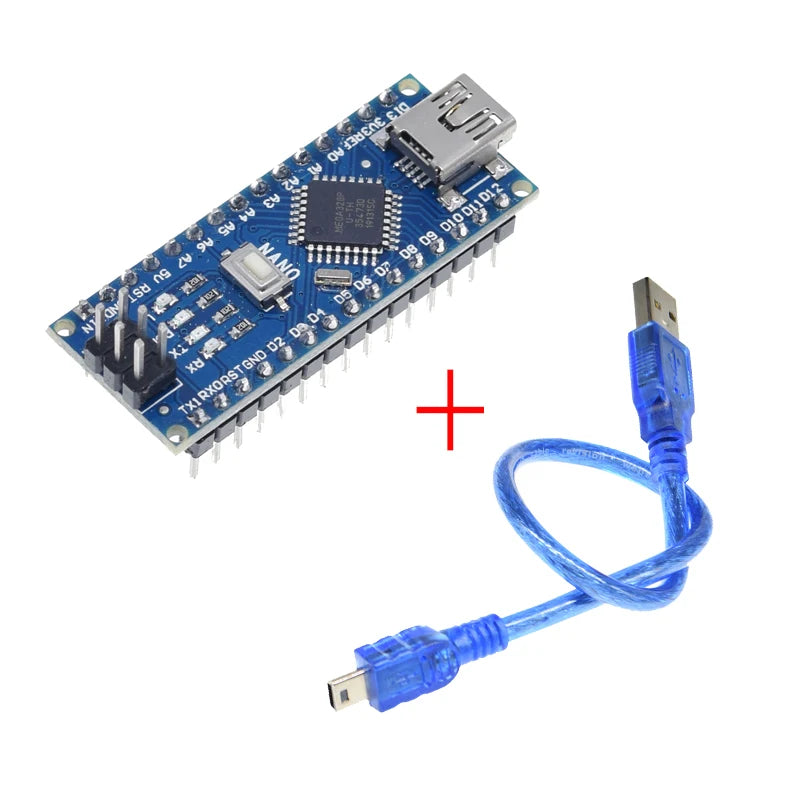
Arduino Nano V3.0 ATmega328P — CH340G USB, 5V 16MHz, Mini/Micro/Type-C
Arduino Nano V3.0 ATmega328P CH340G USB, 5V 16MHz, Mini/Micro/Type-C

Couldn't load pickup availability
Arduino Nano V3.0 — ATmega328P, CH340G USB, 5V 16MHz, Breadboard-Friendly
The Arduino Nano V3.0 is a compact, breadboard-friendly development board based on the ATmega328P microcontroller, running at 5V / 16MHz with 32KB flash and 2KB SRAM. Using the CH340G USB-to-serial bridge, it connects to any PC via Mini USB, Micro USB, or Type-C (select variant) and is fully compatible with the Arduino IDE and all standard Arduino libraries.
Key Specifications
| Parameter | Value |
|---|---|
| Microcontroller | ATmega328P (Microchip) |
| USB Bridge | CH340G |
| Operating Voltage | 5V |
| Clock Speed | 16MHz |
| Flash Memory | 32KB (2KB bootloader) |
| SRAM | 2KB |
| EEPROM | 1KB |
| Digital I/O Pins | 14 (D0–D13, 6 PWM: D3/D5/D6/D9/D10/D11) |
| Analog Input Pins | 8 (A0–A7, 10-bit ADC) |
| UART / SPI / I2C | 1 / 1 / 1 |
| USB Connector | Mini USB / Micro USB / Type-C (select variant) |
| Input Voltage (VIN) | 7V – 12V |
| Board Size | 18 × 45mm |
Arduino Nano vs Arduino Uno — Which to Choose?
| Feature | Arduino Nano V3.0 | Arduino Uno R3 |
|---|---|---|
| Size | 18 × 45mm | 53 × 68mm |
| Breadboard Mount | Direct (DIP footprint) | Requires jumper wires |
| Analog Pins | 8 (A0–A7) | 6 (A0–A5) |
| USB Connector | Mini / Micro / Type-C | Type-B |
| MCU | ATmega328P | ATmega328P |
| Performance | Identical | Identical |
| Best For | Compact, breadboard projects | Shield-based projects |
Why Choose Arduino Nano V3.0?
- Breadboard-Friendly — 18mm width fits standard 830-point breadboard with one row free on each side for jumper wires
- 8 Analog Inputs — 2 more than Arduino Uno; ideal for multi-sensor data acquisition projects
- Compact 18×45mm — Fits in tight enclosures, wearable projects, and embedded installations
- Arduino IDE Compatible — Full support for all Arduino libraries; select Arduino Nano + ATmega328P (Old Bootloader)
- CH340G Driver — Free driver for Windows 7–11, Linux, macOS; recognized as virtual COM port
Typical Applications
- Multi-sensor data acquisition (DHT22 temperature, HC-SR04 ultrasonic, BMP280 pressure)
- LED matrix and 7-segment display controller
- Robot and servo motor controller (up to 6 PWM channels)
- Wireless sensor node with NRF24L01, HC-12, or LoRa module
- Data logger with Micro SD card module and RTC
- Wearable electronics and compact IoT devices
- PID controller for temperature, motor speed, and position
Arduino IDE Setup
Board: Arduino Nano. Processor: ATmega328P (Old Bootloader) for CH340G versions. Install CH340 driver if not auto-detected on Windows. Upload speed: 57600 baud (Old Bootloader).
Pinout Reference
- PWM Pins: D3, D5, D6, D9, D10, D11 (analogWrite() compatible)
- SPI: D10 (SS), D11 (MOSI), D12 (MISO), D13 (SCK)
- I2C: A4 (SDA), A5 (SCL)
- UART: D0 (RX), D1 (TX)
- Analog: A0–A7 (10-bit, 0–5V range)
FAQ
Q: Why does my Nano fail to upload with ATmega328P selected?
A: CH340G-based Nanos use the Old Bootloader. In Arduino IDE, select Processor: ATmega328P (Old Bootloader) to fix upload errors.
Q: Can Arduino Nano run 3.3V sensors directly?
A: The Nano operates at 5V logic. Use a voltage divider or level shifter for 3.3V sensors. The 3.3V pin provides up to 50mA from the onboard regulator.
Q: What is the difference between Mini USB, Micro USB, and Type-C variants?
A: Electrically identical — only the USB connector differs. Type-C is recommended for new projects for cable convenience. All variants use CH340G and ATmega328P.
Package Contents
- 1× Arduino Nano V3.0 Board (ATmega328P + CH340G)