

3V DC Hobby Motor
3V DC Hobby Motor
Compatible JST cables for sensors and modules — secure & reliable. Shop now.

Couldn't load pickup availability
Small 1.5 – 3V DC motors for science projects or general experimenting
DESCRIPTION
These small 1.5 – 3V DC motors are an inexpensive option for use in science projects or for general experimenting with DC motors.
PACKAGE INCLUDES:
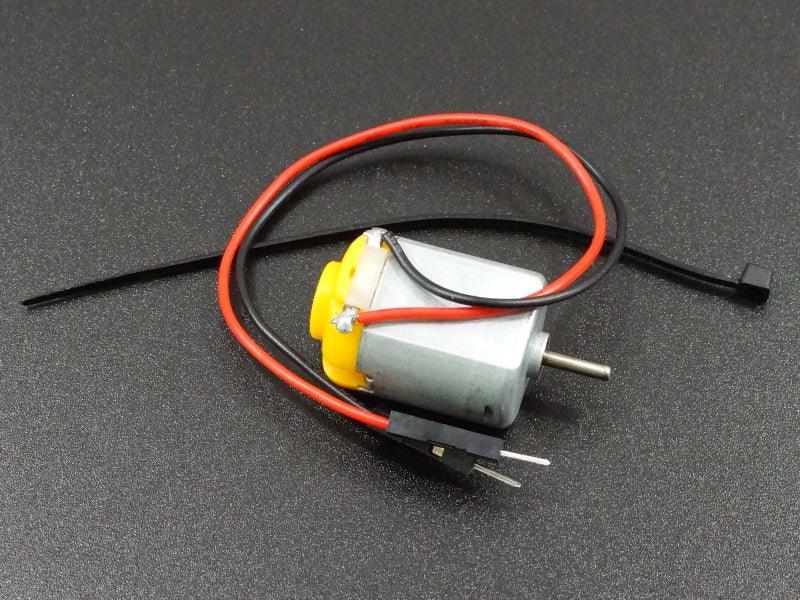
- 3V DC motor w/ 5″ jumper leads
- Plastic zip tie
KEY FEATURES OF 3V DC HOBBY MOTOR:
- 1.5 to 3VDC operation typical. 6VDC max
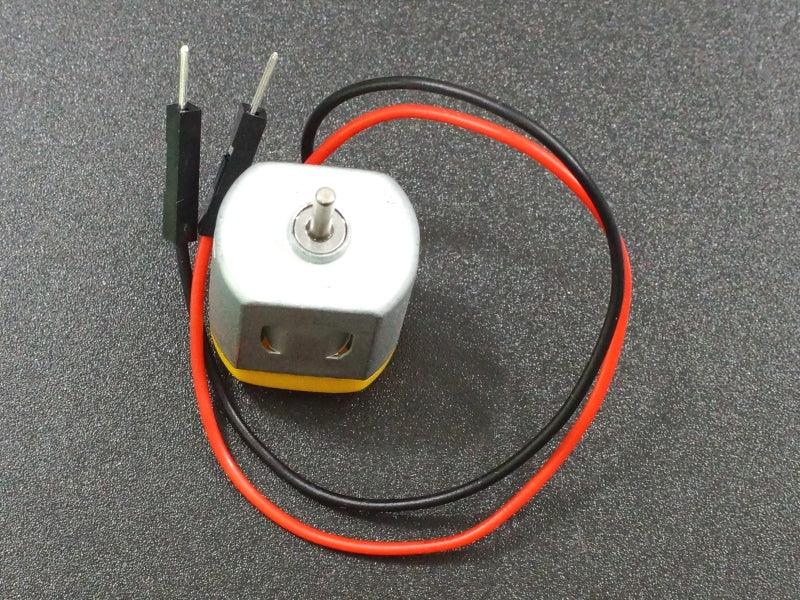
- 5″ leads with Dupont style male jumper pins installed
- 12000 RPM typical with no load
- 60mA current draw @ 3V typical.
OUR EVALUATION RESULTS:
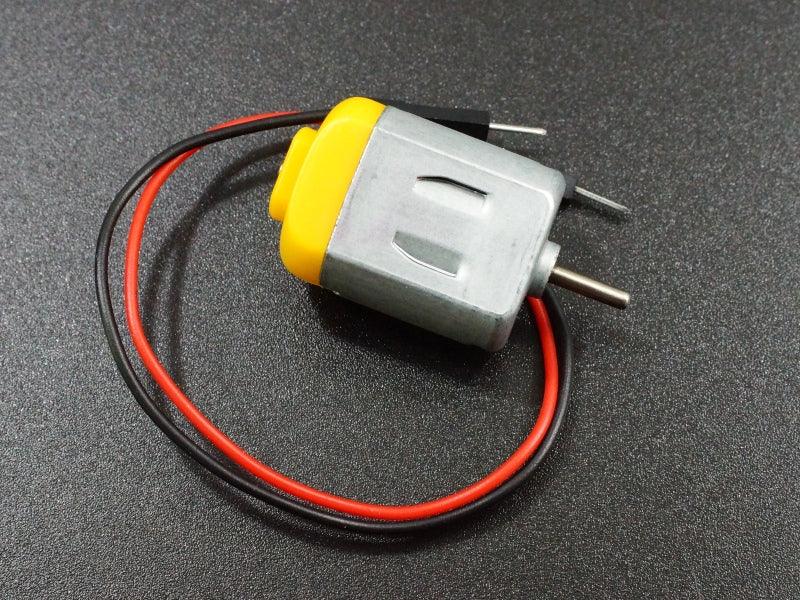
These small ‘130 size’ DC motors are designed to work from 1.5 to 3VDC for typical battery use, but they will also work fine for periods of time on 5V such as if experimenting with PWM for motor speed control. Speed and current will vary with the voltage and load the motor is being operated at.
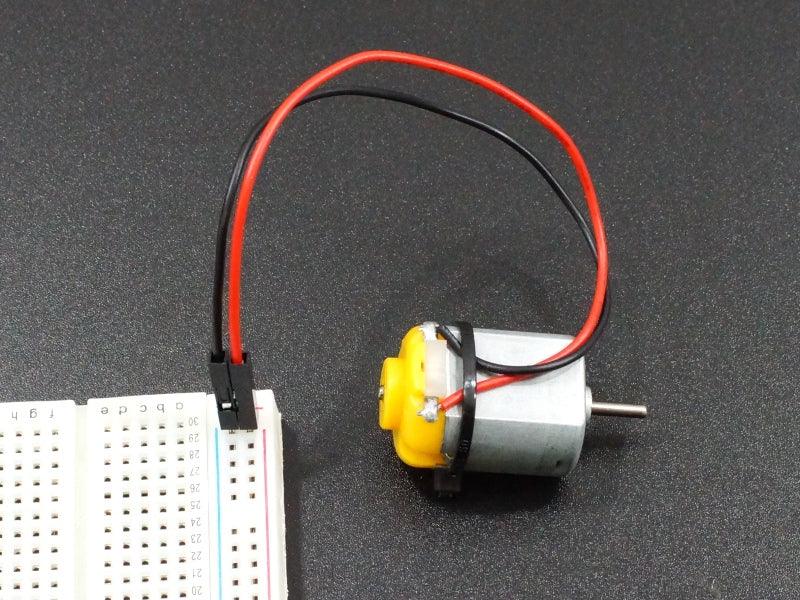
The male jumper pins make these easy to use with solderless breadboards. Reversing the polarity of the leads will reverse the direction of the motor rotation.
The electrical connections where the wires attach, like on any small motor of this type, are subject to breaking when being flexed repeatedly. We toss in a zip tie which can be placed around the motor and leads to strain relieve them.
Like most small hobby motors in this form factor, there are no specific provisions made for mounting. These motors are typically clamped, glued, Velcroed or zip-tied in place.
BEFORE THEY ARE SHIPPED, THESE MOTORS ARE:
- Zip tie added
- Sample tested per incoming shipment
Notes:
- None
TECHNICAL SPECIFICATIONS
| Operating Ratings | ||
| Motor Voltage | 1.5 – 3VDC typical. 5V max | |
| Motor Current (no load) | 60mA typical | |
| Motor Current (stall conditions) | 400mA typical | |
| Motor Speed | 3V (No Load) | 12000 RPM typical |
| Dimensions | Motor (L x W x H) | 27.5 x 20 x 15mm (1.08 x 0.8 x 0.6″) |
| Shaft (L x Dia) | 8 x 2mm (0.32 x 0.079″) | |
| Lead Length | 125mm (5″) |

Blog posts
View all-

Best JST Connector Crimping Tools in 2026: Engi...
Choosing the wrong crimping tool ruins JST connectors and wastes wire. This guide compares the top crimping tools for JST SH, GH, PH, XH, and VH series — including Engineer...
Best JST Connector Crimping Tools in 2026: Engi...
Choosing the wrong crimping tool ruins JST connectors and wastes wire. This guide compares the top crimping tools for JST SH, GH, PH, XH, and VH series — including Engineer...
-

Molex KK 254 vs Mini-Fit Jr. vs Micro-Fit 3.0: ...
Choosing between Molex KK 254, Mini-Fit Jr., and Micro-Fit 3.0? This guide compares pitch, current rating, locking mechanism, wire gauge, and typical applications — with decision tables, part number references,...
Molex KK 254 vs Mini-Fit Jr. vs Micro-Fit 3.0: ...
Choosing between Molex KK 254, Mini-Fit Jr., and Micro-Fit 3.0? This guide compares pitch, current rating, locking mechanism, wire gauge, and typical applications — with decision tables, part number references,...
-

DuPont Connector vs JST PH 2.0: Pinout, Specs &...
Not sure whether to use a DuPont 2.54mm or JST PH 2.0mm connector? This guide compares pitch, locking mechanism, current rating, pinout, and best use cases — so you can...
DuPont Connector vs JST PH 2.0: Pinout, Specs &...
Not sure whether to use a DuPont 2.54mm or JST PH 2.0mm connector? This guide compares pitch, locking mechanism, current rating, pinout, and best use cases — so you can...


