

Keszoox
Mini D1 PRO ESP8266 WiFi Development Board | NodeMCU Lua | 4MB / 16MB Flash | External Antenna Option | IoT
Mini D1 PRO ESP8266 WiFi Development Board | NodeMCU Lua | 4MB / 16MB Flash | External Antenna Option | IoT

Couldn't load pickup availability
Mini D1 PRO ESP8266 WiFi Development Board — NodeMCU Lua | 4MB / 16MB Flash | External Antenna Option
The Mini D1 PRO is an upgraded ESP8266-based WiFi development board in a compact form factor — a significant improvement over the standard D1 Mini with larger flash memory options (4MB or 16MB) and an optional external antenna connector for extended WiFi range. The ESP8266 is the most widely used WiFi SoC in the maker and IoT community, combining a 32-bit Tensilica L106 processor with 802.11 b/g/n WiFi in a single chip. The NodeMCU Lua firmware is pre-loaded, and the board is fully compatible with the Arduino IDE via the ESP8266 Arduino core — enabling Arduino-style programming with WiFi connectivity for smart home, IoT sensor, and wireless control applications.
Specifications
| SoC | ESP8266 (Tensilica L106, 80/160MHz) |
| WiFi Standard | 802.11 b/g/n (2.4GHz) |
| Flash Memory | 4MB or 16MB (as selected) |
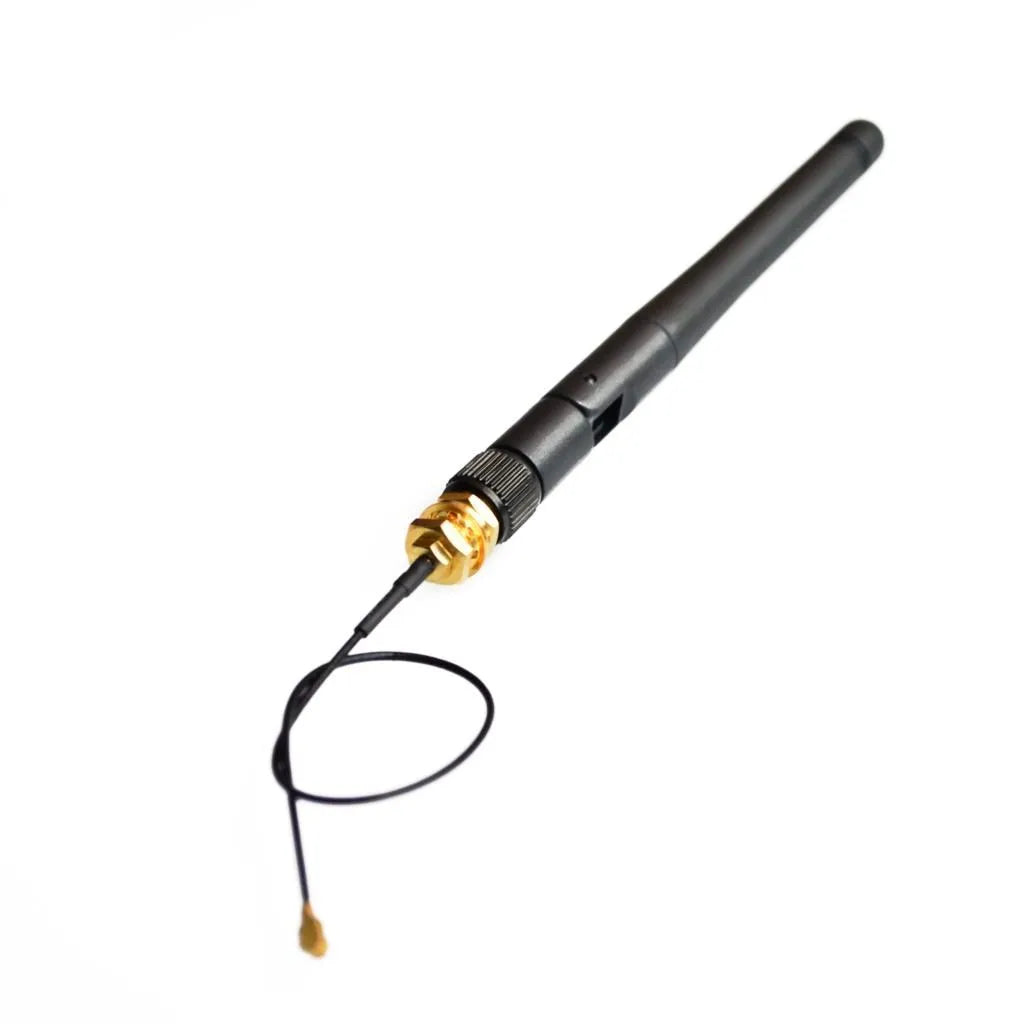
| Antenna | PCB trace antenna (standard) / External antenna connector (optional) |
| GPIO Pins | 11 digital I/O, 1 analog input (A0, 0–3.3V) |
| Communication | UART, I2C, SPI, PWM |
| USB Interface | Micro USB (CH340 USB-UART bridge) |
| Supply Voltage | 5V via USB / 3.3V via pin |
| Operating Voltage | 3.3V (GPIO logic level) |
| Firmware | NodeMCU Lua (pre-loaded) |
| Arduino IDE | Compatible (ESP8266 Arduino core) |
| Origin | Mainland China |
Mini D1 PRO vs. Standard D1 Mini
| Feature | Mini D1 PRO (this product) | Standard D1 Mini |
|---|---|---|
| Flash memory | 4MB or 16MB | 4MB |
| External antenna | Optional (IPEX connector) | No |
| WiFi range | Extended (with external antenna) | Standard |
| Form factor | Compact (same as D1 Mini) | Compact |
| Arduino IDE | Compatible | Compatible |
| Best for | Long-range WiFi, large firmware projects | Standard IoT projects |
Key Features
- ✅ ESP8266 SoC — 802.11 b/g/n WiFi + 32-bit processor in a single chip
- ✅ 4MB or 16MB flash — 16MB option supports larger firmware, OTA updates, and SPIFFS file storage
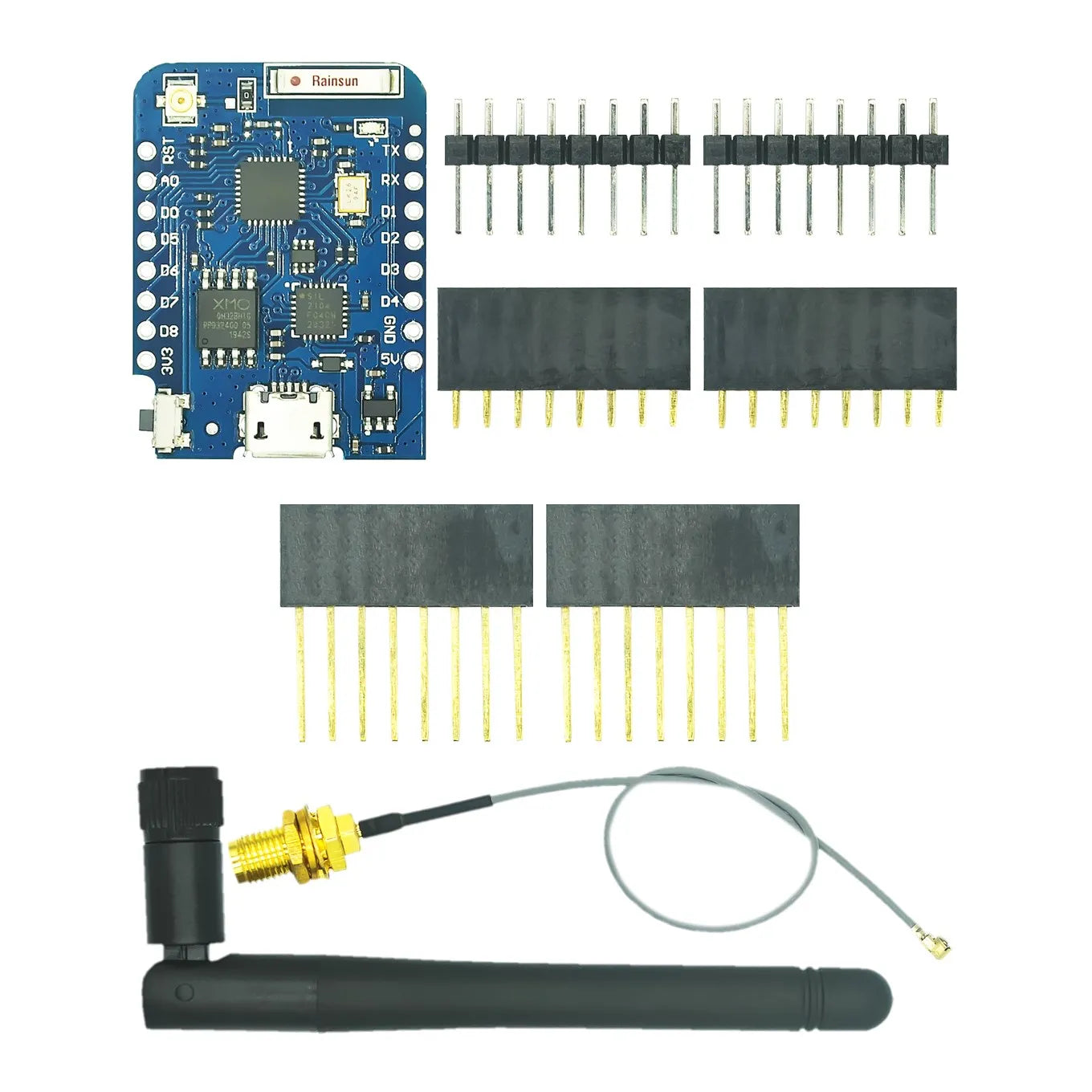
- ✅ External antenna option — IPEX connector for external antenna, extending WiFi range through walls and over longer distances
- ✅ NodeMCU Lua pre-loaded — ready to use with Lua scripting immediately after unboxing
- ✅ Arduino IDE compatible — program with familiar Arduino syntax using the ESP8266 Arduino core
- ✅ Micro USB programming — no external programmer needed, program directly via USB
- ✅ 3.3V GPIO logic — compatible with 3.3V sensors and modules (use level shifter for 5V devices)
- ✅ Compact form factor — D1 Mini compatible footprint, fits D1 Mini shields and accessories
Common Applications
- Smart home sensor node (temperature, humidity, motion)
- WiFi-controlled relay and switch
- MQTT IoT data publisher
- Web server and REST API endpoint
- OTA (over-the-air) firmware update projects
- WiFi weather station
- Remote monitoring and control
- Home automation integration (Home Assistant, ESPHome)
Arduino IDE Setup
- Install the CH340 USB driver if not already installed.
- In Arduino IDE, go to File > Preferences and add the ESP8266 board manager URL:
http://arduino.esp8266.com/stable/package_esp8266com_index.json - Install the ESP8266 board package via Tools > Board > Boards Manager.
- Select LOLIN(WEMOS) D1 mini PRO as the board.
- Select the correct COM port and upload your sketch.
Frequently Asked Questions
Q: What is the difference between 4MB and 16MB flash?
A: 4MB flash is sufficient for most Arduino sketches and NodeMCU Lua scripts. 16MB flash is recommended for projects using SPIFFS (file system), large web server assets, OTA updates, or complex firmware. The 16MB version also supports larger Lua scripts and more stored data.
Q: Is the external antenna version better for all applications?
A: The external antenna version provides better range through walls and over longer distances. For applications within 10–15 metres of the router with no obstructions, the PCB antenna version is adequate. For basement installations, metal enclosures, or long-range applications, choose the external antenna version.
Package Contents
- 1× Mini D1 PRO ESP8266 WiFi Development Board (flash size and antenna option as selected)