





PC817 Optocoupler — Single-Channel, DIP-4, 5kV Isolation, 50mA Output
PC817 Optocoupler Single-Channel, DIP-4, 5kV Isolation, 50mA Output
Compatible JST cables for sensors and modules — secure & reliable. Shop now.

Couldn't load pickup availability
PC817 Optocoupler — Single-Channel, DIP-4, 5kV Isolation
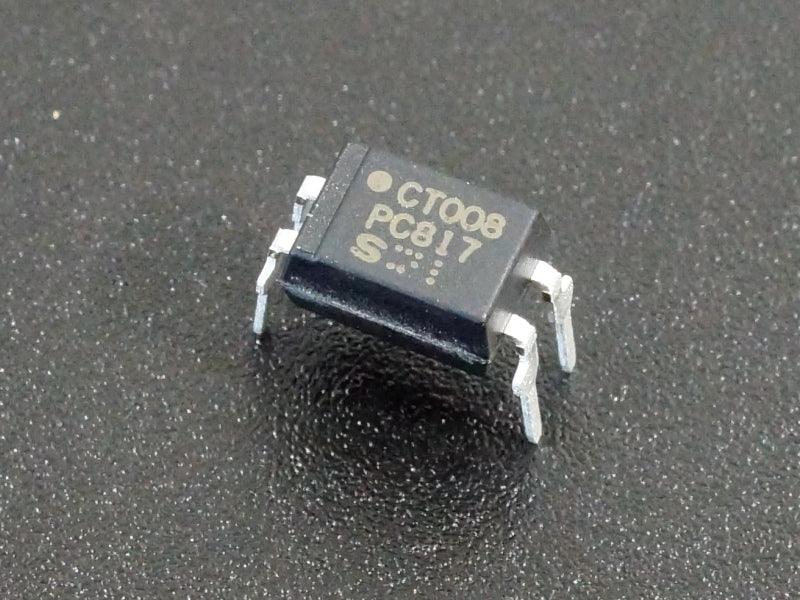
The PC817 is a widely-used single-channel phototransistor optocoupler providing 5kV isolation voltage between input and output. An internal LED on the input side drives a phototransistor on the output side — with no electrical connection between them — allowing safe signal transfer between circuits at different voltage levels or ground potentials. Essential for isolating microcontrollers from mains-connected circuits, relay drivers, and industrial control systems.
Key Specifications
| Parameter | Value |
|---|---|
| Channels | 1 |
| Isolation Voltage | 5kV (AC, 1 minute) |
| Input LED Forward Voltage | 1.2V typical |
| Input LED Forward Current | 50mA max |
| Output Collector Current | 50mA max |
| Output Collector-Emitter Voltage | 35V max |
| Current Transfer Ratio (CTR) | 50–300% @ IF=5mA |
| Response Time | ~4µs |
| Package | DIP-4 (through-hole) |
Why Use an Optocoupler?
- Galvanic isolation — completely separates input and output circuits with no electrical connection
- Protect microcontrollers — isolate Arduino/Raspberry Pi GPIO from high-voltage or noisy circuits
- Ground loop elimination — connect circuits with different ground references safely
- Noise immunity — optical coupling is immune to electromagnetic interference on the signal path
Typical Applications
- Isolating Arduino GPIO from relay driver circuits
- Mains zero-crossing detection with microcontroller isolation
- Industrial PLC input/output signal isolation
- Isolating UART/serial communication between different voltage systems
- Feedback isolation in switching power supplies
- Motor driver enable signal isolation
Basic Wiring (Arduino to Relay)
| PC817 Pin | Connection |
|---|---|
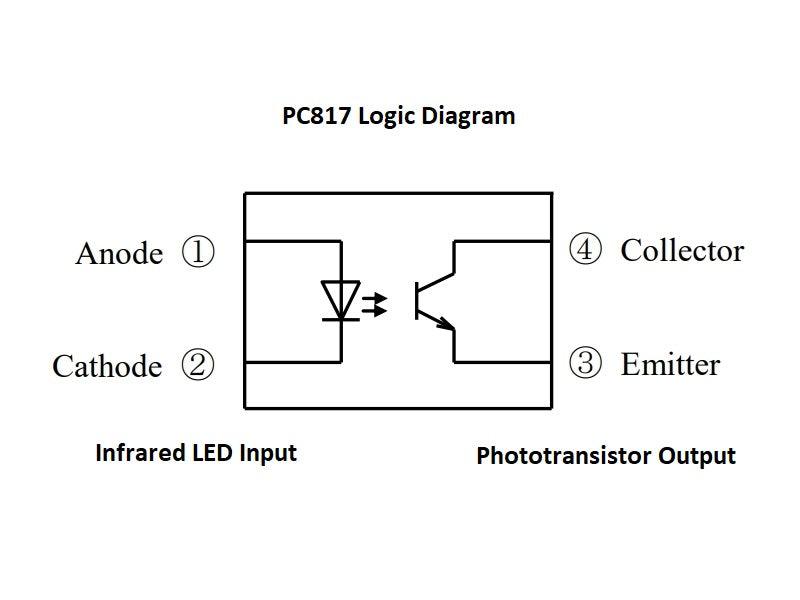
| Pin 1 (Anode) | Arduino GPIO via 330Ω resistor |
| Pin 2 (Cathode) | Arduino GND |
| Pin 3 (Emitter) | Output circuit GND |
| Pin 4 (Collector) | Output circuit load / pull-up |
Package Contents
- 1× PC817 Optocoupler (DIP-4)

Blog posts
View all-

Best JST Connector Crimping Tools in 2026: Engi...
Choosing the wrong crimping tool ruins JST connectors and wastes wire. This guide compares the top crimping tools for JST SH, GH, PH, XH, and VH series — including Engineer...
Best JST Connector Crimping Tools in 2026: Engi...
Choosing the wrong crimping tool ruins JST connectors and wastes wire. This guide compares the top crimping tools for JST SH, GH, PH, XH, and VH series — including Engineer...
-

Molex KK 254 vs Mini-Fit Jr. vs Micro-Fit 3.0: ...
Choosing between Molex KK 254, Mini-Fit Jr., and Micro-Fit 3.0? This guide compares pitch, current rating, locking mechanism, wire gauge, and typical applications — with decision tables, part number references,...
Molex KK 254 vs Mini-Fit Jr. vs Micro-Fit 3.0: ...
Choosing between Molex KK 254, Mini-Fit Jr., and Micro-Fit 3.0? This guide compares pitch, current rating, locking mechanism, wire gauge, and typical applications — with decision tables, part number references,...
-

DuPont Connector vs JST PH 2.0: Pinout, Specs &...
Not sure whether to use a DuPont 2.54mm or JST PH 2.0mm connector? This guide compares pitch, locking mechanism, current rating, pinout, and best use cases — so you can...
DuPont Connector vs JST PH 2.0: Pinout, Specs &...
Not sure whether to use a DuPont 2.54mm or JST PH 2.0mm connector? This guide compares pitch, locking mechanism, current rating, pinout, and best use cases — so you can...


