





PWM Signal Generator Module — 1Hz–50kHz, Adjustable Duty Cycle, Arduino
PWM Signal Generator Module 1Hz–50kHz, Adjustable Duty Cycle, Arduino
Compatible JST cables for sensors and modules — secure & reliable. Shop now.

Couldn't load pickup availability
PWM Signal Generator Module — 1Hz–50kHz, Adjustable Duty Cycle, Arduino
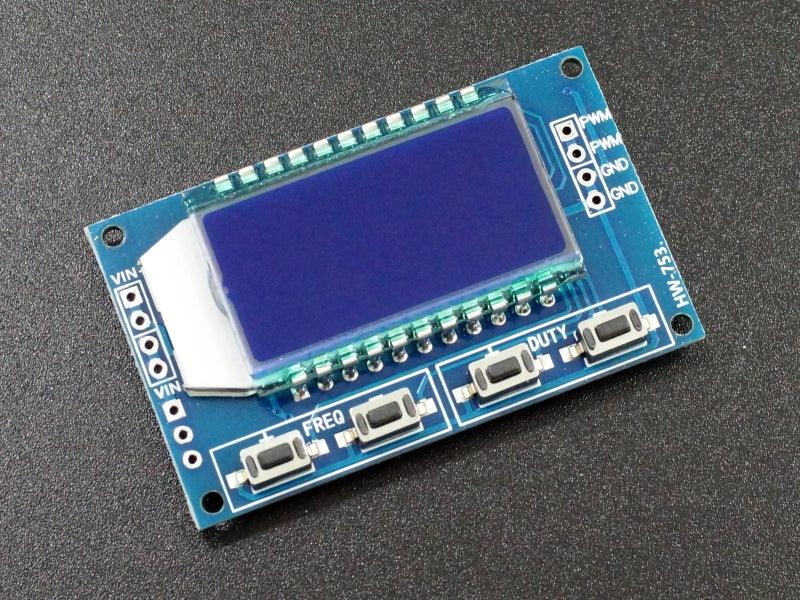
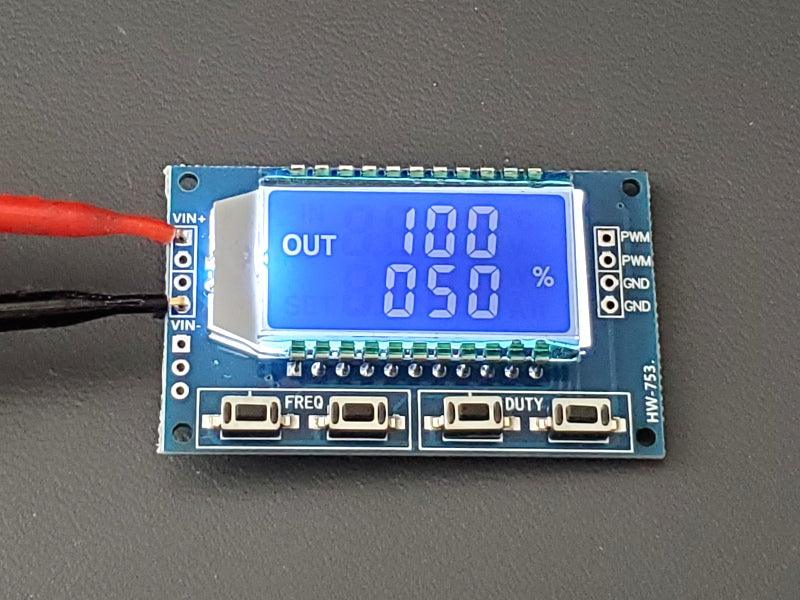
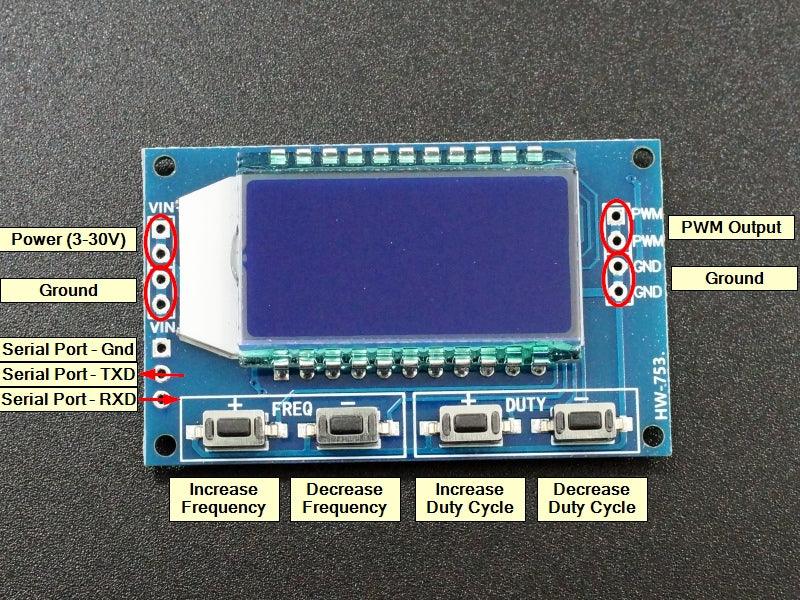
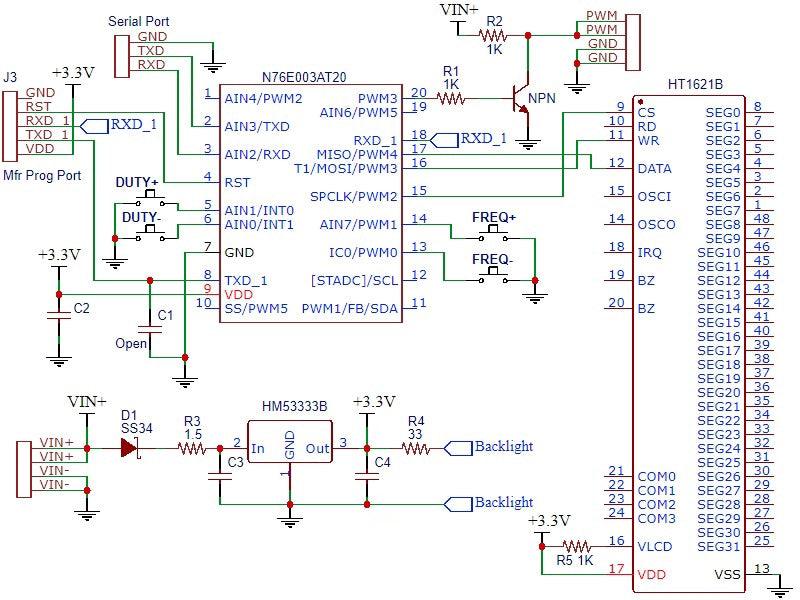
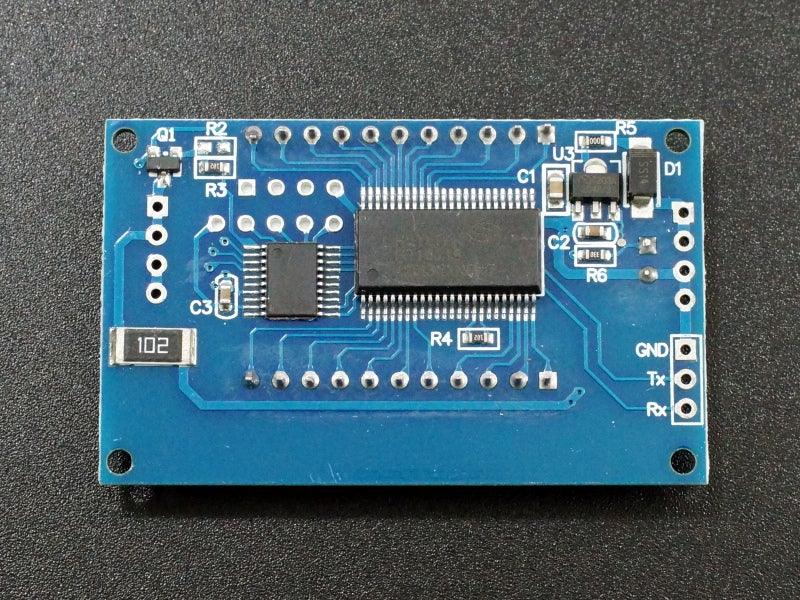
A compact PWM signal generator module producing adjustable PWM signals from 1Hz to 50kHz with 0–100% duty cycle control — all adjustable via onboard potentiometers. Generate PWM signals for motor speed control, LED dimming, servo testing, and PWM circuit development without writing any code. The module outputs a clean, stable PWM signal that can drive MOSFETs, motor drivers, and other PWM-controlled devices directly.
Key Specifications
- Frequency range: 1Hz–50kHz (adjustable via potentiometer)
- Duty cycle: 0–100% (adjustable via potentiometer)
- Output voltage: 0–5V PWM signal
- Supply: 5V DC
- Output current: up to 30mA (direct drive)
- Display: LED frequency indicator
- Compliance: RoHS compliant
Why a Dedicated PWM Generator?
- ✅ No code required — adjust frequency and duty cycle with potentiometers
- ✅ Wide frequency range — 1Hz to 50kHz covers most PWM applications
- ✅ Independent frequency and duty cycle — adjust each parameter separately
- ✅ Stable output — crystal-controlled for consistent PWM signal
Typical Applications
- DC motor speed control via MOSFET or motor driver
- LED brightness dimming control
- Servo motor testing and calibration
- PWM circuit development and testing
- Fan speed control
- Power supply switching frequency testing

Blog posts
View all-

Best JST Connector Crimping Tools in 2026: Engi...
Choosing the wrong crimping tool ruins JST connectors and wastes wire. This guide compares the top crimping tools for JST SH, GH, PH, XH, and VH series — including Engineer...
Best JST Connector Crimping Tools in 2026: Engi...
Choosing the wrong crimping tool ruins JST connectors and wastes wire. This guide compares the top crimping tools for JST SH, GH, PH, XH, and VH series — including Engineer...
-

Molex KK 254 vs Mini-Fit Jr. vs Micro-Fit 3.0: ...
Choosing between Molex KK 254, Mini-Fit Jr., and Micro-Fit 3.0? This guide compares pitch, current rating, locking mechanism, wire gauge, and typical applications — with decision tables, part number references,...
Molex KK 254 vs Mini-Fit Jr. vs Micro-Fit 3.0: ...
Choosing between Molex KK 254, Mini-Fit Jr., and Micro-Fit 3.0? This guide compares pitch, current rating, locking mechanism, wire gauge, and typical applications — with decision tables, part number references,...
-

DuPont Connector vs JST PH 2.0: Pinout, Specs &...
Not sure whether to use a DuPont 2.54mm or JST PH 2.0mm connector? This guide compares pitch, locking mechanism, current rating, pinout, and best use cases — so you can...
DuPont Connector vs JST PH 2.0: Pinout, Specs &...
Not sure whether to use a DuPont 2.54mm or JST PH 2.0mm connector? This guide compares pitch, locking mechanism, current rating, pinout, and best use cases — so you can...


