





Solderless Breadboard Starter Kit — Hobby Line with Jumper Wires & Power Supply
Solderless Breadboard Starter Kit Hobby Line with Jumper Wires & Power Supply
Compatible JST cables for sensors and modules — secure & reliable. Shop now.

Couldn't load pickup availability
Solderless Breadboard Starter Kit — Hobby Line with Jumper Wires & Power Supply
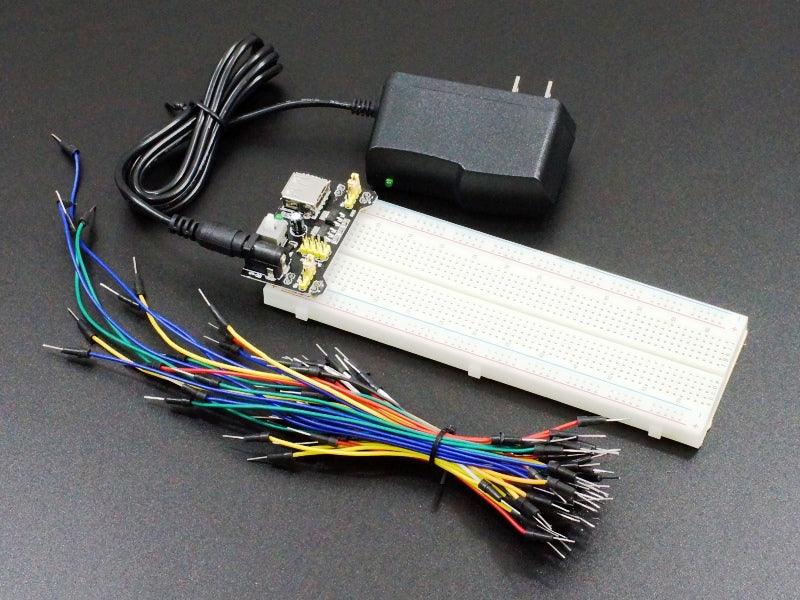
A complete solderless breadboard starter kit (Hobby Line) with everything you need to start prototyping immediately — no additional purchases required. This all-in-one kit bundles an 830-point solderless breadboard, a 65-piece jumper wire kit, a 3.3V/5V breadboard power supply module, and accessories into a single package. The ideal starting point for Arduino beginners, electronics students, and anyone new to circuit prototyping.
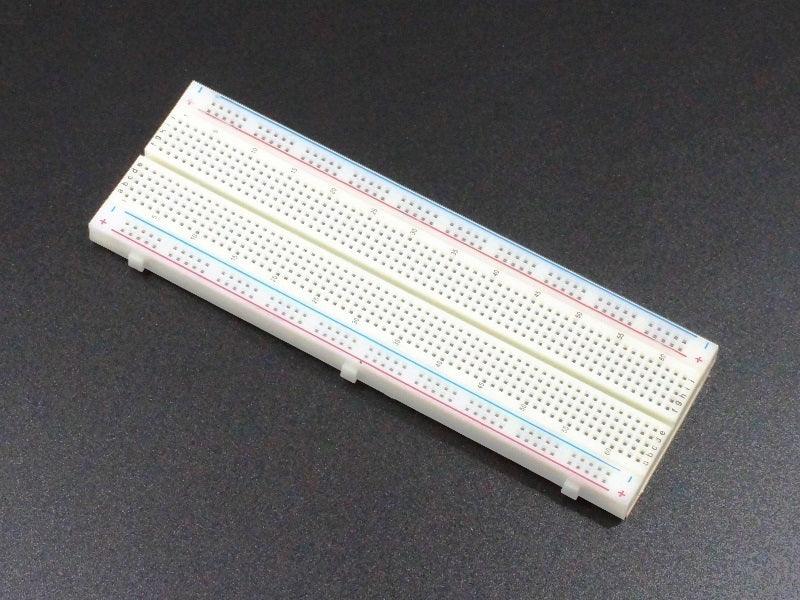
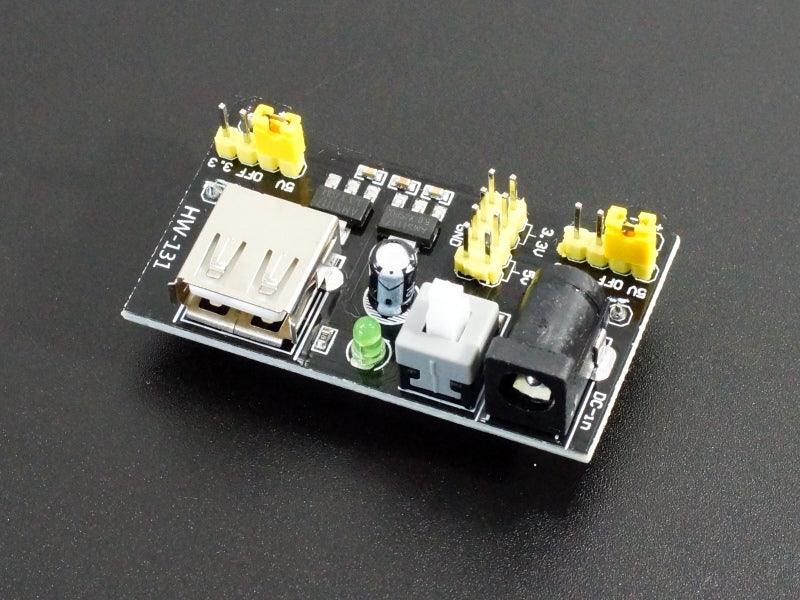
The Hobby Line breadboard uses phosphor bronze contacts with a binding force exceeding 60g per contact, providing reliable electrical connections for all standard prototyping applications. The included power supply module accepts USB or DC barrel jack input and provides selectable 3.3V or 5V output directly to the breadboard power rails — eliminating the need for a separate bench power supply.
Kit Contents
- 1× 830-point solderless breadboard (Hobby Line) with power rails
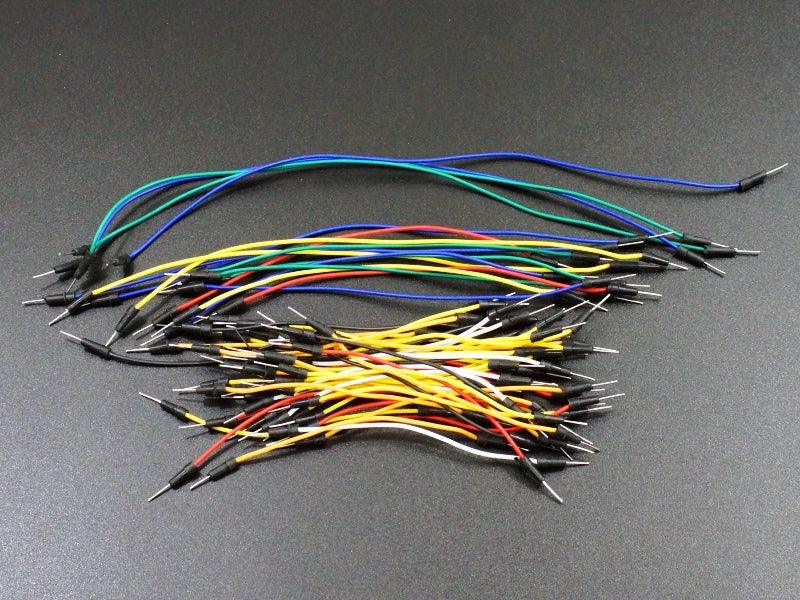
- 65-piece jumper wire kit — male-to-male, assorted lengths and colors
- 1× Breadboard power supply module — 3.3V / 5V selectable, USB & DC barrel jack input
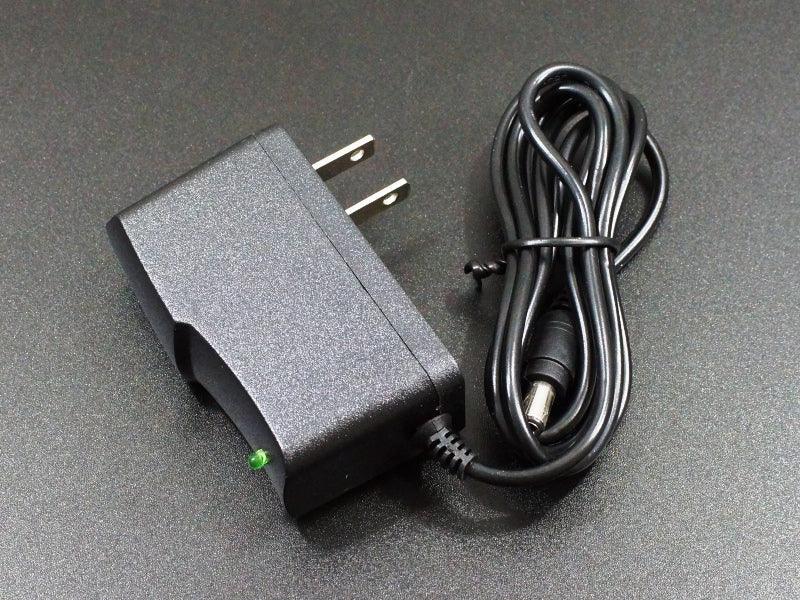
- Accessories — additional components for getting started
Key Specifications
- Breadboard tie points: 830 | Series: Hobby Line
- Contact material: Phosphor bronze | Binding force: >60g per contact
- Pitch: 2.54mm (0.1") | Wire gauge: AWG #20–#29
- Power supply output: 3.3V or 5V selectable | Input: USB or 6.5–12V DC barrel jack
- Power supply current: Up to 700mA | RoHS compliant
Why Choose This Starter Kit?
- ✅ Complete out-of-the-box kit — breadboard, wires, power supply, and accessories all included
- ✅ Power supply module included — 3.3V/5V selectable, powers breadboard rails directly from USB
- ✅ 65-piece jumper wire kit — covers all standard lengths, color-coded for organized wiring
- ✅ No soldering required — insert and remove components freely, perfect for beginners
- ✅ Universal 2.54mm pitch — compatible with all DIP ICs, Arduino shields, and sensor modules
- ✅ RoHS compliant — meets international environmental standards
Typical Applications
- Arduino Uno, Nano, and ESP32 beginner learning and first projects
- Electronics classroom and STEM education starter kit
- Rapid circuit prototyping without soldering or bench power supply
- Sensor, actuator, and module integration testing
- First electronics kit for students, hobbyists, and makers
- Gift kit for anyone getting started with electronics and Arduino

Blog posts
View all-

Best JST Connector Crimping Tools in 2026: Engi...
Choosing the wrong crimping tool ruins JST connectors and wastes wire. This guide compares the top crimping tools for JST SH, GH, PH, XH, and VH series — including Engineer...
Best JST Connector Crimping Tools in 2026: Engi...
Choosing the wrong crimping tool ruins JST connectors and wastes wire. This guide compares the top crimping tools for JST SH, GH, PH, XH, and VH series — including Engineer...
-

Molex KK 254 vs Mini-Fit Jr. vs Micro-Fit 3.0: ...
Choosing between Molex KK 254, Mini-Fit Jr., and Micro-Fit 3.0? This guide compares pitch, current rating, locking mechanism, wire gauge, and typical applications — with decision tables, part number references,...
Molex KK 254 vs Mini-Fit Jr. vs Micro-Fit 3.0: ...
Choosing between Molex KK 254, Mini-Fit Jr., and Micro-Fit 3.0? This guide compares pitch, current rating, locking mechanism, wire gauge, and typical applications — with decision tables, part number references,...
-

DuPont Connector vs JST PH 2.0: Pinout, Specs &...
Not sure whether to use a DuPont 2.54mm or JST PH 2.0mm connector? This guide compares pitch, locking mechanism, current rating, pinout, and best use cases — so you can...
DuPont Connector vs JST PH 2.0: Pinout, Specs &...
Not sure whether to use a DuPont 2.54mm or JST PH 2.0mm connector? This guide compares pitch, locking mechanism, current rating, pinout, and best use cases — so you can...


