





Trimmer Potentiometer 10KΩ Single-Turn — Breadboard Compatible, Top-Adjust, 5-Pack
Trimmer Potentiometer 10KΩ Single-Turn Breadboard Compatible, Top-Adjust, 5-Pack
Compatible JST cables for sensors and modules — secure & reliable. Shop now.

Couldn't load pickup availability
Trimmer Potentiometer — 10KΩ Single-Turn, Top-Adjust, Breadboard Compatible (5-Pack)
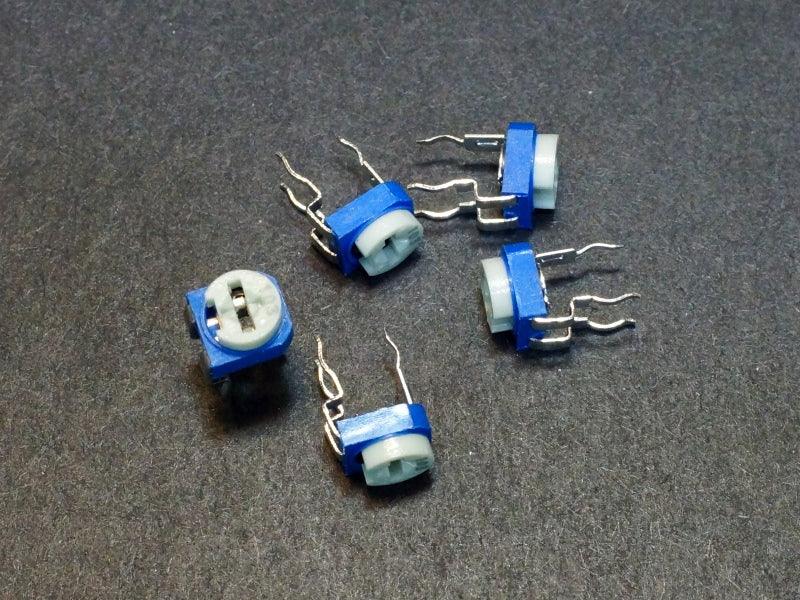
The 10KΩ single-turn trimmer potentiometer is the most commonly stocked trimmer value in any electronics lab — and for good reason. At 10KΩ, it sits at the sweet spot for voltage dividers, op-amp gain networks, comparator thresholds, and sensor calibration circuits. This single-turn version with top-mounted screwdriver adjustment and breadboard-compatible formed leads is the go-to choice for prototyping: plug it directly into a solderless breadboard, adjust with a flat-head screwdriver, and your circuit is calibrated in seconds.
Cermet resistive element provides significantly better long-term stability than carbon trimmers — resistance stays consistent across temperature cycles and humidity, making these suitable for both bench prototyping and permanent installation in enclosures.
Key Specifications
| Resistance | 10KΩ (10,000Ω) |
| Tolerance | ±10% (typical measured: 9.5K–10.5KΩ) |
| Power Rating | 0.5W |
| Turns | Single-turn (~270° rotation) |
| Adjustment | Top-mounted screwdriver slot |
| Resistive Element | Cermet |
| Min Resistance (wiper) | <2Ω |
| Package | 3 radial leads, 10×10×10mm |
| Lead Spacing | Formed for solderless breadboard compatibility |
| Compliance | RoHS compliant |
Single-Turn vs Multi-Turn — Which to Choose?
- Single-turn (this): Full resistance range in ~270° of rotation — fast adjustment, ideal for non-critical settings, LED brightness, motor speed, and coarse calibration. Best when you need quick adjustment without fine precision.
- Multi-turn 3296: Full range across ~20 turns — 20× finer resolution. Best for precision reference voltages, sensor span calibration, and any setting that must be stable and repeatable over time.
Typical Applications
- Comparator threshold setting — LM393, LM339: set the voltage at which the comparator switches
- Op-amp gain adjustment — LM358, LM741: trim closed-loop gain in inverting/non-inverting amplifier circuits
- Arduino analog input voltage divider — set a variable reference voltage for ADC input calibration
- Sensor output calibration — light (LDR), temperature (NTC/PTC), and pressure sensor zero-point adjustment
- LED brightness control — set fixed brightness level for indicator LEDs in enclosures
- NE555 / TLC555 timing adjustment — fine-tune oscillator frequency or monostable pulse width
- Motor speed coarse setting — set base speed for DC motor PWM driver circuits
- Audio level trim — balance channel levels in audio mixer and amplifier circuits
Why Cermet Over Carbon?
Carbon trimmers are cheap but drift — resistance changes with temperature, humidity, and age. Cermet (ceramic-metal) trimmers maintain their set resistance across a wide temperature range (−40°C to +85°C), resist moisture, and last significantly longer. For any circuit where the trimmer setting must remain stable after calibration, cermet is the professional choice.
Package Contents
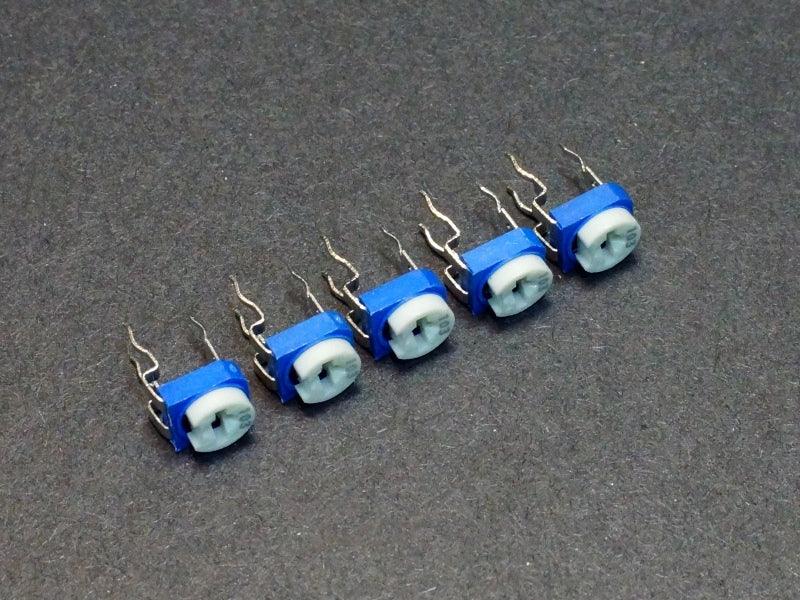
- 5 × Trimmer Potentiometer 10KΩ Single-Turn (top-adjust, breadboard compatible, cermet)

Blog posts
View all-

Best JST Connector Crimping Tools in 2026: Engi...
Choosing the wrong crimping tool ruins JST connectors and wastes wire. This guide compares the top crimping tools for JST SH, GH, PH, XH, and VH series — including Engineer...
Best JST Connector Crimping Tools in 2026: Engi...
Choosing the wrong crimping tool ruins JST connectors and wastes wire. This guide compares the top crimping tools for JST SH, GH, PH, XH, and VH series — including Engineer...
-

Molex KK 254 vs Mini-Fit Jr. vs Micro-Fit 3.0: ...
Choosing between Molex KK 254, Mini-Fit Jr., and Micro-Fit 3.0? This guide compares pitch, current rating, locking mechanism, wire gauge, and typical applications — with decision tables, part number references,...
Molex KK 254 vs Mini-Fit Jr. vs Micro-Fit 3.0: ...
Choosing between Molex KK 254, Mini-Fit Jr., and Micro-Fit 3.0? This guide compares pitch, current rating, locking mechanism, wire gauge, and typical applications — with decision tables, part number references,...
-

DuPont Connector vs JST PH 2.0: Pinout, Specs &...
Not sure whether to use a DuPont 2.54mm or JST PH 2.0mm connector? This guide compares pitch, locking mechanism, current rating, pinout, and best use cases — so you can...
DuPont Connector vs JST PH 2.0: Pinout, Specs &...
Not sure whether to use a DuPont 2.54mm or JST PH 2.0mm connector? This guide compares pitch, locking mechanism, current rating, pinout, and best use cases — so you can...


