

Keszoox
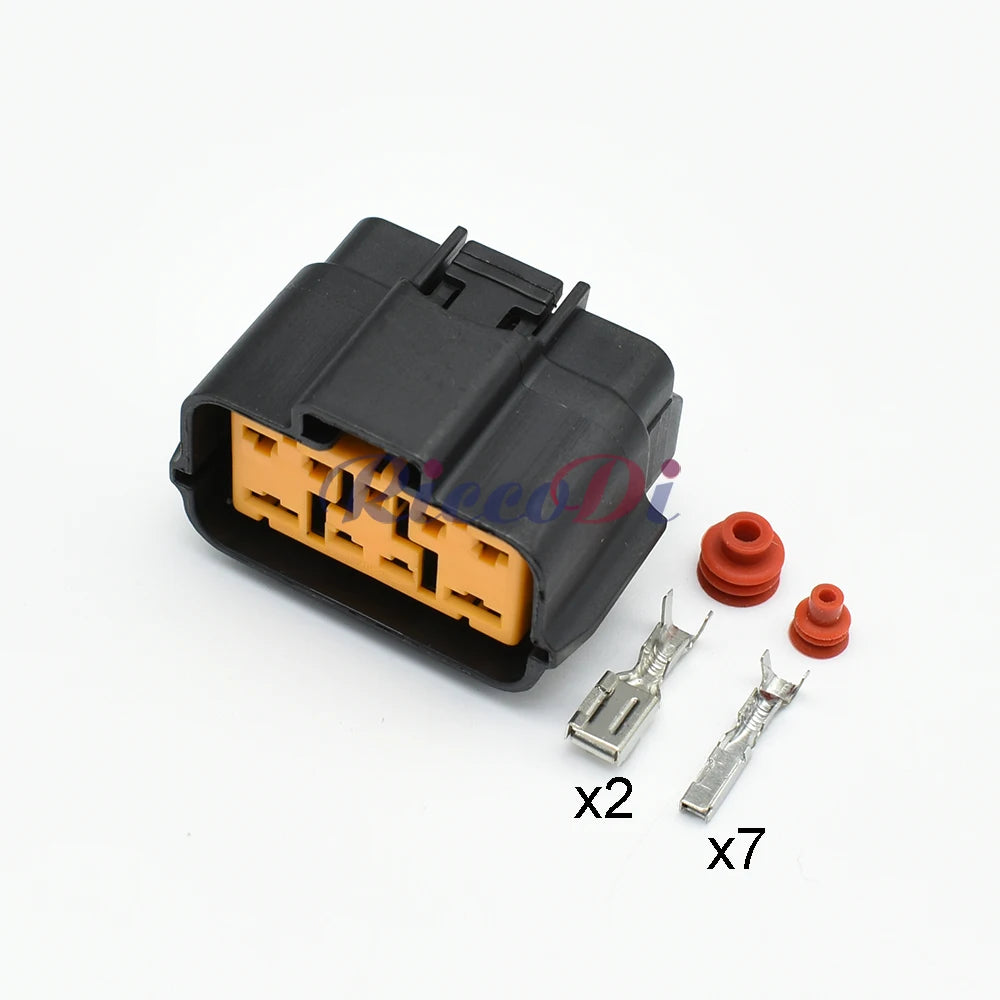
6195-0238 Automotive 9-Pin Sealed Composite Connector — 2.2mm / 4.8mm Mixed Pitch Wire Harness Socket
6195-0238 Automotive 9-Pin Sealed Composite Connector 2.2mm / 4.8mm Mixed Pitch Wire Harness Socket

Couldn't load pickup availability
6195-0238 Automotive 9-Pin Sealed Composite Connector — 2.2mm / 4.8mm Mixed Pitch
The 6195-0238 is a 9-pin sealed composite automotive connector from Sumitomo Electric, featuring a mixed terminal pitch design combining 2.2mm signal terminals and 4.8mm power terminals in a single housing. Composite connectors are used when a single connector must interface both low-current signal circuits (sensor inputs, CAN bus, switch outputs) and moderate-to-high current power circuits (motor power, heating elements, actuator power) — eliminating the need for separate signal and power connectors in space-constrained applications.
The 6195-0238 is used in Sumitomo-harness vehicles (Toyota, Honda, Nissan) for applications such as door module connectors, seat control module connectors, and HVAC actuator assemblies where signal and power circuits must be combined in a single sealed connector interface.
Key Specifications
| Parameter | Value |
|---|---|
| OEM Part Number | 6195-0238 |
| Manufacturer | Sumitomo Electric |
| Pin Count | 9-pin (composite) |
| Terminal Pitch | 2.2mm (signal) + 4.8mm (power) — mixed |
| Sealing | Waterproof (sealed) |
| Housing Material | PA66 glass-filled nylon |
| Terminal Material | Tin-plated copper alloy |
| Signal Terminal Rating | Up to 5A (2.2mm) |
| Power Terminal Rating | Up to 10A (4.8mm) |
| Operating Temperature | -40°C to +125°C |
| Compatible Platforms | Toyota, Honda, Nissan (Sumitomo harness) |
| Compliance | RoHS |
Composite Connector Design — Why Mixed Pitch Matters
- Single connector for mixed circuits — combining signal (2.2mm) and power (4.8mm) terminals in one housing reduces connector count, simplifies harness routing, and eliminates the risk of mis-mating separate signal and power connectors
- Space efficiency — a single 9-pin composite connector occupies less space than two separate connectors (one signal, one power), critical in door modules and seat assemblies where space is limited
- Sealed for moisture protection — the sealed design protects both signal and power circuits from moisture in door, seat, and underbody applications
- Sumitomo OEM standard — Sumitomo composite connectors are used across Toyota, Honda, and Nissan platforms for door module, seat, and HVAC applications
Typical Applications
- Door module connector repair (window motor + switch signal)
- Seat control module connector replacement (motor power + position sensor)
- HVAC actuator assembly connector repair
- Mixed signal/power circuit connector replacement on Sumitomo-harness vehicles
Frequently Asked Questions
Q: How do I identify the 2.2mm and 4.8mm terminal positions in the 6195-0238 housing?
The composite housing has two distinct cavity sizes — the smaller cavities (2.2mm) are for signal terminals and the larger cavities (4.8mm) are for power terminals. The cavity sizes are visually distinguishable and physically prevent inserting the wrong terminal size. Consult the Sumitomo connector datasheet or your vehicle’s wiring diagram for the specific pin assignment (which circuits use 2.2mm vs 4.8mm terminals).
Q: Can I use a standard 2.2mm terminal in the 4.8mm cavities?
No — a 2.2mm terminal in a 4.8mm cavity will not lock properly and will create a loose, unreliable connection. The terminal must match the cavity size. Using the wrong terminal size in a composite connector is a common assembly error that causes intermittent faults in the power circuits. Always use the correct terminal size for each cavity position.
Q: What causes composite connector failure in door module applications?
Door module connectors experience the most demanding mechanical environment of any automotive connector — the door opens and closes thousands of times per year, flexing the wiring harness at the connector entry point. The most common failure modes are: wire breakage at the terminal crimp from repeated flexing, terminal push-back from connector disconnection during door panel removal, and moisture ingress through degraded wire seals in the door cavity. Inspect the connector and wiring harness at the door hinge area for signs of chafing or wire damage.