

Keszoox
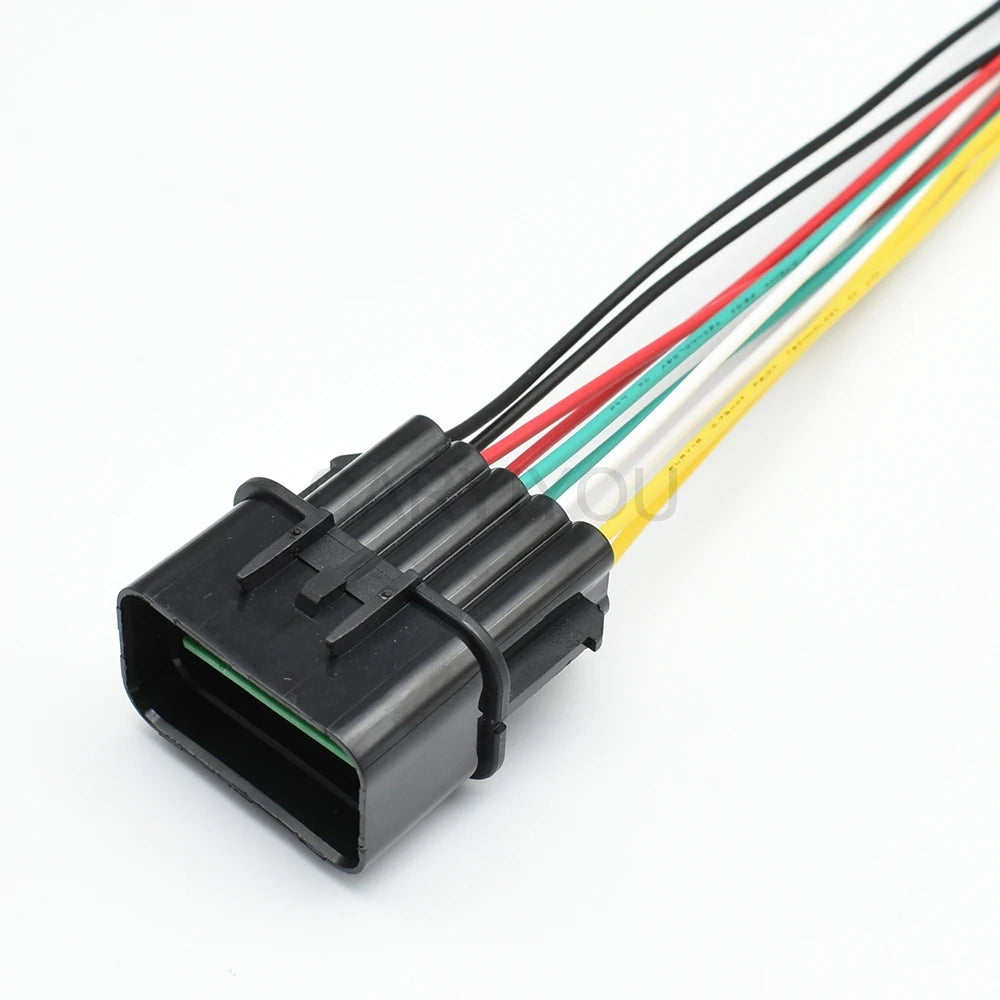
PB625-10027 / PK501-10020 Automotive 10-Pin Waterproof Connector — Female Male Plug for Car & Motorcycle
PB625-10027 / PK501-10020 Automotive 10-Pin Waterproof Connector Female Male Plug for Car & Motorcycle

Couldn't load pickup availability
PB625-10027 / PK501-10020 Automotive 10-Pin Waterproof Connector — Car & Motorcycle
The PB625-10027 (female socket) and PK501-10020 (male plug) are 10-pin waterproof automotive connectors for car and motorcycle wiring harness applications. These connectors are used in ECU, sensor, and body control module wiring harnesses on Japanese and Chinese vehicle platforms, providing sealed moisture protection for underhood and chassis wiring circuits. The 10-pin sealed configuration is suitable for sensor assemblies, ECU signal connectors, and multi-function actuator connectors requiring moisture protection in exposed locations.
Motorcycle applications place particularly demanding requirements on connectors — the connector must withstand direct rain exposure, road spray, pressure washing, and temperature extremes from -40°C in winter storage to +125°C near the engine. The sealed design of the PB625-10027/PK501-10020 provides the moisture protection required for reliable operation in these conditions.
Key Specifications
| Parameter | Value |
|---|---|
| OEM Part Numbers | PB625-10027 (female) / PK501-10020 (male) |
| Pin Count | 10-pin |
| Sealing | Waterproof (sealed housing + wire seals) |
| Application | Car and motorcycle wiring harness |
| Housing Material | PA66 glass-filled nylon |
| Terminal Material | Tin-plated copper alloy |
| Operating Temperature | -40°C to +125°C |
| Compliance | RoHS |
Motorcycle Connector Requirements — Why Sealing Is Critical
- Direct weather exposure — unlike automotive connectors protected by body panels, motorcycle connectors are directly exposed to rain, road spray, and pressure washing; unsealed connectors fail rapidly in motorcycle applications
- Vibration from engine and road — motorcycle engines transmit significantly more vibration to the wiring harness than automotive engines; connectors must have robust locking mechanisms to prevent vibration-induced disconnection
- Temperature extremes — motorcycles are stored outdoors in winter (-40°C) and operated near high-temperature engines (+125°C near the cylinder head); the connector must maintain sealing integrity across this full temperature range
- Compact packaging — motorcycle wiring harnesses are routed in tight spaces; the 10-pin sealed connector provides high circuit density in a compact housing suitable for motorcycle frame routing
Typical Applications
- Motorcycle ECU and sensor connector repair
- Motorcycle body control module wiring harness replacement
- Car underbody and chassis sealed connector repair
- ATV and off-road vehicle wiring harness connector replacement
- Custom motorcycle wiring harness fabrication
Frequently Asked Questions
Q: How do I prevent motorcycle connector corrosion in wet climates?
In addition to using sealed connectors, apply dielectric grease to the terminal contact surfaces before assembly. For connectors that are already installed, use a waterproof connector spray (e.g., WD-40 Specialist Electrical Contact Cleaner followed by a waterproof sealant) to protect exposed connector mating faces. Store the motorcycle in a covered location when not in use — prolonged outdoor storage in wet conditions accelerates connector corrosion even on sealed connectors.
Q: What is the difference between PB625-10027 and PK501-10020?
PB625-10027 is the female socket — it has socket terminals and is typically on the wiring harness side. PK501-10020 is the male plug — it has pin terminals and is typically on the component (ECU, sensor) side. The two connectors are a matched pair that mate together. Always verify the gender of your original connector before ordering.
Q: Can I use PB625-10027 / PK501-10020 for a marine application?
Yes — the sealed design and -40°C to +125°C temperature rating make these connectors suitable for marine applications. However, for saltwater marine environments, consider using connectors with gold-plated terminals for superior corrosion resistance — tin plating can corrode in prolonged saltwater exposure. For freshwater marine applications, tin-plated terminals with sealed connectors provide adequate protection.