

Keszoox
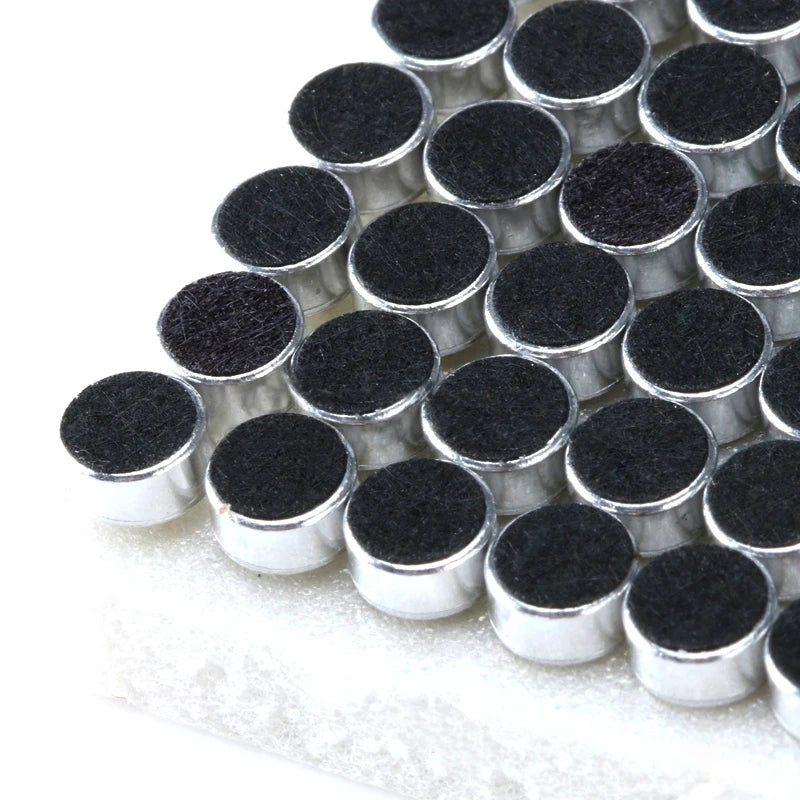
6×2.2mm Electret Condenser Microphone Capsule Capacitive Pickup Mic for Arduino DIY Audio
6×2.2mm Electret Condenser Microphone Capsule Capacitive Pickup Mic for Arduino DIY Audio

Couldn't load pickup availability
6×2.2mm Electret Condenser Microphone Capsule — Capacitive Pickup for Arduino & DIY Audio
This compact 6×2.2mm electret condenser microphone capsule is the go-to choice for makers, engineers, and hobbyists building sound-sensitive electronics. Its small footprint fits directly onto PCBs, breadboards, or custom enclosures, while its high-sensitivity capacitive element captures audio clearly across a wide frequency range. Compatible with Arduino, Raspberry Pi, and virtually any microcontroller-based project requiring audio input.
Specifications
| Type | Electret Condenser Microphone (ECM) |
| Dimensions | 6mm diameter × 2.2mm height |
| Pickup Type | Capacitive (Electret) |
| Sensitivity | High sensitivity |
| Directivity | Omnidirectional |
| Operating Voltage | Typically 1.5V – 10V DC (via bias resistor) |
| Frequency Response | 20Hz – 20kHz |
| Terminals | 2-pin (Source / Ground) |
| Application | Arduino, Raspberry Pi, DIY audio, sound detection |
| Origin | Mainland China |
How to Use with Arduino
- Connect the microphone’s positive terminal (S) through a 10kΩ pull-up resistor to VCC (3.3V or 5V).
- Connect the negative terminal (GND) to Arduino GND.
- Read the audio signal from the junction between the resistor and the microphone terminal using an analog input pin (A0–A5).
- Use
analogRead()in your sketch to capture sound level data. - For voice recording or frequency analysis, pair with an op-amp amplifier circuit (e.g., LM386) for signal amplification before ADC input.
Why Choose This Microphone Capsule?
- ✅ Ultra-compact 6×2.2mm form factor — fits tight PCB layouts and miniature enclosures
- ✅ Omnidirectional pickup — captures sound from all directions, ideal for ambient sound detection
- ✅ Wide frequency response — 20Hz–20kHz covers full human hearing range
- ✅ Low operating voltage — compatible with 3.3V and 5V microcontroller systems
- ✅ Easy PCB integration — standard 2-pin through-hole footprint
- ✅ Cost-effective — ideal for prototyping and production runs
Common Applications
- Arduino sound detection and clap-switch projects
- Voice-activated relay and automation circuits
- DIY intercom and walkie-talkie builds
- Noise level monitoring and environmental sensing
- Raspberry Pi audio input for speech recognition
- Wearable electronics and IoT audio nodes
- Replacement capsule for headsets and small speakers
Frequently Asked Questions
Q: Do I need an amplifier circuit?
A: For basic sound detection (clap switch, noise threshold), a simple pull-up resistor is sufficient. For voice recording or frequency analysis, an op-amp amplifier (LM386, MAX4466, or similar) is recommended to boost the signal before ADC conversion.
Q: Is this compatible with 3.3V systems?
A: Yes. Electret condenser microphones typically operate from 1.5V to 10V, making them fully compatible with both 3.3V (ESP32, STM32, Raspberry Pi) and 5V (Arduino UNO, Mega) systems.
Q: What is the polarity?
A: The terminal connected to the metal case is GND (negative). The other terminal is the signal output (positive/source). Check the capsule markings or datasheet for your specific batch.
Package Contents
- Electret Condenser Microphone Capsules (quantity as selected)