

Keszoox
Adjustable 0–30V 2mA–3A DC Laboratory Power Supply DIY Kit | Short-Circuit & Current Limit Protection | Arduino
Adjustable 0–30V 2mA–3A DC Laboratory Power Supply DIY Kit | Short-Circuit & Current Limit Protection | Arduino

Couldn't load pickup availability
Adjustable 0–30V / 2mA–3A DC Laboratory Power Supply DIY Kit — Short-Circuit & Current Limit Protection
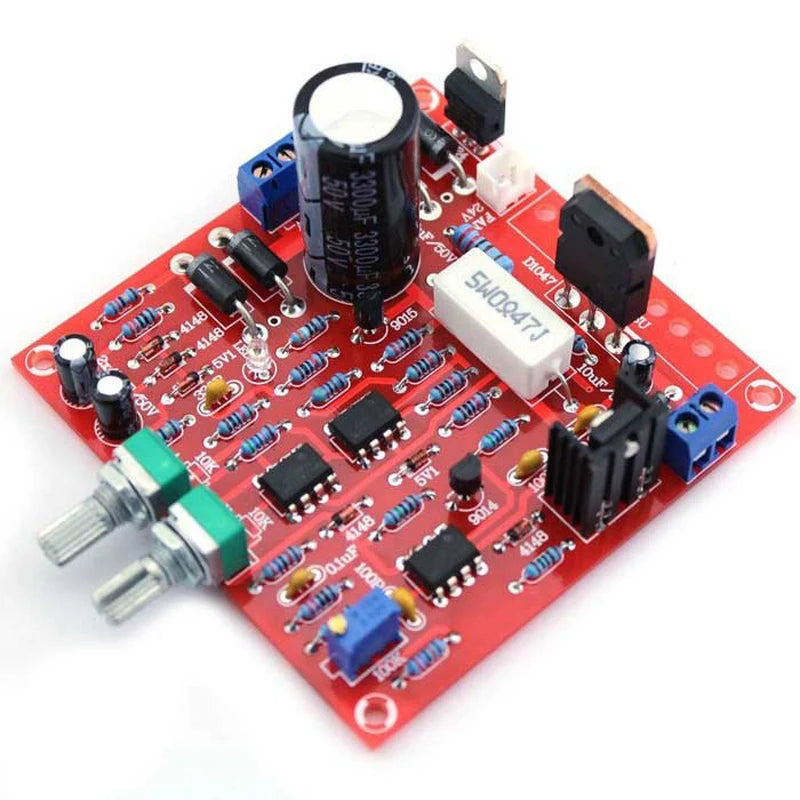
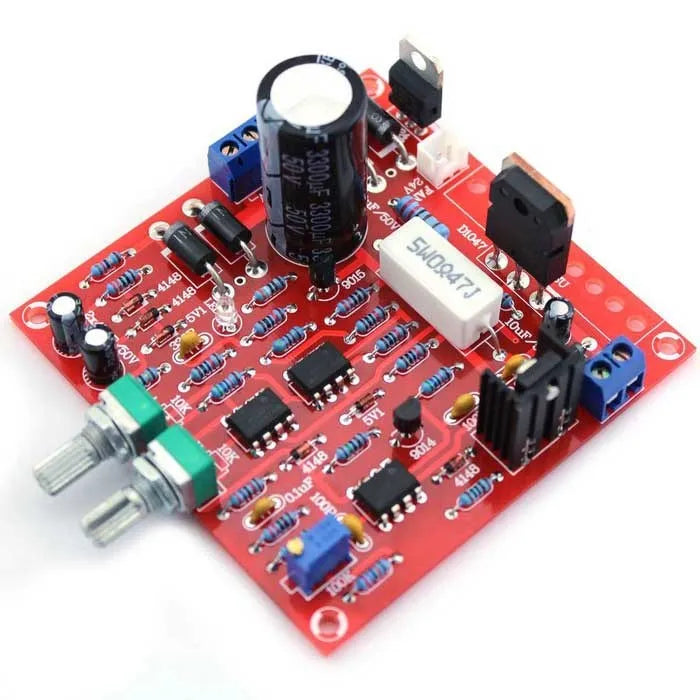
Build your own professional-grade adjustable DC laboratory power supply with this comprehensive DIY kit. Covering 0–30V output voltage and 2mA–3A output current — both continuously adjustable — this kit delivers the core functionality of a bench power supply at a fraction of the cost. The ultra-low output ripple (0.01%), short-circuit protection, and adjustable current limiting make it suitable for powering sensitive electronics, testing circuits, charging batteries, and driving LEDs with precision current control. All components are through-hole (straight-insert) for easy hand-soldering, making this an excellent intermediate-level electronics assembly project.
Specifications
| Input Voltage | 24V AC (external transformer required) |
| Input Current | 3A max |
| Output Voltage | 0V – 30V DC (continuously adjustable) |
| Output Current | 2mA – 3A (continuously adjustable) |
| Output Voltage Ripple | ≤0.01% (excellent regulation) |
| Minimum Current | 2mA (suitable for LED and Zener diode testing) |
| Short-Circuit Protection | Yes (automatic) |
| Overload Protection | Yes — LED indicator activates when current exceeds set limit |
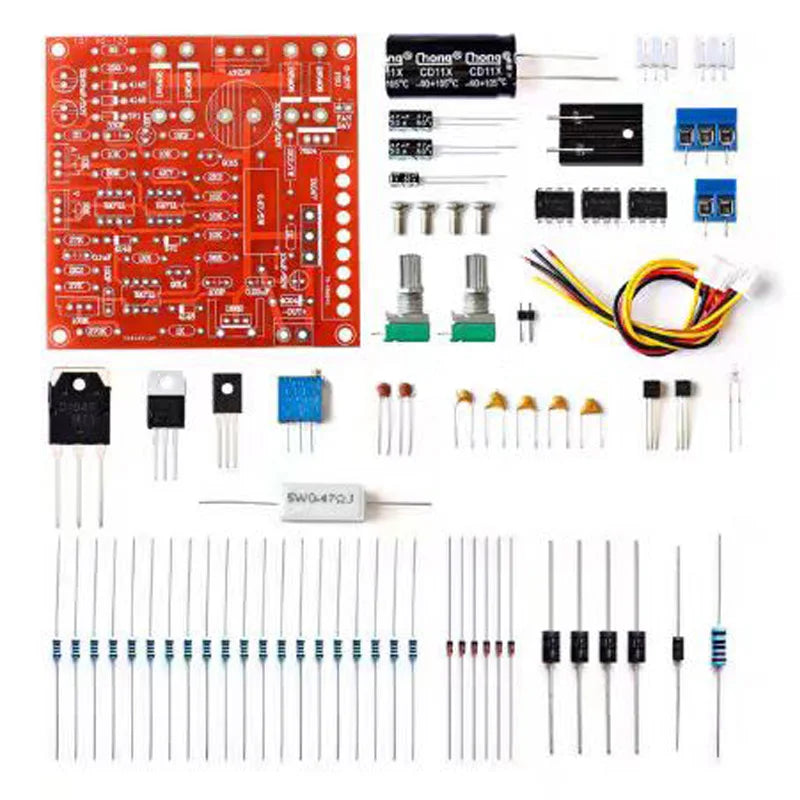
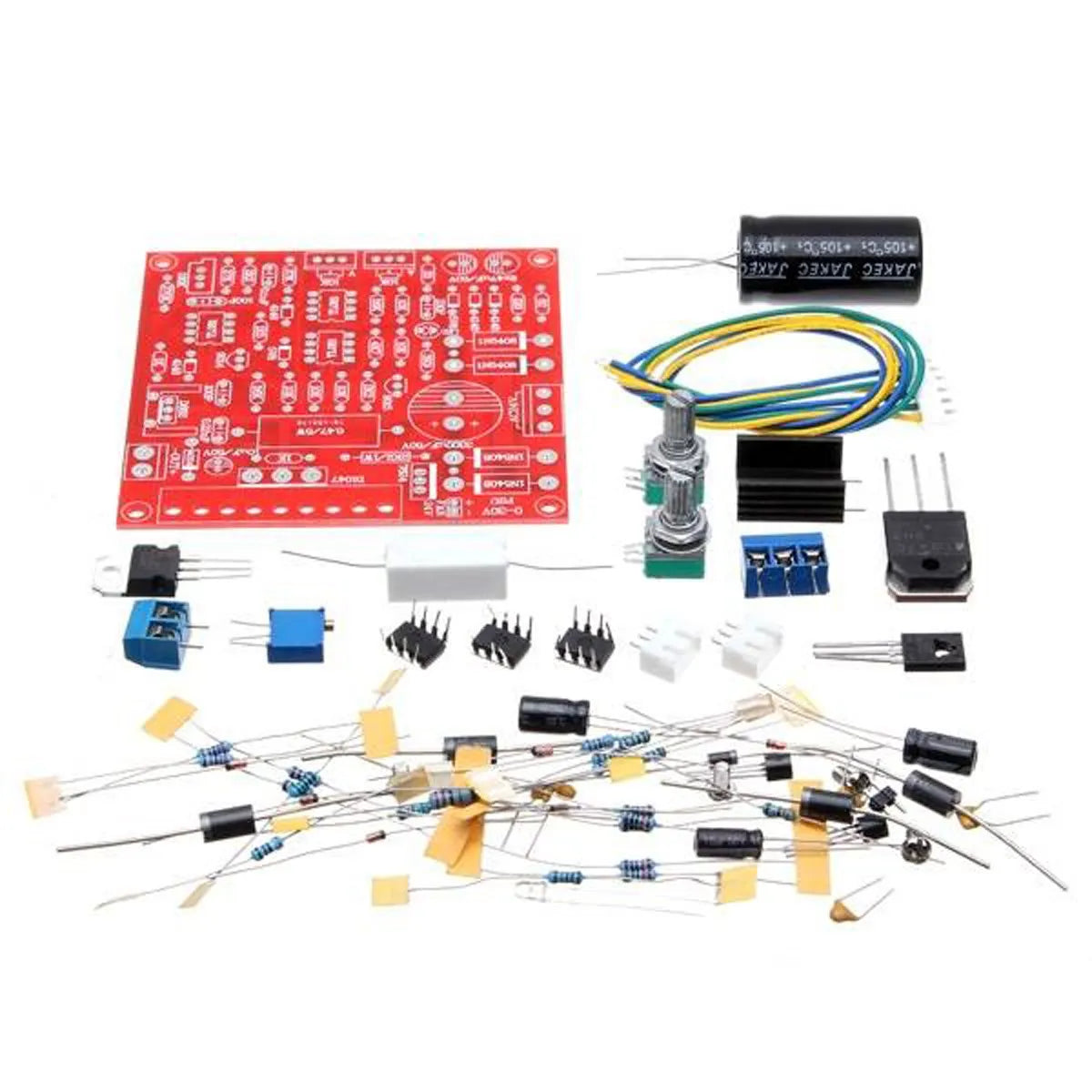
| Component Type | Through-hole (straight-insert), DIY assembly required |
| Origin | Mainland China |
What Makes a Good Lab Power Supply?
A laboratory power supply differs from a simple wall adapter in three critical ways:
- Adjustable voltage — set the exact voltage your circuit requires, from 0V to 30V, without fixed voltage rails
- Adjustable current limiting — set a maximum current to protect sensitive components from overcurrent damage during testing
- Low ripple — 0.01% ripple means the output is a clean, stable DC voltage, not a noisy approximation that can cause circuit instability
Key Features
- ✅ 0–30V continuously adjustable — covers 1.5V, 3.3V, 5V, 9V, 12V, 24V and any custom voltage
- ✅ 2mA–3A current range — from microampere-sensitive LED testing to 3A motor and power circuit testing
- ✅ 0.01% output ripple — ultra-clean DC output for sensitive analog and RF circuit testing
- ✅ Short-circuit protection — automatically limits current on short circuit, protecting both the supply and the circuit under test
- ✅ LED overcurrent indicator — visual alert when output current exceeds the set current limit
- ✅ Through-hole components — all components are easy to hand-solder, suitable for intermediate builders
- ✅ 2mA minimum current — low enough to safely test LEDs and Zener diodes without burning them out
What You Need to Complete the Build
- 24V AC transformer (not included) — rated at 3A or higher
- Soldering iron and solder
- Multimeter (for calibration and testing)
- Enclosure (optional, for a finished bench supply)
- Voltage and current display meters (optional, for front-panel readout)
Common Applications
- Arduino and microcontroller circuit testing and development
- LED forward voltage and current characterisation
- Zener diode breakdown voltage testing
- Li-ion and LiPo battery charging (with current limiting)
- Transistor and MOSFET circuit testing
- Analog circuit development and debugging
- Electronics education and lab experiments
- DIY bench power supply build project
Frequently Asked Questions
Q: Is this kit pre-assembled or do I need to solder it?
A: This is a DIY kit — all components are included but require soldering. All components are through-hole (straight-insert) for easy hand-soldering. Intermediate soldering skills are recommended.
Q: What transformer do I need?
A: A 24V AC transformer rated at 3A or higher is required. This is not included in the kit. A standard toroidal or EI-core transformer with a 24V AC secondary winding is suitable.
Q: Can I use this to charge lithium batteries?
A: Yes. Set the output voltage to the appropriate charge voltage (e.g., 4.2V for 1S Li-ion) and set the current limit to the desired charge rate. Monitor the charging process — this kit does not include automatic charge termination.
Package Contents
- 1× Adjustable DC Laboratory Power Supply DIY Kit (all through-hole components, PCB, and assembly instructions)

