



Keszoox
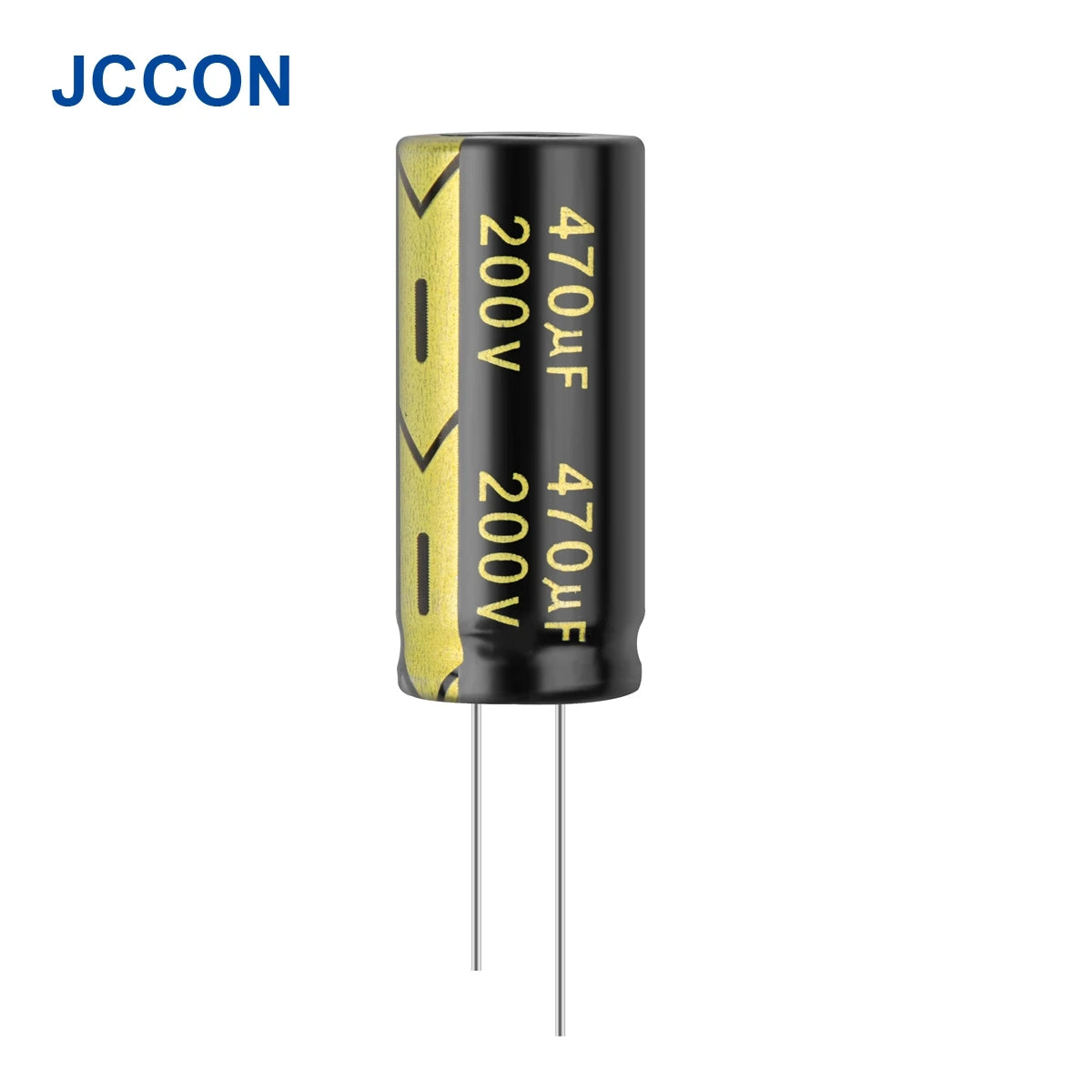
Aluminum Electrolytic Capacitor — High Frequency Low ESR, 25V–450V, 68μF–10000μF
Aluminum Electrolytic Capacitor High Frequency Low ESR, 25V–450V, 68μF–10000μF

Couldn't load pickup availability
Aluminum Electrolytic Capacitor — High Frequency / Low ESR, 25V–450V, 68μF–10000μF
These high-frequency, low-ESR aluminum electrolytic capacitors are engineered for demanding power electronics applications where standard general-purpose capacitors fall short. With a wide voltage range of 25V to 450V and capacitance options from 68μF to 10000μF, they are the go-to choice for switching power supply (SMPS) output filters, audio amplifier power stages, motor drive inverters, and industrial control circuits.
Key Specifications
| Parameter | Value |
|---|---|
| Type | Aluminum Electrolytic, Radial Lead |
| Voltage Range | 25V, 35V, 50V, 63V, 100V, 160V, 200V, 250V, 400V, 450V |
| Capacitance Range | 68μF – 10000μF |
| ESR | Low ESR (high-frequency grade) |
| Frequency Rating | High frequency (suitable for 10kHz–500kHz SMPS) |
| Temperature Rating | 105°C (standard high-temp grade) |
| Lead Style | Radial (through-hole) |
| Compliance | RoHS compliant |
| Origin | CN |
Why Choose Low ESR / High Frequency Capacitors?
- Low ESR reduces heat generation — Standard electrolytic capacitors have high ESR that causes resistive heating at switching frequencies; low-ESR types run cooler and last longer
- Better ripple current handling — High-frequency grade capacitors tolerate higher ripple currents without degradation, critical for SMPS output stages
- 105°C rated — Extended temperature rating vs standard 85°C capacitors; suitable for high-ambient-temperature environments such as enclosed power supplies and automotive electronics
- Wide voltage selection — 25V to 450V covers everything from 5V USB power supplies to 400V AC mains rectifier bulk capacitors
- RoHS compliant — Meets EU RoHS Directive requirements for lead-free electronics manufacturing
Typical Applications
- SMPS (switching mode power supply) output filter capacitors
- PFC (power factor correction) bulk capacitors at 400V–450V
- Audio amplifier power supply decoupling and filter stages
- Motor drive and VFD (variable frequency drive) DC bus capacitors
- LED driver and lighting power supply circuits
- Arduino, Raspberry Pi, and embedded system power rail decoupling
- UPS and battery charger filter stages
Compatible With / Replaces
- Replaces standard 85°C general-purpose electrolytic capacitors in any application (direct upgrade)
- Compatible with: Nichicon UHE/UHW series, Panasonic FR/FM series, Rubycon ZLH/ZL series (equivalent grade)
- Suitable for: ATX power supplies, laptop charger repair, amplifier recap, industrial inverter maintenance
Frequently Asked Questions
Q: What does “low ESR” mean and why does it matter?
ESR (Equivalent Series Resistance) is the internal resistance of a capacitor. In switching power supplies operating at 20kHz–500kHz, high ESR causes the capacitor to dissipate power as heat, reducing efficiency and lifespan. Low-ESR capacitors minimize this effect, improving SMPS efficiency and extending capacitor life significantly.
Q: Can I use a higher voltage rating than required?
Yes. Using a capacitor with a higher voltage rating than the circuit requires is safe and often beneficial — it provides additional voltage margin and typically results in lower ESR and longer service life. For example, using a 63V capacitor in a 48V circuit is perfectly acceptable.
Q: What is the difference between high-frequency and standard electrolytic capacitors?
Standard electrolytic capacitors are optimized for 50Hz/60Hz mains frequency applications. High-frequency types use a different electrolyte formulation and construction that maintains low impedance at switching frequencies (10kHz–500kHz), making them essential for SMPS, Class D amplifiers, and PWM motor drives.
Package Contents
- Aluminum electrolytic capacitor(s) per selected variant (voltage and capacitance)
Please select your required voltage and capacitance from the variant options.



Blog posts
View all-

IC Chips & Discrete Components Express Shipping...
Shipping IC chips and discrete electronic components internationally requires more than choosing a carrier. ESD-safe packaging, correct HS codes, accurate customs declarations, and carrier selection for your destination all determine...
IC Chips & Discrete Components Express Shipping...
Shipping IC chips and discrete electronic components internationally requires more than choosing a carrier. ESD-safe packaging, correct HS codes, accurate customs declarations, and carrier selection for your destination all determine...
-

From Prototype to Mass Production — How to Scal...
Scaling from prototype to mass production is the most critical transition in a hardware product's lifecycle. The sourcing strategy that works for 10 prototype boards — cut tape, spot pricing,...
From Prototype to Mass Production — How to Scal...
Scaling from prototype to mass production is the most critical transition in a hardware product's lifecycle. The sourcing strategy that works for 10 prototype boards — cut tape, spot pricing,...
-

ISO 9001 Electronic Component Distributor — Wha...
ISO 9001:2015 certification is the most widely recognized quality management standard in the world — but what does it actually mean when an electronic component distributor claims to be ISO...
ISO 9001 Electronic Component Distributor — Wha...
ISO 9001:2015 certification is the most widely recognized quality management standard in the world — but what does it actually mean when an electronic component distributor claims to be ISO...


