



Solderless Breadboard Assembly 2390 — Hobby Line with Jumper Wires
Solderless Breadboard Assembly 2390 Hobby Line with Jumper Wires
Compatible JST cables for sensors and modules — secure & reliable. Shop now.

Couldn't load pickup availability
Solderless Breadboard Assembly 2390 — Hobby Line with Jumper Wires
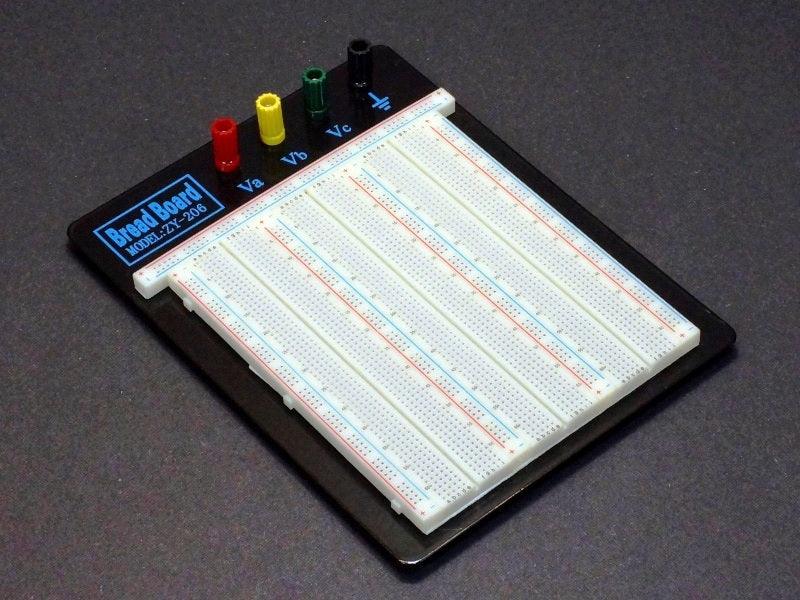
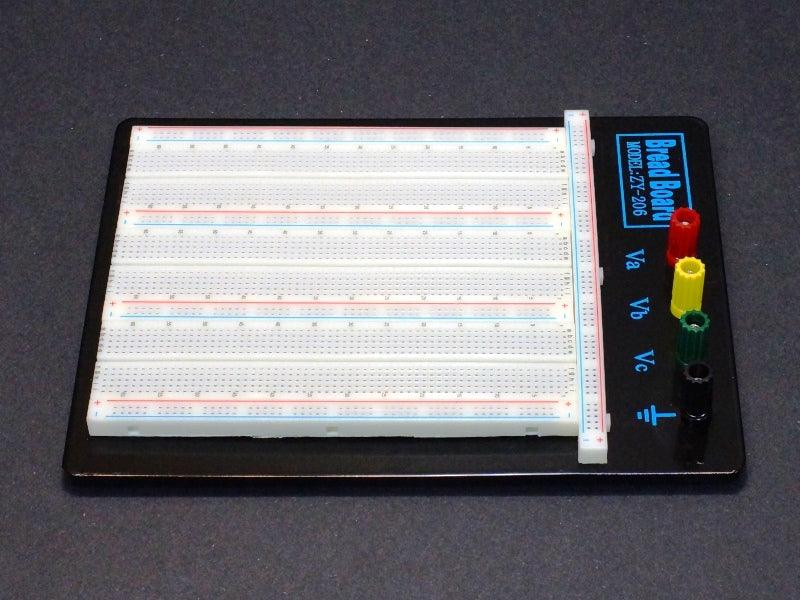
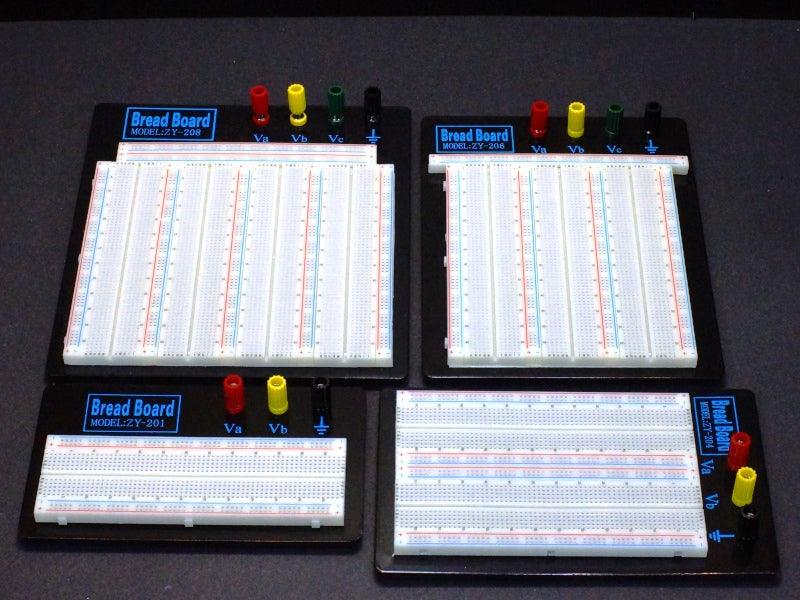
An extra-large 2390-point solderless breadboard assembly from the Hobby Line series, bundled with a jumper wire kit for an immediately ready prototyping workspace. With nearly three times the tie-point count of a standard 830-point breadboard, the 2390-point layout gives you the space to build complex multi-IC circuits, multi-module Arduino projects, and large-scale electronics experiments without running out of room.
The Hobby Line series uses phosphor bronze contacts with a binding force exceeding 60g per contact, providing reliable electrical connections for the vast majority of prototyping applications. The 2.54mm (0.1") pitch is compatible with all standard DIP ICs, through-hole components, and breadboard-compatible modules.
What's Included
- 1× 2390-point solderless breadboard (Hobby Line)
- Jumper wire kit — assorted lengths and colors
- Multiple integrated power rails — dedicated + and − bus strips
Key Specifications
- Tie points: 2390 | Series: Hobby Line
- Contact material: Phosphor bronze | Binding force: >60g per contact
- Wire gauge: AWG #20–#29 | Pitch: 2.54mm (0.1")
- Max voltage: 300V | Max current: 3A per contact
- Operating temperature: −20°C to +80°C | RoHS compliant
Why Choose the 2390-Point Hobby Line?
- ✅ 2390 tie-points — ~3× the space of a standard 830-point board, no more running out of room
- ✅ Multiple power rails — clean + and − power distribution across the full board length
- ✅ Jumper wires included — ready to prototype immediately out of the box
- ✅ No soldering required — insert and remove components freely, iterate fast
- ✅ Universal 2.54mm pitch — compatible with all DIP ICs, Arduino shields, and sensor modules
- ✅ RoHS compliant — meets international environmental standards
Typical Applications
- Complex multi-module Arduino Uno, Mega, and ESP32 projects
- Multi-IC circuit prototyping (microcontrollers + drivers + sensors + displays)
- Electronics lab bench with multiple simultaneous circuits
- IoT device development with many sensors and communication modules
- Advanced electronics education and STEM research projects
- Projects that have outgrown a standard 830 or 1660-point breadboard

Blog posts
View all-

IC Chips & Discrete Components Express Shipping...
Shipping IC chips and discrete electronic components internationally requires more than choosing a carrier. ESD-safe packaging, correct HS codes, accurate customs declarations, and carrier selection for your destination all determine...
IC Chips & Discrete Components Express Shipping...
Shipping IC chips and discrete electronic components internationally requires more than choosing a carrier. ESD-safe packaging, correct HS codes, accurate customs declarations, and carrier selection for your destination all determine...
-

From Prototype to Mass Production — How to Scal...
Scaling from prototype to mass production is the most critical transition in a hardware product's lifecycle. The sourcing strategy that works for 10 prototype boards — cut tape, spot pricing,...
From Prototype to Mass Production — How to Scal...
Scaling from prototype to mass production is the most critical transition in a hardware product's lifecycle. The sourcing strategy that works for 10 prototype boards — cut tape, spot pricing,...
-

ISO 9001 Electronic Component Distributor — Wha...
ISO 9001:2015 certification is the most widely recognized quality management standard in the world — but what does it actually mean when an electronic component distributor claims to be ISO...
ISO 9001 Electronic Component Distributor — Wha...
ISO 9001:2015 certification is the most widely recognized quality management standard in the world — but what does it actually mean when an electronic component distributor claims to be ISO...


