

Keszoox
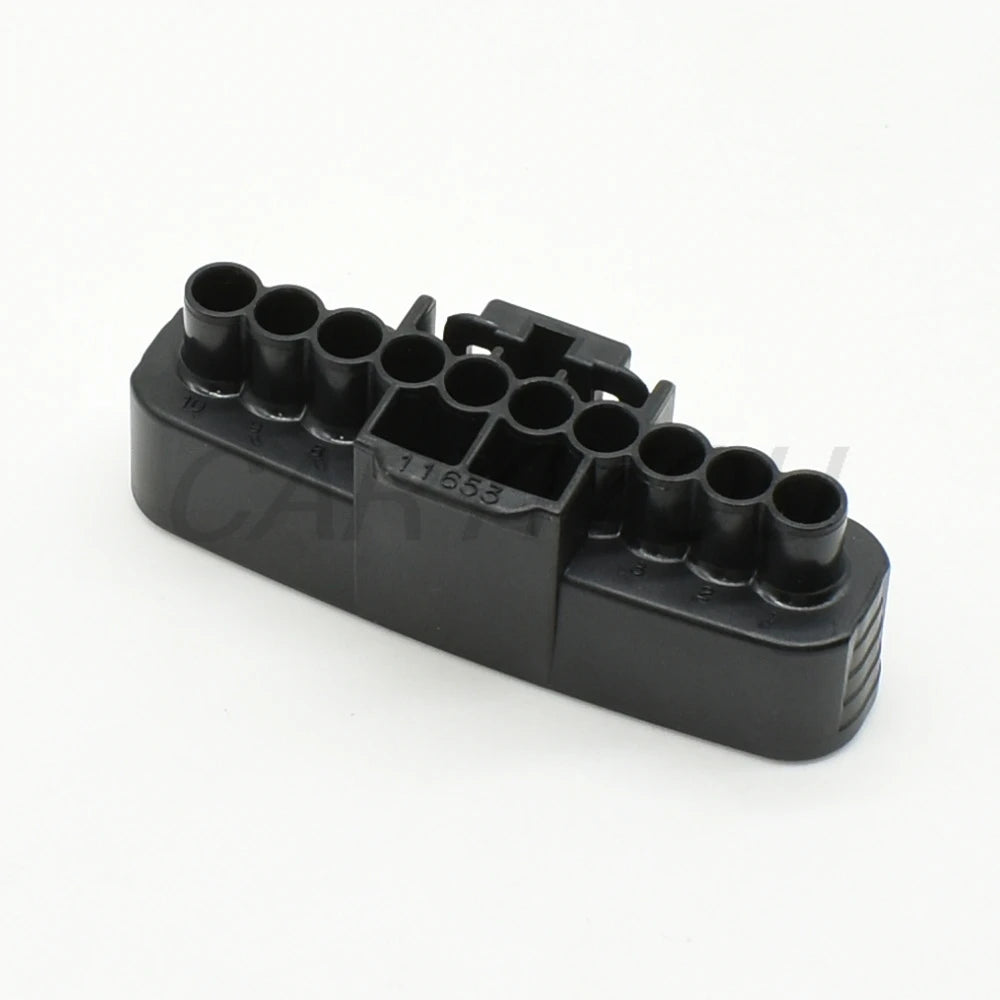
DJ71011-2.2-21 Automotive 10-Pin 2.2mm Wire Harness Connector — Female Socket
DJ71011-2.2-21 Automotive 10-Pin 2.2mm Wire Harness Connector Female Socket

Couldn't load pickup availability
DJ71011-2.2-21 Automotive 10-Pin 2.2mm Wire Harness Connector — Female Socket
The DJ71011-2.2-21 is a 10-pin female automotive connector in the DJ series 2.2mm terminal pitch, designed for ECU, sensor, and body control module wiring harness applications. The DJ series is the dominant automotive connector standard in Chinese OEM vehicles, used by SAIC, FAW, Dongfeng, Chery, Geely, BYD, Great Wall, and many other Chinese vehicle manufacturers. The 2.2mm terminal pitch provides a balance between circuit density and current-carrying capacity — suitable for mixed signal and low-power circuits up to 5A per terminal.
The “-21” suffix in the DJ naming convention indicates a female socket (unsealed). The 10-pin configuration is widely used for sensor assemblies, body control module interfaces, and ECU signal connectors requiring a moderate circuit count in a compact housing.
Key Specifications
| Parameter | Value |
|---|---|
| OEM Part Number | DJ71011-2.2-21 |
| Series | DJ series (Chinese OEM standard) |
| Pin Count | 10-pin |
| Terminal Pitch | 2.2mm |
| Gender | Female socket (“-21” suffix) |
| Sealing | Unsealed |
| Housing Material | PA66 glass-filled nylon |
| Terminal Material | Tin-plated copper alloy |
| Wire Range | 0.3–0.85mm² (22–18 AWG) |
| Current Rating | Up to 5A per terminal |
| Operating Temperature | -40°C to +125°C |
| Compatible Platforms | SAIC, FAW, Dongfeng, Chery, Geely, BYD, Great Wall |
| Compliance | RoHS |
DJ Series — Chinese OEM Connector Standard
- Dominant Chinese OEM standard — the DJ series is used across virtually all Chinese domestic vehicle brands; understanding the DJ naming convention is essential for Chinese vehicle wiring harness repair
- DJ naming convention — DJ7[pin count][variant]-[pitch]-[gender/sealing]: DJ7 = automotive connector, 10 = 10-pin, 11 = variant, 2.2 = 2.2mm pitch, 21 = female unsealed (11 = male unsealed, 22 = female sealed, 12 = male sealed)
- 2.2mm pitch for sensor circuits — the 2.2mm terminal pitch is used for sensor, actuator, and low-power control circuits; larger than the 0.6mm ECU signal pitch but smaller than the 6.3mm power pitch
- Mating connector — the mating male connector is DJ71011-2.2-11 (male unsealed)
Typical Applications
- Chinese OEM vehicle ECU and BCM connector repair
- Sensor and actuator wiring harness repair on SAIC/FAW/Dongfeng vehicles
- Body control module connector replacement
- Custom wiring harness fabrication for Chinese vehicle platforms
Frequently Asked Questions
Q: How do I decode the DJ connector part number?
The DJ series part number format is: DJ7[pin count][variant]-[pitch]-[gender/sealing]. For DJ71011-2.2-21: DJ7 = automotive connector series, 10 = 10-pin, 11 = housing variant, 2.2 = 2.2mm terminal pitch, 21 = female unsealed. The last two digits indicate gender and sealing: 11 = male unsealed, 21 = female unsealed, 12 = male sealed (with wire seals), 22 = female sealed. This convention applies consistently across the entire DJ series.
Q: What is the mating male connector for DJ71011-2.2-21?
The mating male connector is DJ71011-2.2-11 — the “-11” suffix indicates the male (plug) unsealed variant. The male and female connectors share the same housing variant number (71011) and terminal pitch (2.2mm), differing only in the gender/sealing suffix. Always order both male and female variants if replacing a complete connector pair.
Q: Are DJ series connectors compatible with Japanese or European OEM connectors?
No — DJ series connectors are a Chinese OEM standard with housing dimensions and terminal specifications specific to the DJ series. They are not interchangeable with Japanese (Sumitomo, Furukawa, JAE) or European (TE Connectivity, Delphi, Bosch) connector systems, even if the pin count and terminal pitch appear similar. Always use the correct OEM connector series for your vehicle to ensure proper mating and reliable electrical connection.