



LM386 Low-Voltage Audio Amplifier IC DIP-8 – 0.25W to 1W, 4V–12V Supply
LM386 Low-Voltage Audio Amplifier IC DIP-8 – 0.25W to 1W, 4V–12V Supply
Compatible JST cables for sensors and modules — secure & reliable. Shop now.

Couldn't load pickup availability
LM386 Low-Voltage Audio Amplifier IC – DIP-8
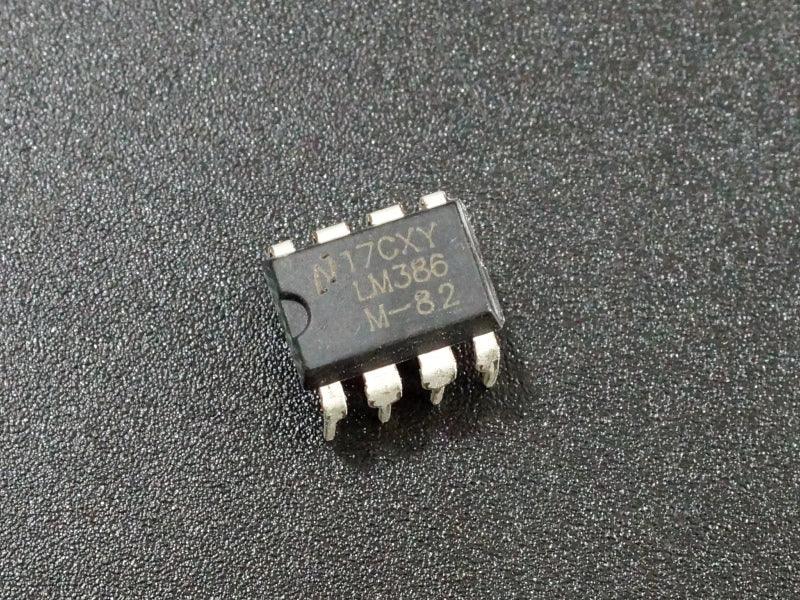
The LM386 is the classic low-voltage audio power amplifier IC – a self-contained mono amplifier that drives a small speaker directly from a 4V to 12V supply with no external power transistors required. With adjustable gain from 20× to 200× and output power from 0.25W to 1W depending on supply voltage and load, it's the go-to IC for portable speaker projects, Arduino audio output, intercoms, and battery-powered audio applications. The DIP-8 package makes it ideal for breadboard prototyping.
Electrical Specifications
- Part Number: LM386 / LM386N / LM386N-1 / LM386N-3 / LM386N-4
- Package: DIP-8 (through-hole, 2.54mm pitch)
- Supply Voltage: 4V – 12V DC
- Output Power: 0.25W (4Ω, 6V) / 0.5W (8Ω, 9V) / 1W (8Ω, 12V, LM386N-4)
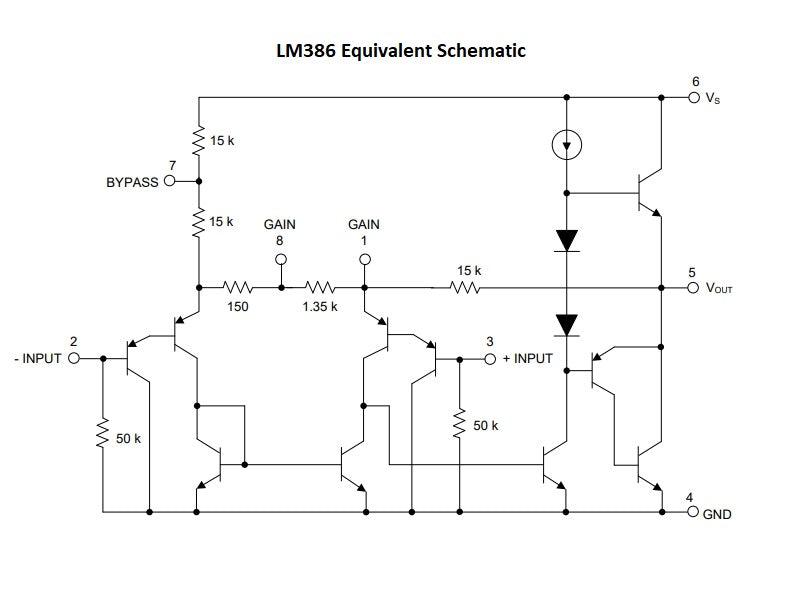
- Gain: 20× (default) to 200× (with 10μF between pins 1 and 8)
- Input Impedance: 50kΩ
- Quiescent Current: 4mA (typical at 6V)
- THD: 0.2% (typical at 125mW, 8Ω, 6V)
- Operating Temperature: 0°C to +70°C
- Built-in thermal shutdown protection
Gain Setting
- 20× (26dB): Pins 1 and 8 open (default)
- 50× (34dB): 1.2kΩ resistor between pins 1 and 8
- 200× (46dB): 10μF capacitor between pins 1 and 8
Typical Applications
- Arduino speaker driver: Drive a small 8Ω speaker from Arduino PWM or DAC output
- Portable speaker: Battery-powered compact speaker amplifier
- Intercom system: Voice amplification for two-way communication
- Walkie-talkie audio: Receiver audio amplifier stage
- AM/FM radio: Audio output stage for radio receiver circuits
- IoT audio alerts: Speaker driver for notification and alarm sounds
Package Contents
- 1 × LM386 DIP-8 low-voltage audio amplifier IC
The classic portable audio amplifier IC – the LM386 drives a small speaker directly from 4V–12V with adjustable gain up to 200× and no external power transistors required.

Blog posts
View all-

IC Chips & Discrete Components Express Shipping...
Shipping IC chips and discrete electronic components internationally requires more than choosing a carrier. ESD-safe packaging, correct HS codes, accurate customs declarations, and carrier selection for your destination all determine...
IC Chips & Discrete Components Express Shipping...
Shipping IC chips and discrete electronic components internationally requires more than choosing a carrier. ESD-safe packaging, correct HS codes, accurate customs declarations, and carrier selection for your destination all determine...
-

From Prototype to Mass Production — How to Scal...
Scaling from prototype to mass production is the most critical transition in a hardware product's lifecycle. The sourcing strategy that works for 10 prototype boards — cut tape, spot pricing,...
From Prototype to Mass Production — How to Scal...
Scaling from prototype to mass production is the most critical transition in a hardware product's lifecycle. The sourcing strategy that works for 10 prototype boards — cut tape, spot pricing,...
-

ISO 9001 Electronic Component Distributor — Wha...
ISO 9001:2015 certification is the most widely recognized quality management standard in the world — but what does it actually mean when an electronic component distributor claims to be ISO...
ISO 9001 Electronic Component Distributor — Wha...
ISO 9001:2015 certification is the most widely recognized quality management standard in the world — but what does it actually mean when an electronic component distributor claims to be ISO...


