

Keszoox
Molex 51005 / 51006 Male-Female Extension Cable — MX 2.0mm, 2–12 Pin, 22AWG UL1007
Molex 51005 / 51006 Male-Female Extension Cable MX 2.0mm, 2–12 Pin, 22AWG UL1007

Couldn't load pickup availability
Molex 51005 / 51006 Male-Female Extension Cable — MX 2.0mm, 2–12 Pin, 22AWG
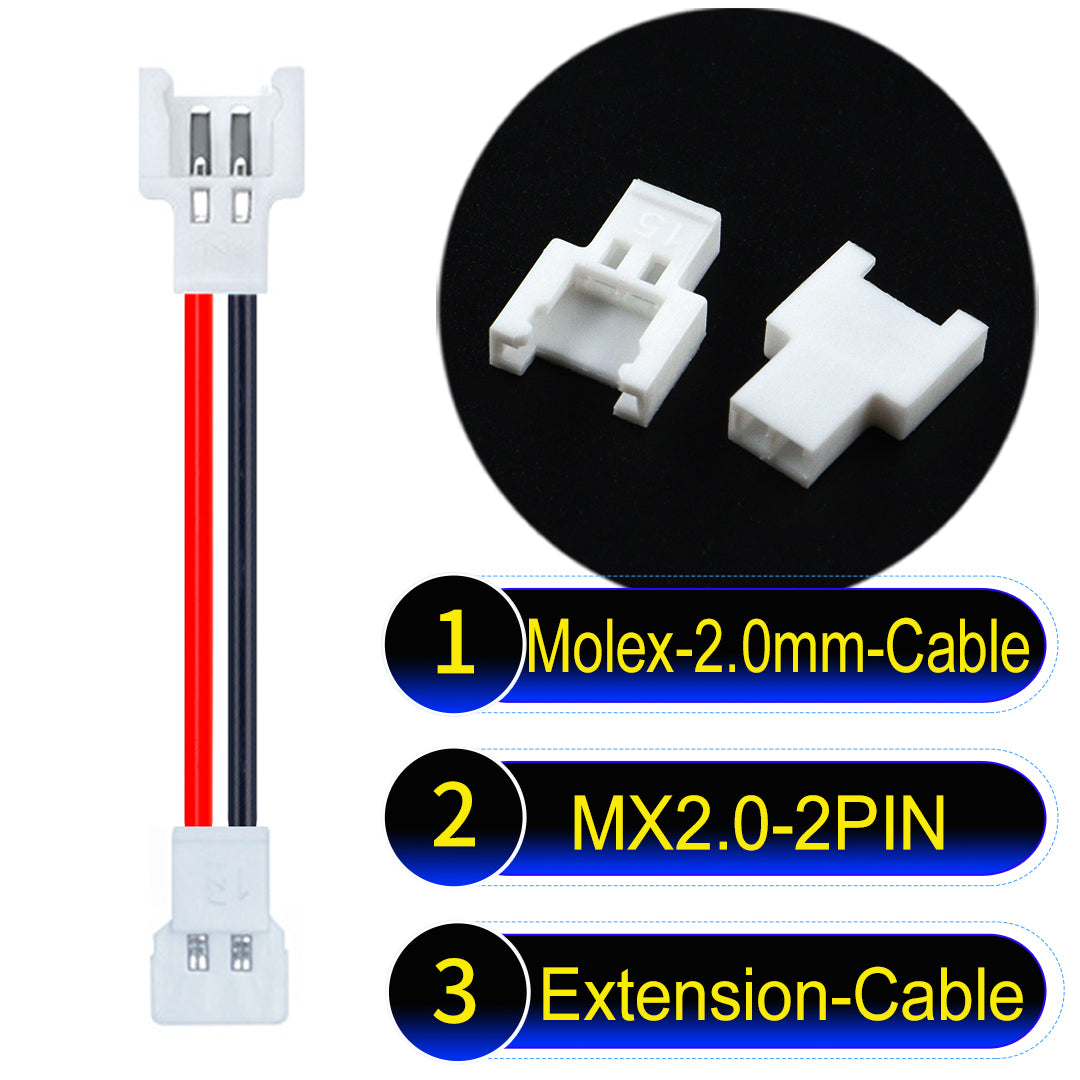
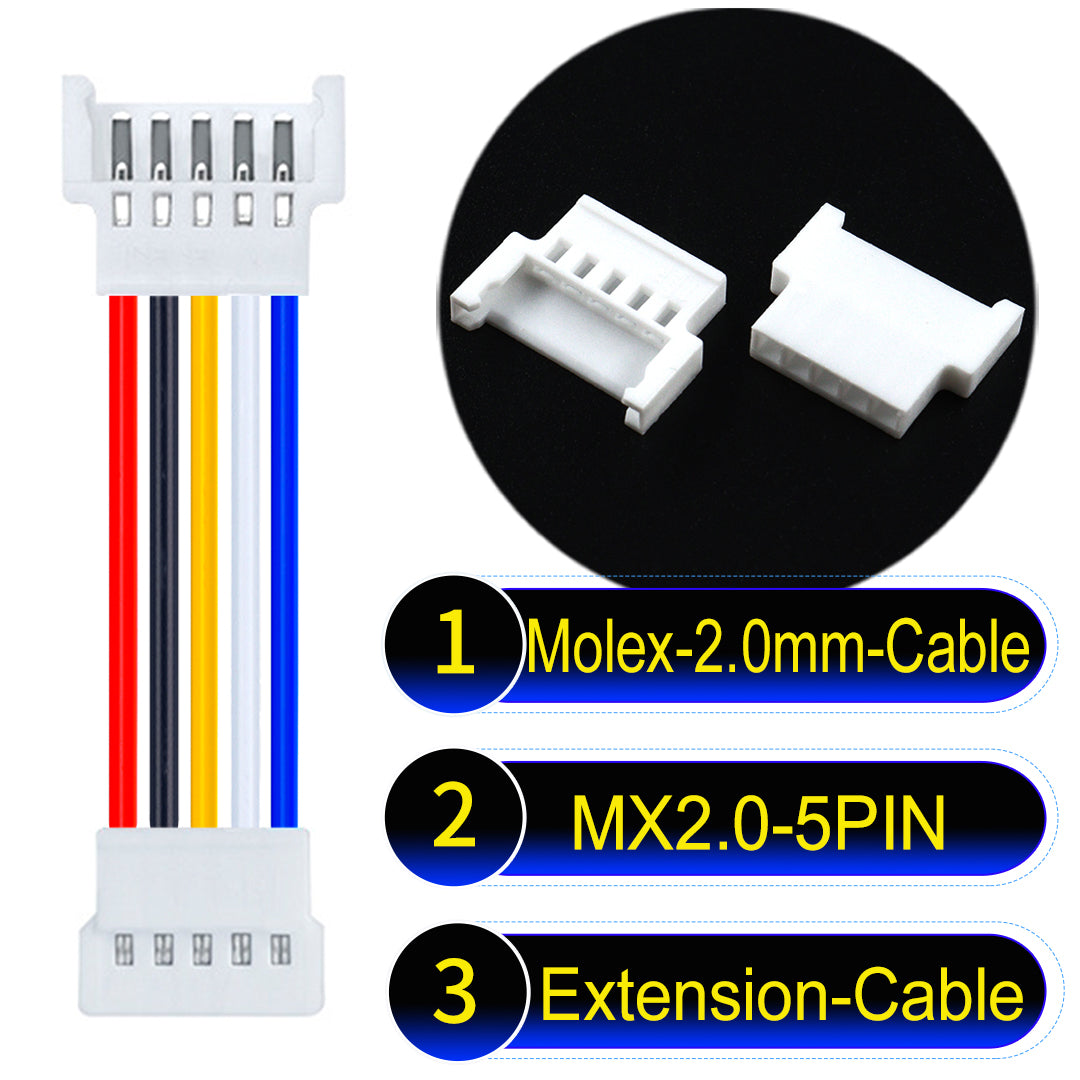
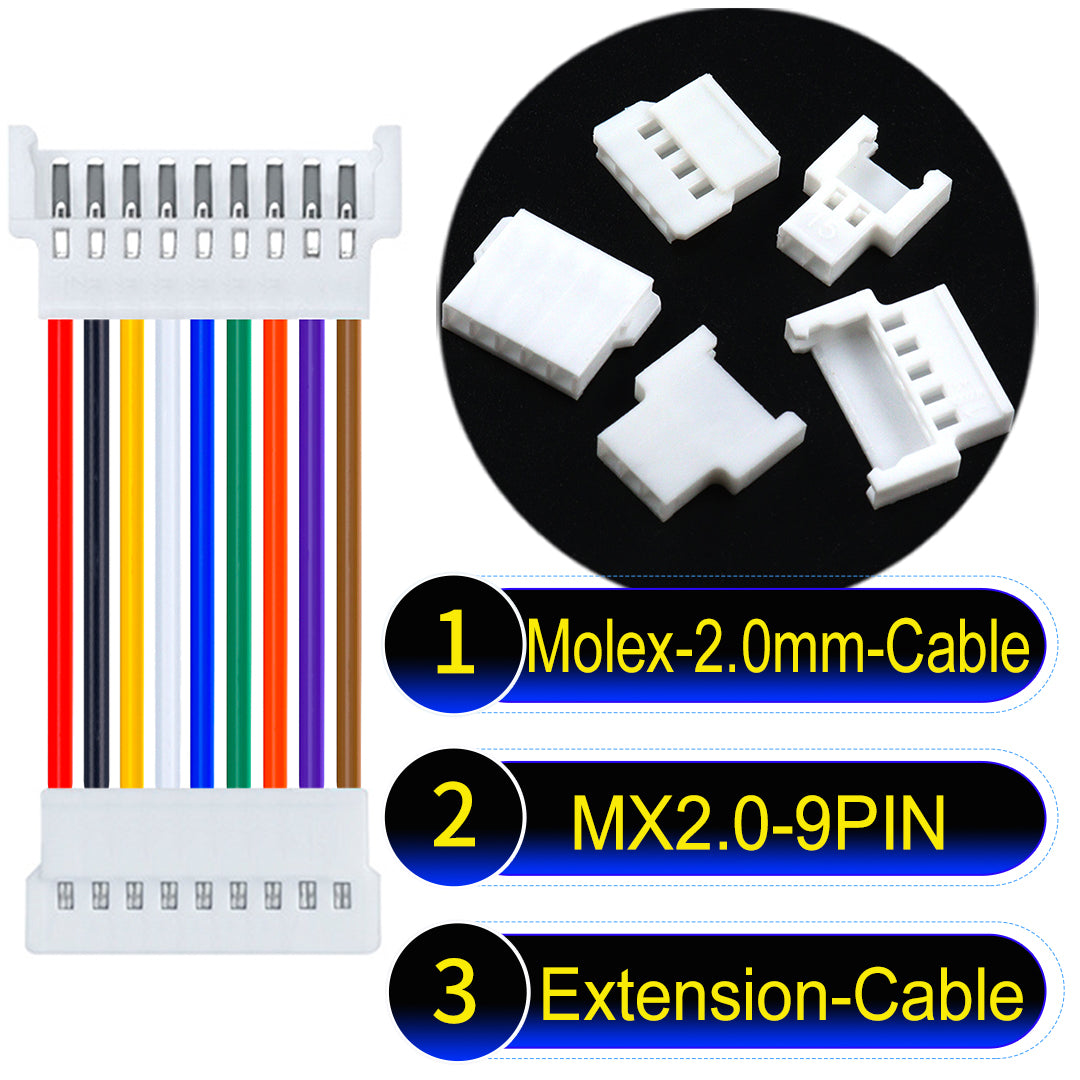
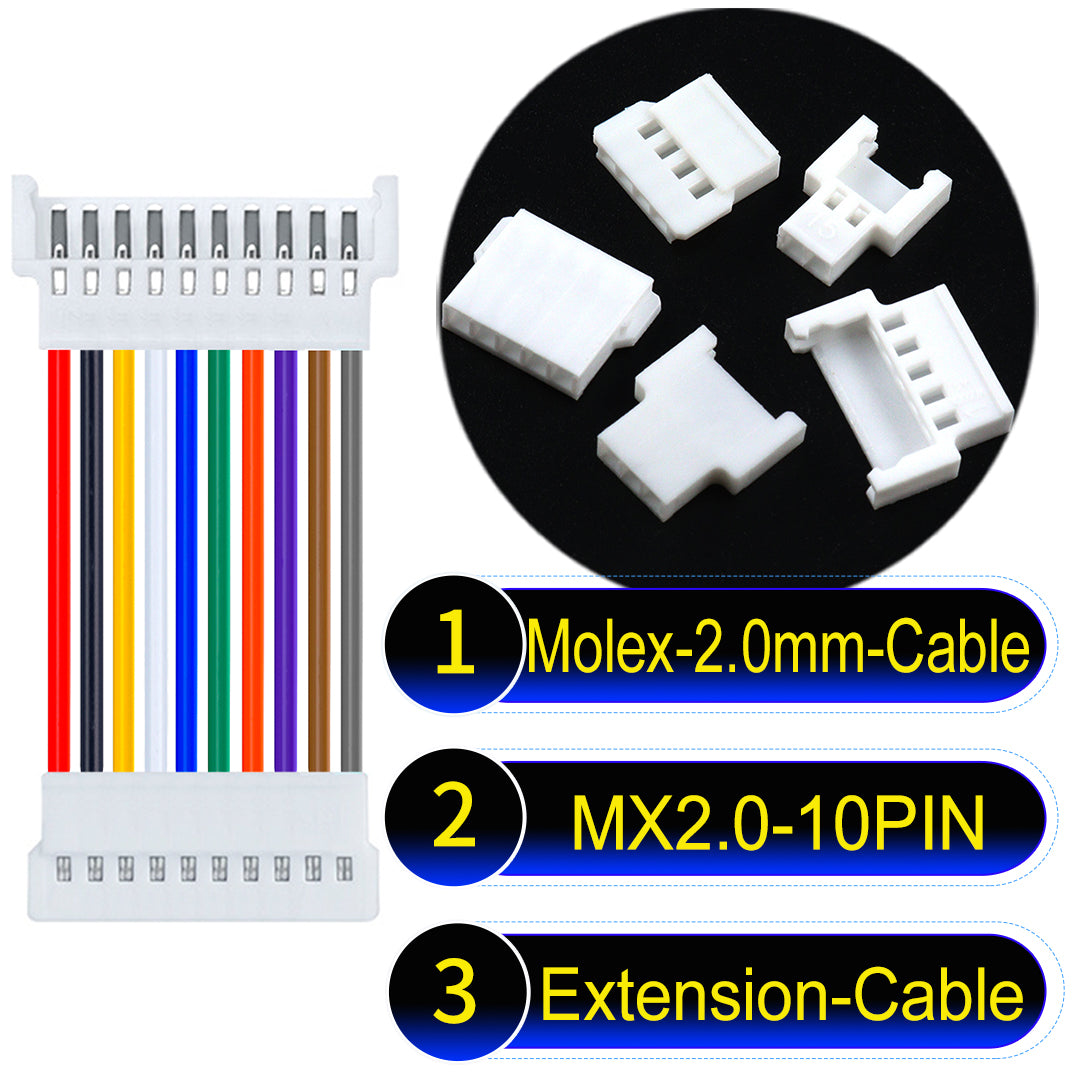
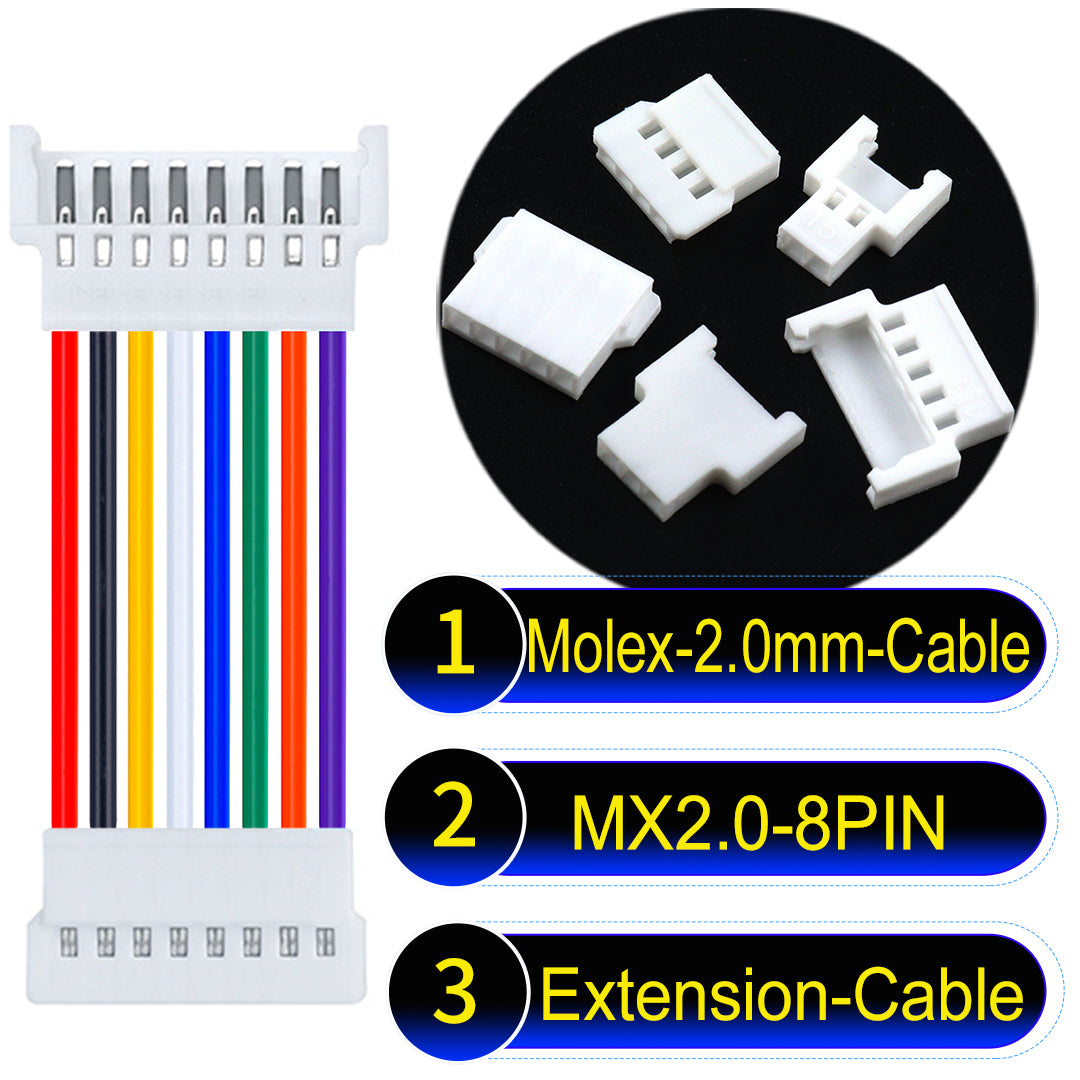
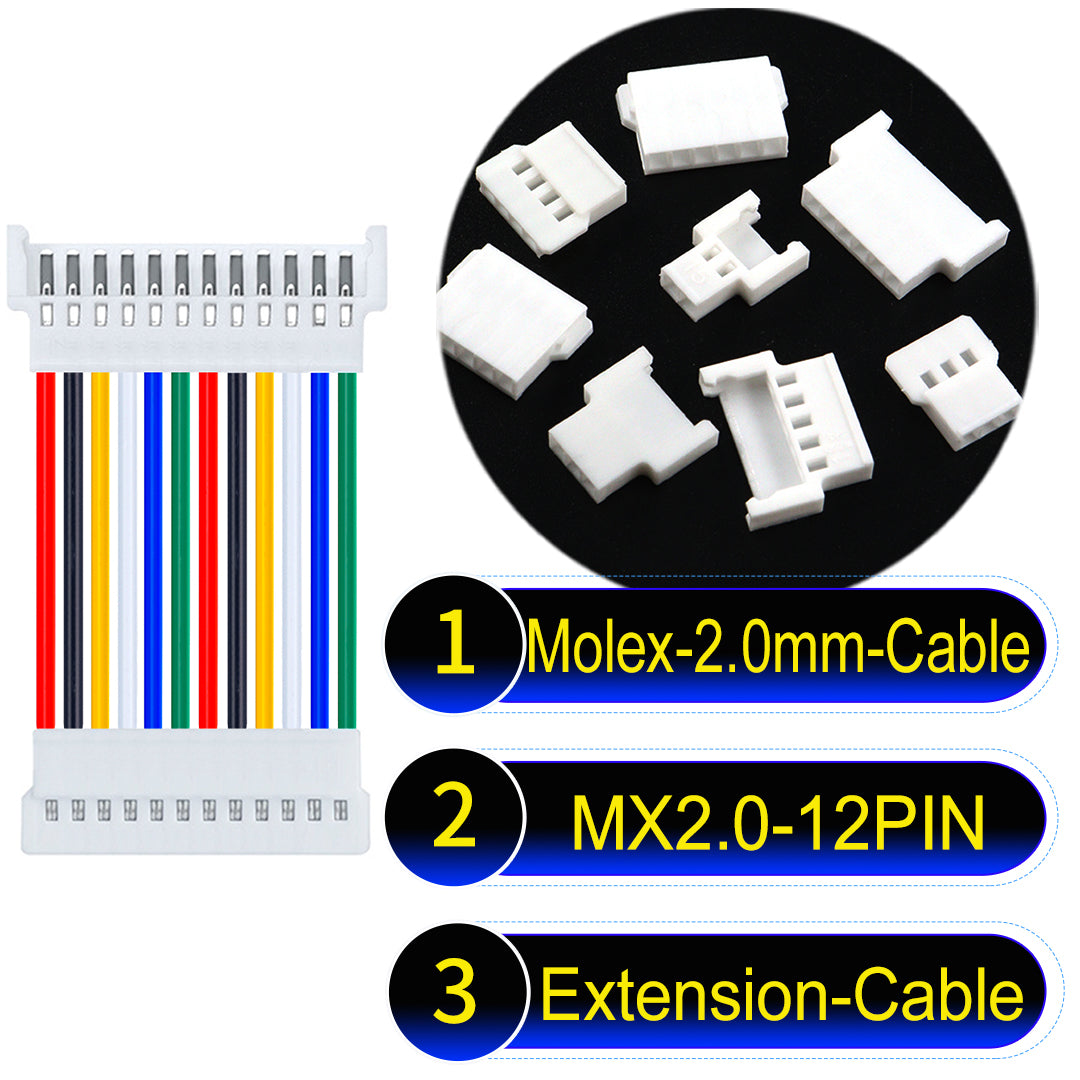
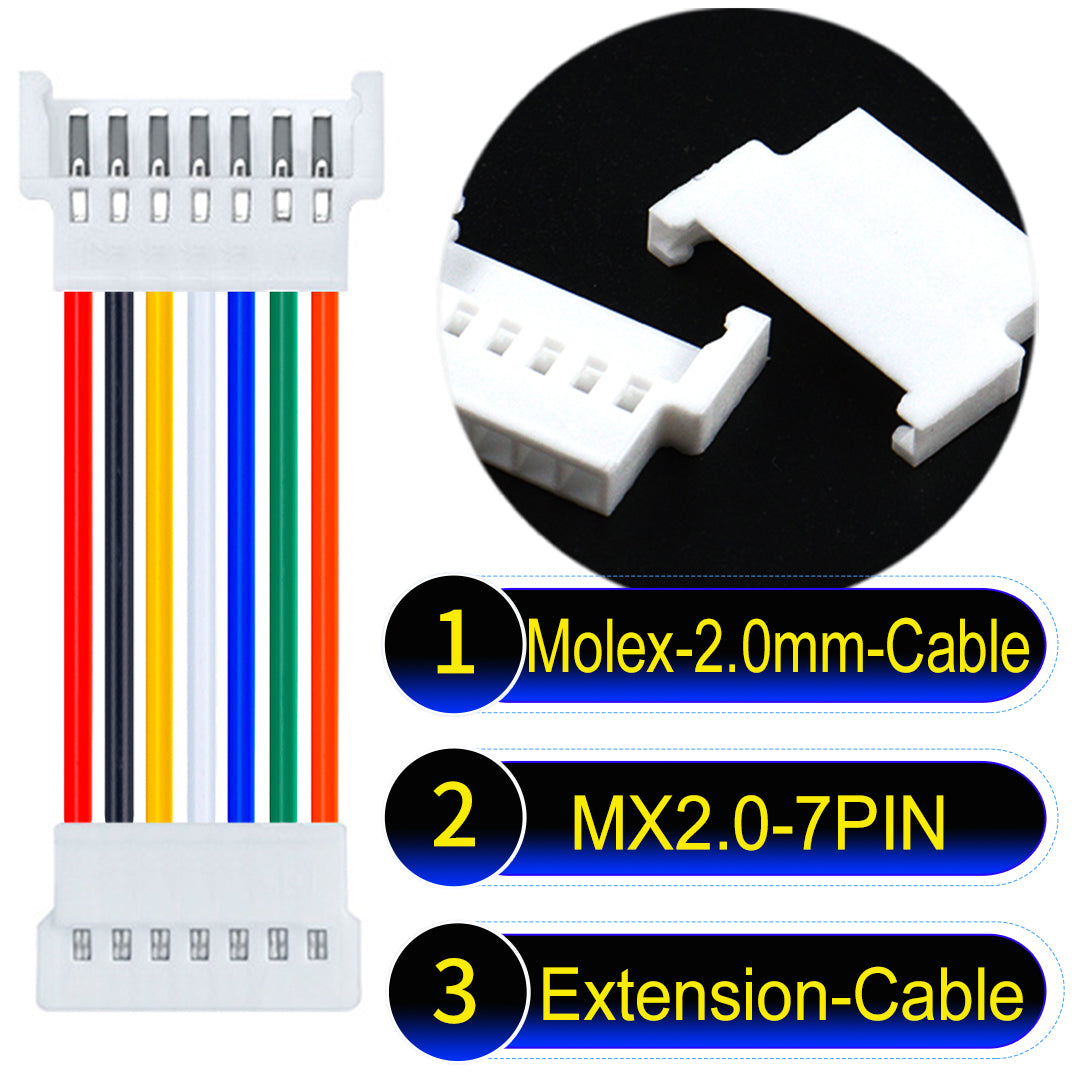
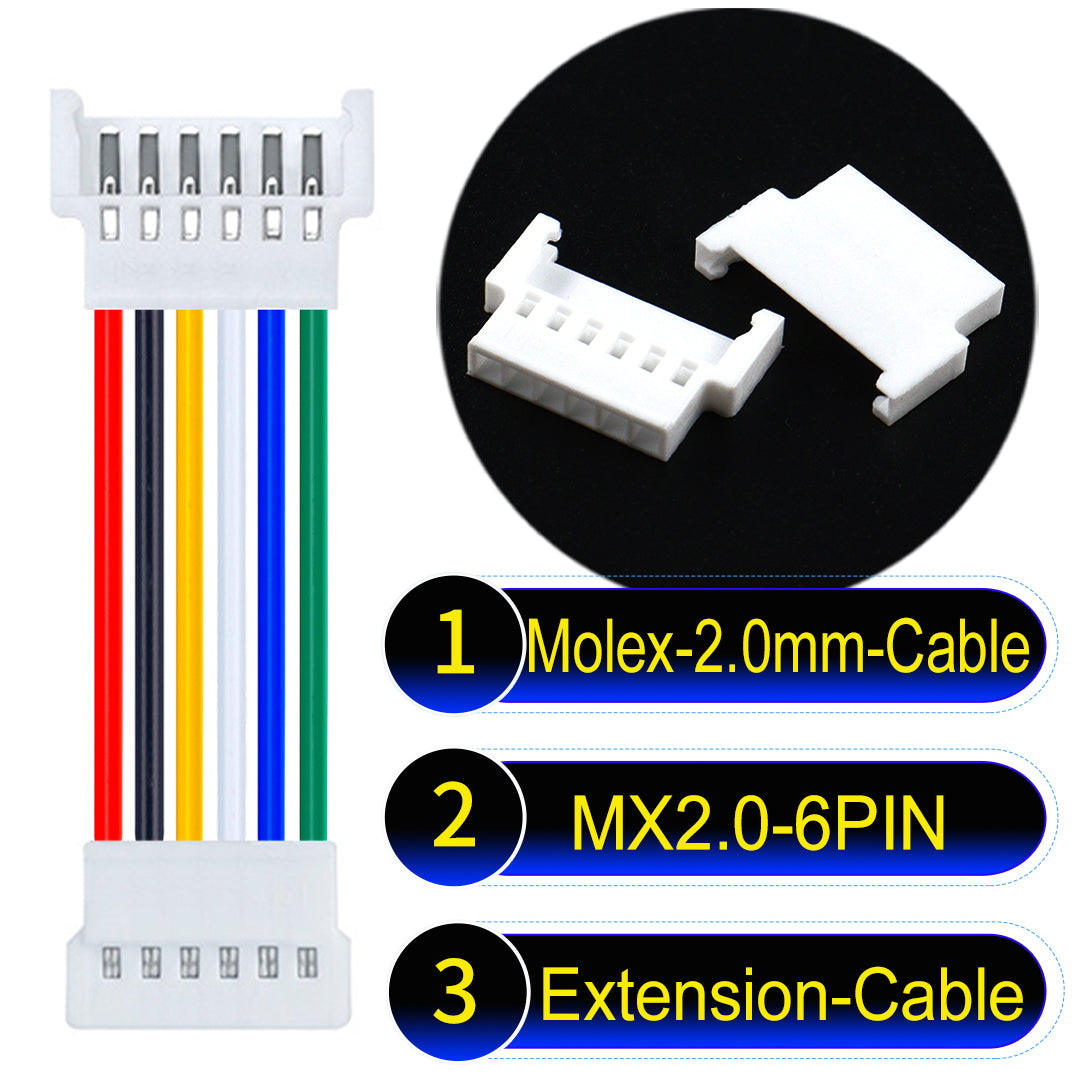
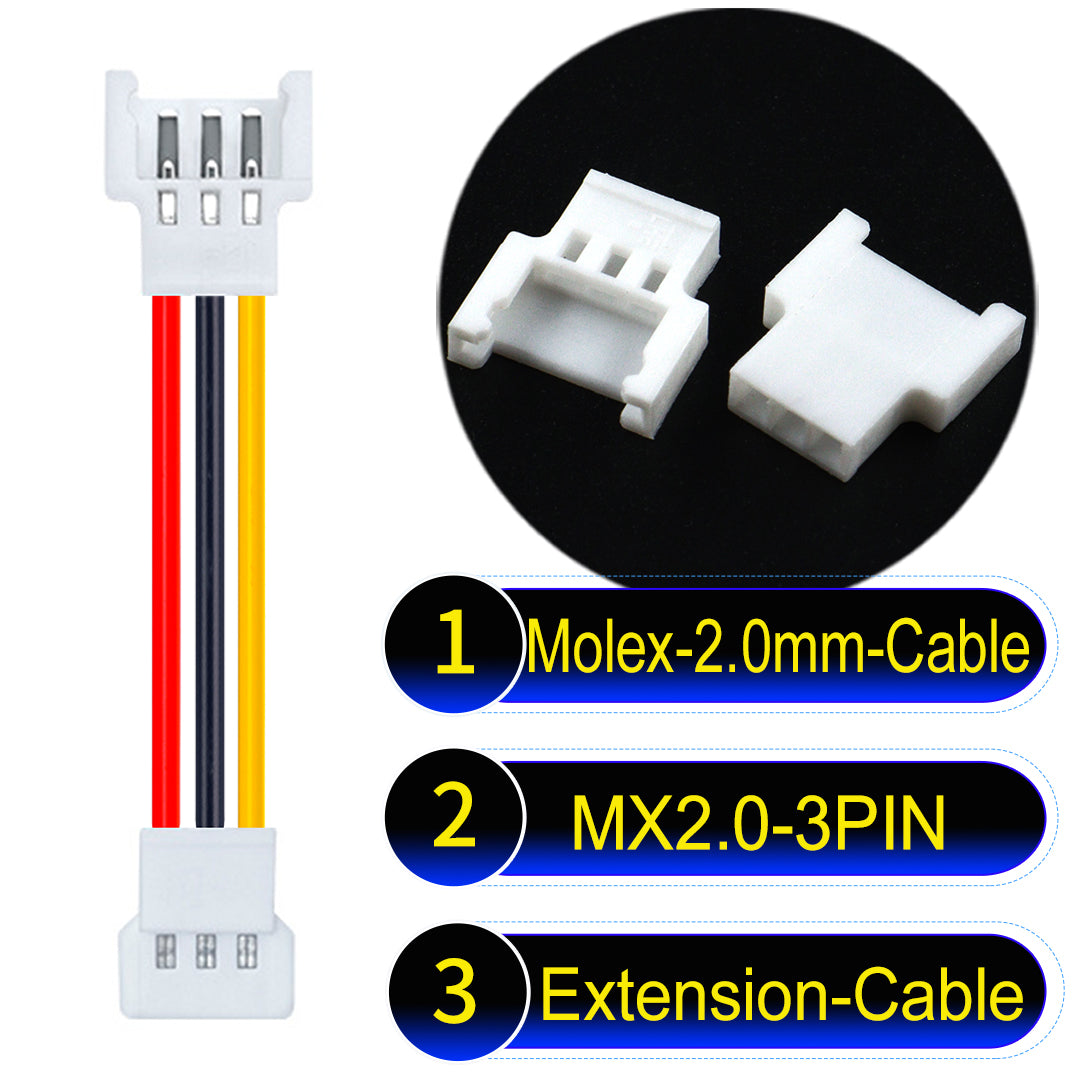
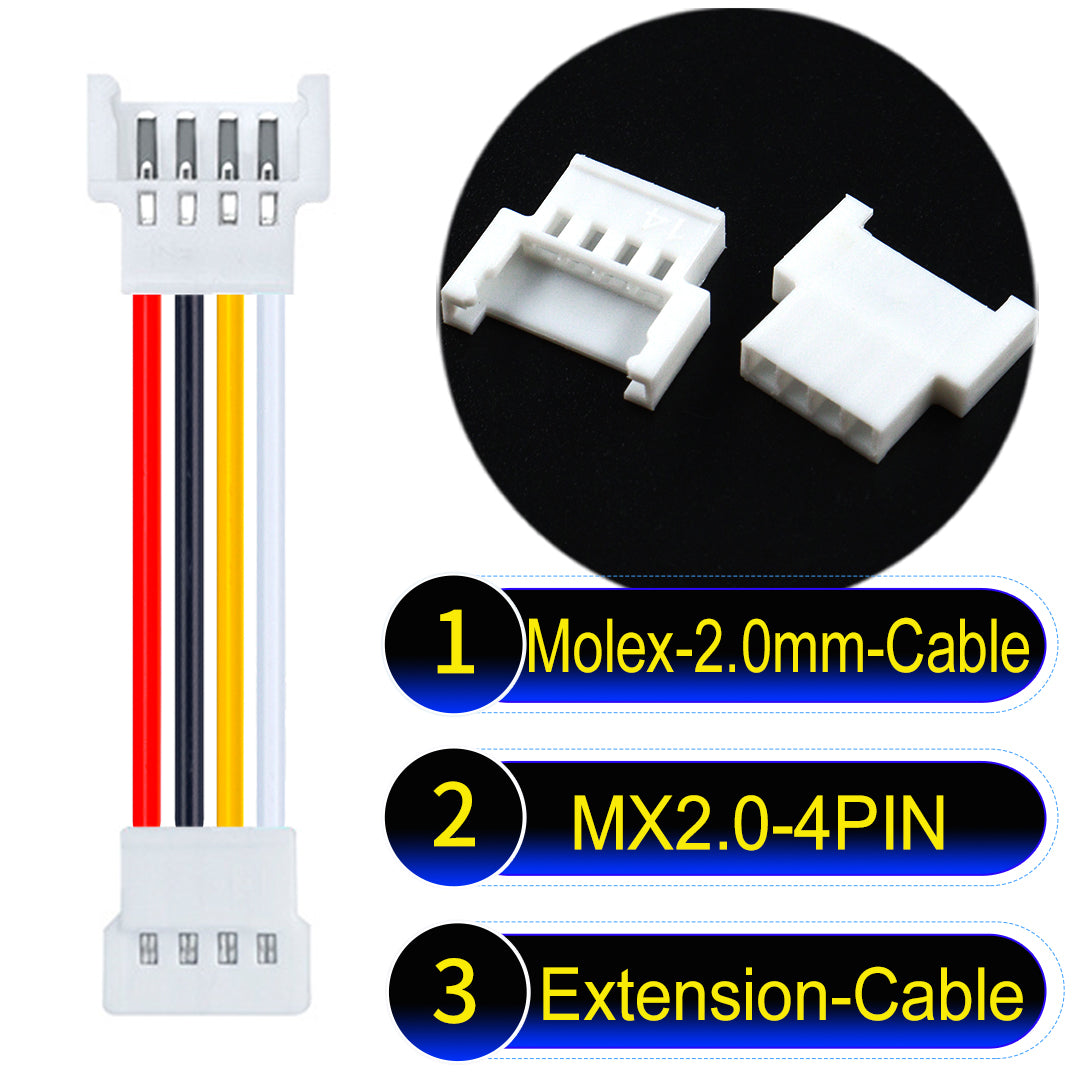
Extend any existing Molex 51005 / 51006 (MX 2.0mm / Micro Losi) wiring harness without cutting, re-crimping, or modifying your existing cables. This inline extension cable has a Molex 51006-compatible male housing on one end and a Molex 51005-compatible female receptacle on the other — plug it between any two MX 2.0mm connectors to add length instantly.
Available in 2P through 12P. Color-coded 22AWG UL1007 conductors rated at 300V / 3A per contact. Ideal for RC battery lead extensions, IoT sensor harness extensions, and compact embedded system wiring where the original cable is too short.
Key Specifications
- Connectors: Molex MX 2.0mm male (51006-compatible) one end + female (51005-compatible) other end
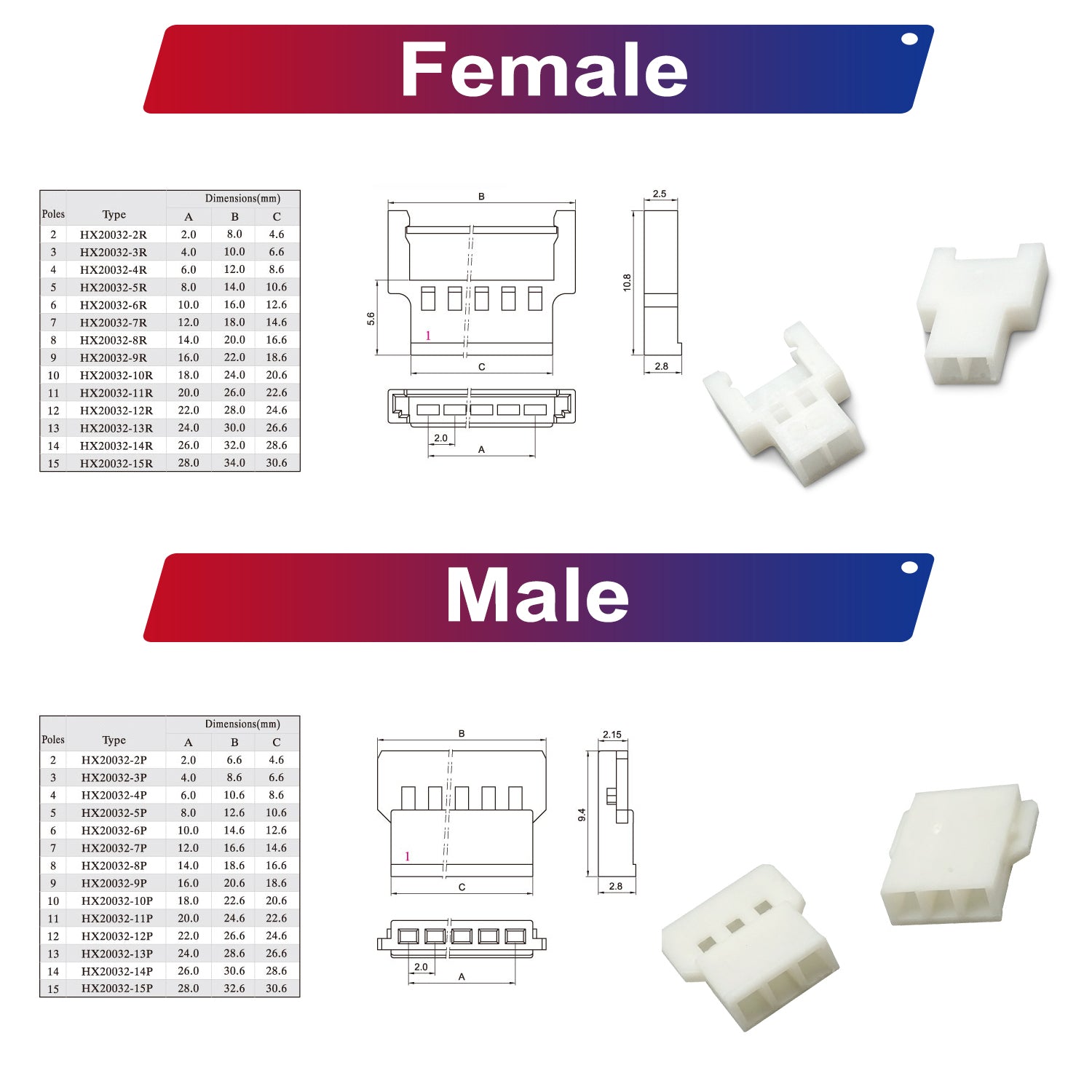
- Pitch: 2.00 mm | Pin counts: 2 to 12 pin
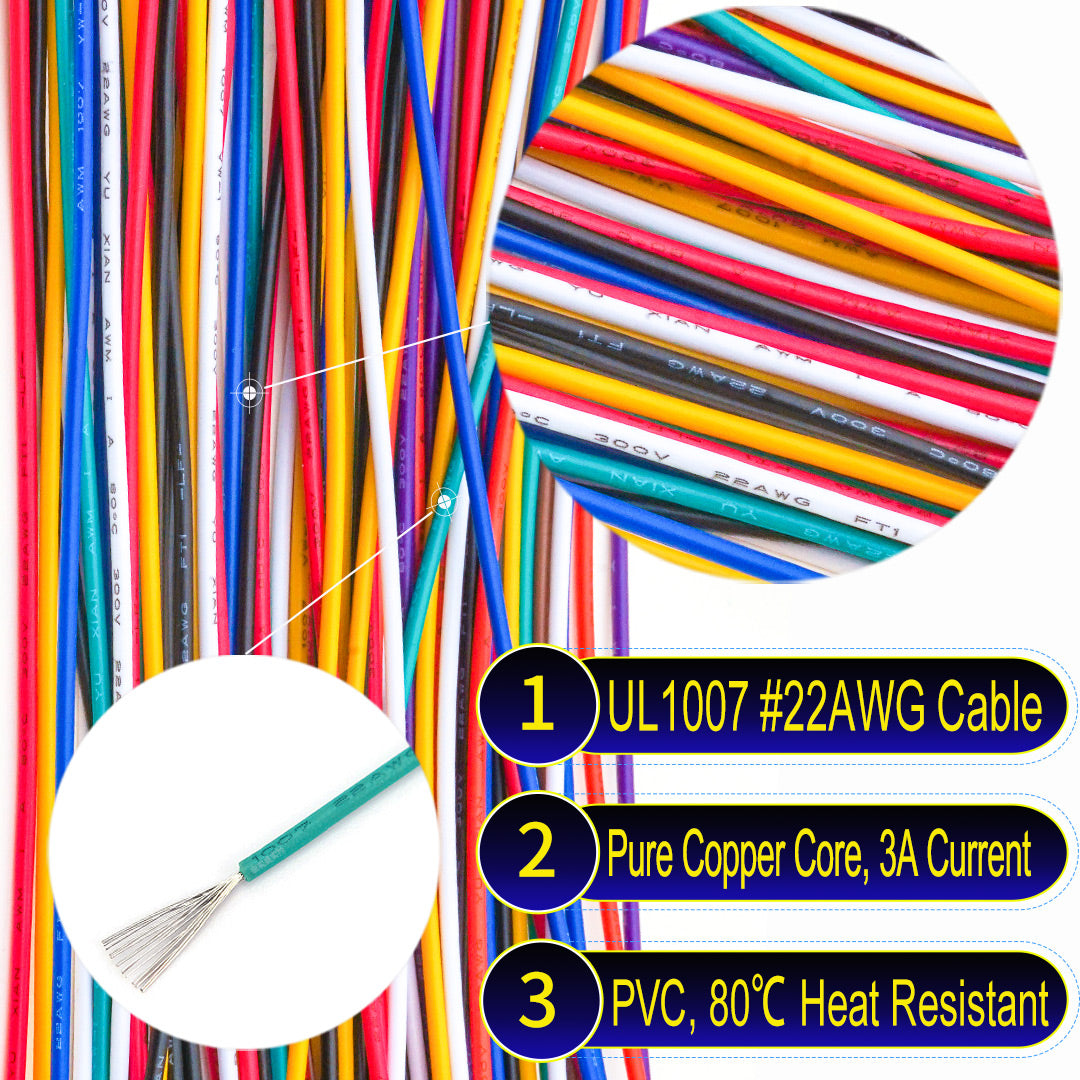
- Wire: 22AWG UL1007 PVC, color-coded conductors
- Voltage rating: 300 V | Current rating: 3A per contact
- Temperature range: −25°C to +80°C
- Compliance: RoHS
How It Works
The male end plugs into your existing 51005 female receptacle; the female end accepts your existing 51006 male header or pigtail. The result is a seamless inline extension with no signal loss, no re-crimping, and no modification to your existing harness.
Typical Applications
- 🔋 RC / FPV: Extend 1S/2S LiPo battery leads on micro RC cars and FPV quads (Micro Losi standard) when the original lead is too short to reach the ESC or receiver
- 📡 IoT & Embedded: Extend sensor and battery harnesses in wireless nodes and compact embedded systems without re-wiring
- 🔧 Prototyping: Quickly add length to any MX 2.0mm harness during development and testing
- 🏭 Industrial: Inline harness extension for compact DIN-rail and panel-mount assemblies
- 🩺 Wearables & Medical: Low-current sensor harness extension in portable and wearable devices
Compatibility Note
Compatible with all Molex 51005 / 51006 (MX 2.0mm) connectors and pre-crimped cables. Not compatible with JST PH 2.0mm connectors despite identical pitch — housing geometry differs. For JST PH extension cables, see our JST PH 2.0mm range.
Extension Cable vs Pigtail — Which Do I Need?
- Extension cable (this product): Male one end + female other end — plugs inline between two existing MX 2.0mm connectors to add length
- Female single-head pigtail: Female one end + bare leads other end — for new connections to a PCB header
- Male single-head pigtail: Male one end + bare leads other end — for new connections to a female receptacle


Blog posts
View all-

IC Chips & Discrete Components Express Shipping...
Shipping IC chips and discrete electronic components internationally requires more than choosing a carrier. ESD-safe packaging, correct HS codes, accurate customs declarations, and carrier selection for your destination all determine...
IC Chips & Discrete Components Express Shipping...
Shipping IC chips and discrete electronic components internationally requires more than choosing a carrier. ESD-safe packaging, correct HS codes, accurate customs declarations, and carrier selection for your destination all determine...
-

From Prototype to Mass Production — How to Scal...
Scaling from prototype to mass production is the most critical transition in a hardware product's lifecycle. The sourcing strategy that works for 10 prototype boards — cut tape, spot pricing,...
From Prototype to Mass Production — How to Scal...
Scaling from prototype to mass production is the most critical transition in a hardware product's lifecycle. The sourcing strategy that works for 10 prototype boards — cut tape, spot pricing,...
-

ISO 9001 Electronic Component Distributor — Wha...
ISO 9001:2015 certification is the most widely recognized quality management standard in the world — but what does it actually mean when an electronic component distributor claims to be ISO...
ISO 9001 Electronic Component Distributor — Wha...
ISO 9001:2015 certification is the most widely recognized quality management standard in the world — but what does it actually mean when an electronic component distributor claims to be ISO...


